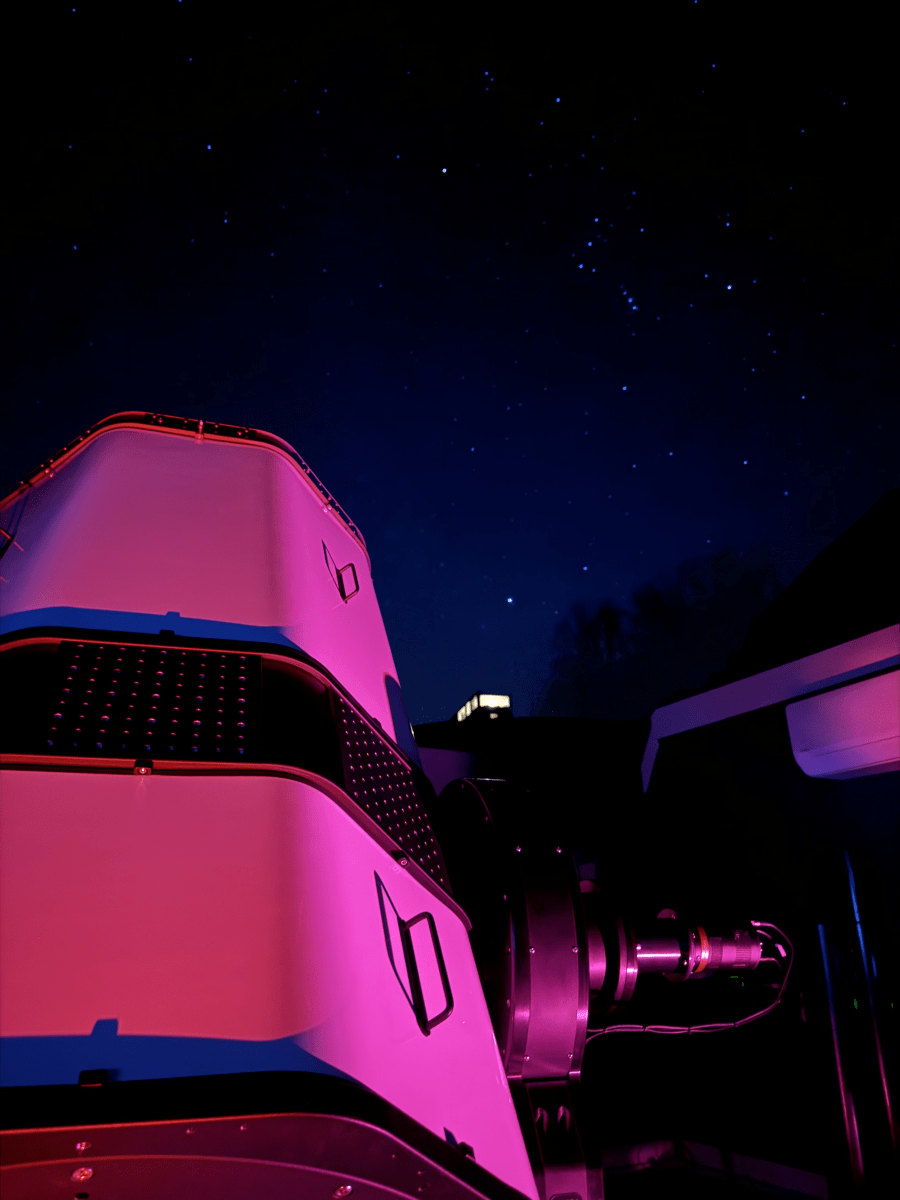
Low-Cost Laser Terminal Revolutionizes Deep Space Data Transmission
A significant breakthrough in space communication has been achieved following the successful transmission of high-definition imagery from lunar orbit to Earth using advanced laser technology. During the Artemis II mission, a newly developed, cost-effective receiving terminal demonstrated the ability to maintain data speeds of 260 megabits per second. This achievement proves that high-throughput deep space connectivity does not require the prohibitive capital investment typically associated with specialized aerospace infrastructure.
The terminal, a collaborative effort involving Observable Space and Quantum Opus, was managed by the Australian National University and constructed for less than $5 million. By combining specialized tracking software with high-precision photonic sensors, the team successfully maintained a stable link with the Orion spacecraft. This experimental setup worked in tandem with existing ground stations, confirming that a distributed network of receivers can effectively manage high-bandwidth data, such as 4K video, from the lunar vicinity.
While laser communications offer vastly superior data rates compared to traditional radio frequency methods, they remain susceptible to atmospheric interference like cloud cover. To address this, the project utilized a strategic reception site in Australia, which provided a clear line of sight from the opposite side of the globe. This successful demonstration highlights the viability of laser downlinks for broader commercial and scientific use, potentially setting the stage for a global network of terminals to support future space-based data infrastructure.
Key Takeaways
- A cost-effective laser terminal successfully achieved 260 Mbps data transmission from the Orion spacecraft.
- The hardware was developed for under $5 million, challenging the necessity of expensive, traditional aerospace communication systems.
- Global ground station distribution is critical to overcoming atmospheric interference and maintaining consistent deep-space data links.
Editor’s Analysis & Impact
The successful deployment of this low-cost laser terminal signals a paradigm shift in space communications. Historically, the high cost of entry for deep-space data reception has limited the number of participants in the space economy. By proving that high-throughput links can be established with affordable, off-the-shelf-adjacent technology, the industry is poised to move toward a more decentralized, global network of ground stations. This will likely accelerate the commercialization of lunar and deep-space missions, as companies and research institutions will no longer be solely dependent on expensive, government-run infrastructure. Future implications include the potential for real-time, high-definition streaming from space, which will be critical for the next phase of human exploration and the growing satellite internet sector.
Frequently Asked Questions
Q: Why is laser communication preferred over radio frequency for space missions?
A: Laser communication offers significantly higher data throughput, allowing for the transmission of high-definition video and large datasets that would be too slow or inefficient to send via traditional radio waves.
Q: What is the main limitation of using laser communication for space-to-Earth links?
A: The primary limitation is atmospheric interference. Laser signals require a clear line of sight and can be blocked or degraded by clouds, rain, or other weather conditions, necessitating a global network of ground stations to ensure constant connectivity.
AI Disclosure: This article is based on verified data and official reports. Our Team and AI have cross-referenced every financial detail with primary sources to ensure total accuracy.
More from this Category