NASA Prepares Massive Cargo Delivery to Advance Orbital Research
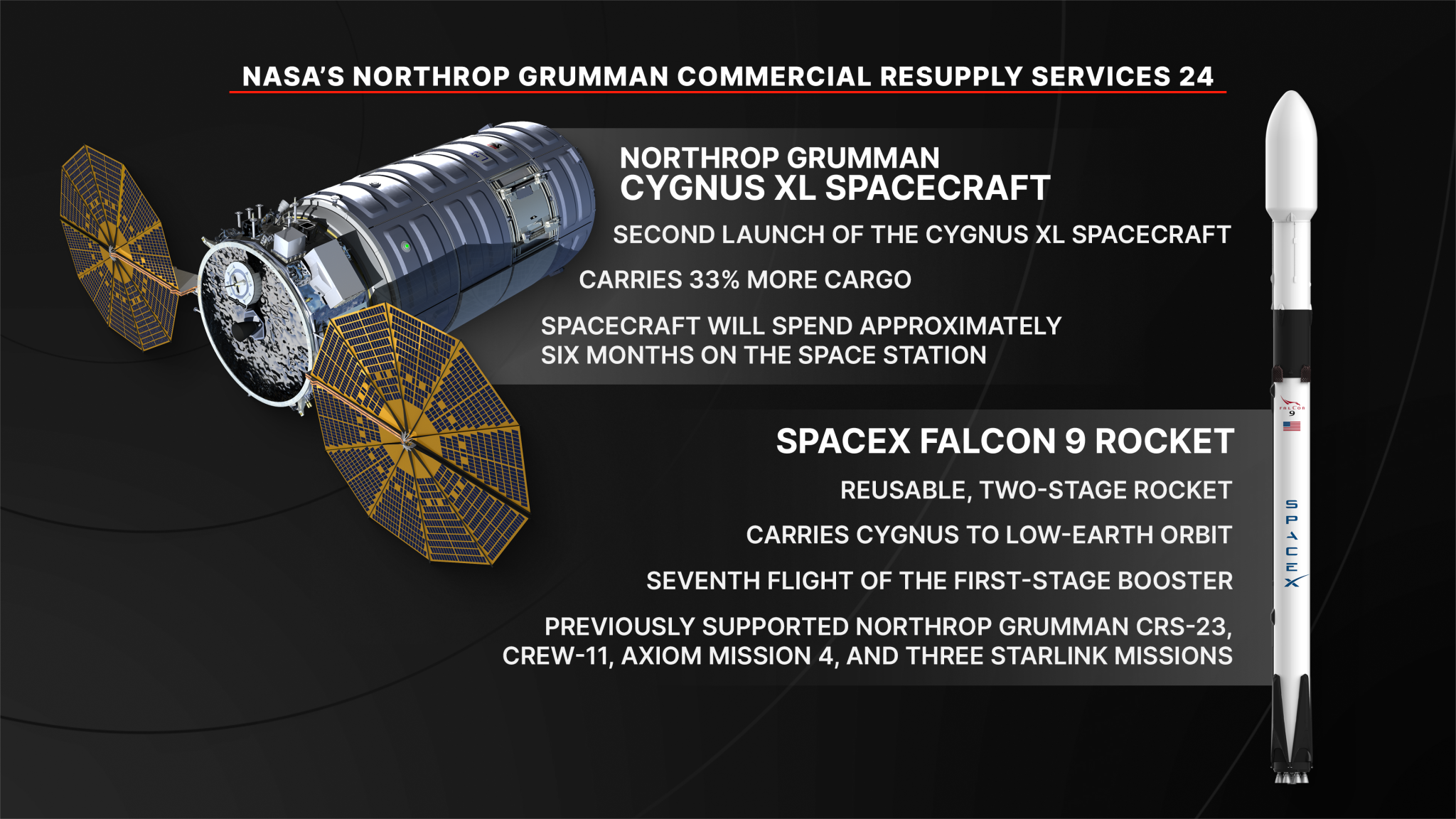
NASA is in the final stages of preparing for the CRS-24 mission, a critical logistics operation aimed at transporting over 11,000 pounds of essential equipment and scientific research materials to the International Space Station. The mission will utilize the advanced, solar-powered Cygnus XL spacecraft, which is slated to launch from the Cape Canaveral Space Force Station in Florida aboard a SpaceX Falcon 9 rocket. This flight marks the second deployment of the upgraded Cygnus model, dedicated to the legacy of veteran astronaut Steven Nagel.
Upon reaching orbit, the station’s Canadarm2 robotic arm, operated by astronauts Jack Hathaway and Chris Williams, will capture the spacecraft. The crew will then guide the vessel to the Unity module’s Earth-facing port to initiate the offloading process. This cargo is fundamental to both the ongoing maintenance of the station and the progression of several high-priority scientific investigations currently underway in microgravity.
The research manifest is diverse, featuring significant upgrades for the Cold Atom Lab to support quantum physics research, as well as experiments focused on stem cell production for cancer treatment. Additionally, the mission includes studies on the impact of spaceflight on roundworm gut microbiomes, alongside new medical imaging tools for monitoring astronaut eye health and specialized exercise equipment to combat bone density loss.
Beyond experimental hardware, the mission provides vital infrastructure support to ensure the long-term sustainability of the station. The shipment includes critical replacement parts for life-support systems, such as oxygen and nitrogen tanks, new batteries for the Zarya module, and essential water storage containers. These components are necessary to maintain a safe, pressurized environment for the crew and ensure the laboratory remains operational for future scientific discovery.
Key Takeaways
- The CRS-24 mission will deliver over 11,000 pounds of cargo, including critical life-support hardware and advanced scientific research equipment.
- Key experiments include quantum physics studies, stem cell research for cancer, and investigations into the effects of microgravity on biological organisms.
- The mission utilizes the enhanced Cygnus XL spacecraft, launched via a SpaceX Falcon 9 rocket, to sustain long-term operations on the International Space Station.
Editor’s Analysis & Impact
The CRS-24 mission underscores the ongoing transition toward a more robust, commercially supported orbital research environment. By prioritizing both infrastructure maintenance and high-level scientific experimentation, NASA is effectively extending the operational lifespan of the International Space Station while fostering breakthroughs in fields like quantum physics and oncology. The integration of private-sector launch capabilities, such as the SpaceX Falcon 9, alongside specialized hardware like the Cygnus XL, highlights a maturing space economy where logistics are increasingly streamlined. As the station continues to serve as a unique laboratory for microgravity research, these resupply missions remain the backbone of global space exploration, ensuring that critical data and technological advancements continue to flow back to Earth, ultimately informing future deep-space missions and terrestrial medical applications.
Frequently Asked Questions
Q: What is the primary purpose of the CRS-24 mission?
A: The mission is designed to deliver over 11,000 pounds of vital equipment, scientific research materials, and infrastructure support to the International Space Station.
Q: How will the cargo be transferred to the space station?
A: Once the Cygnus XL spacecraft reaches orbit, the station's Canadarm2 robotic arm will capture the vessel and maneuver it to the Unity module for offloading.
AI Disclosure: This article is based on verified data and official reports. Our Team and AI have cross-referenced every financial detail with primary sources to ensure total accuracy.
More from this Category