NASA’s PUEO Mission Concludes Antarctic Flight to Probe Cosmic Mysteries
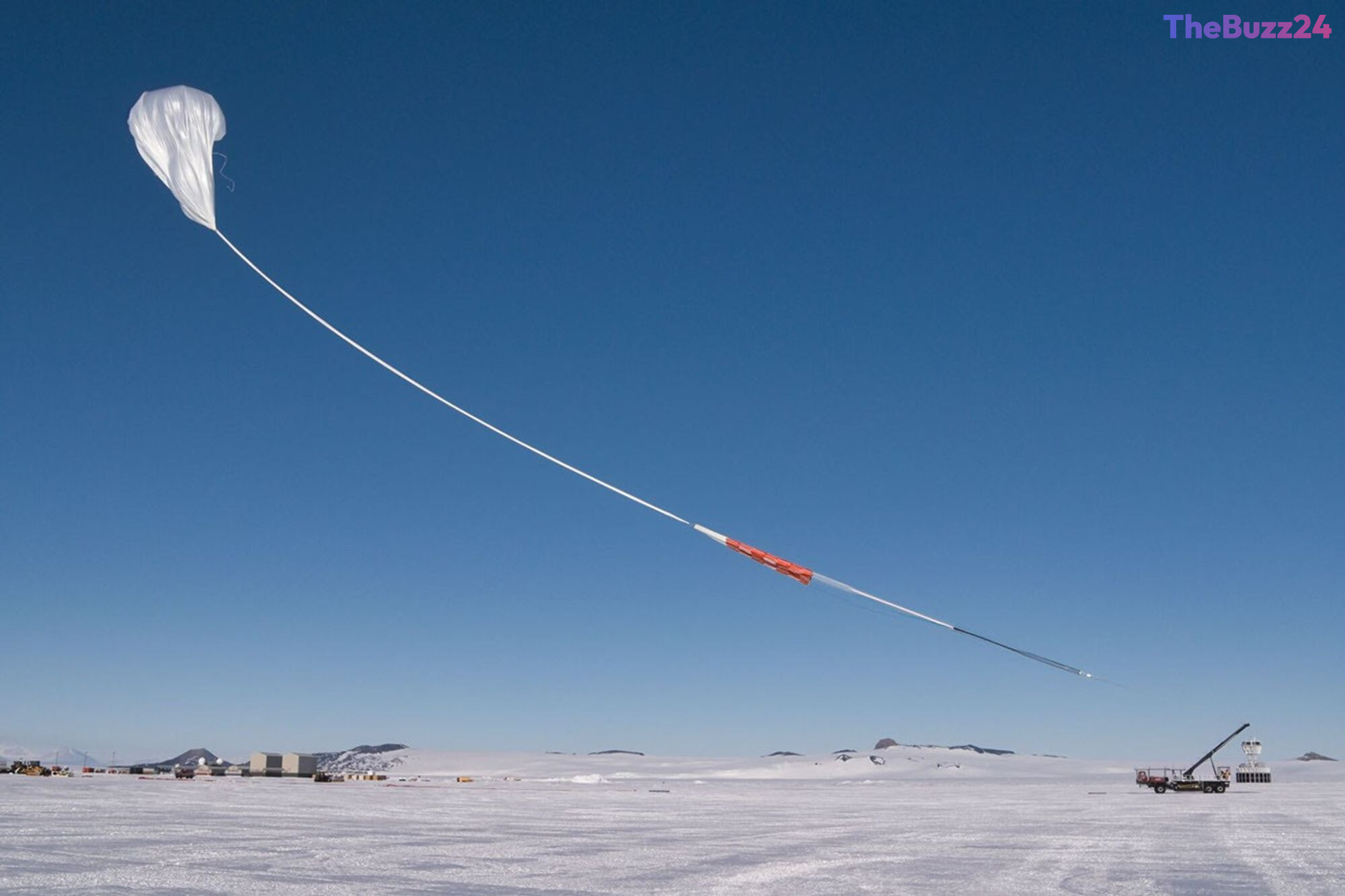
NASA has successfully wrapped up the Payload for Ultrahigh Energy Observations (PUEO) mission, a pioneering scientific endeavor that spent 23 days floating above the Antarctic landscape. Launched from the Long Duration Balloon Facility near McMurdo Station, the instrument reached an altitude of 120,000 feet, where it utilized the expansive Antarctic ice sheet as a natural detector for ultra-high energy neutrinos and cosmic rays. These particles are essential for understanding some of the most violent events in the universe, including the mergers of neutron stars and the activity surrounding supermassive black holes.
Designed as a successor to the Antarctic Impulsive Transient Antenna (ANITA) project, PUEO featured significant technological upgrades aimed at increasing detection sensitivity. The most notable improvement was the integration of an interferometric phased array trigger, which allowed the system to combine signals from multiple antennas in real time. This innovation enabled the mission to identify much weaker signals than its predecessors, while a specialized low-frequency instrument further enhanced the team’s ability to characterize air showers.
Following the conclusion of the flight, the PUEO payload was recovered roughly 120 miles from the South Pole, with all critical data drives intact. Researchers are now beginning the intensive process of analyzing the gathered information, a task expected to take approximately one year. The success of this mission not only provides a deeper look into high-energy physics but also paves the way for future exploration, including potential experiments that could use the moon’s surface to detect cosmic rays.
Key Takeaways
- The PUEO mission successfully completed a 23-day flight over Antarctica to detect ultra-high energy neutrinos and cosmic rays.
- Technological advancements, specifically an interferometric phased array trigger, allowed for significantly higher sensitivity in signal detection compared to previous experiments.
- Data recovered from the mission will undergo a year-long analysis and may influence future cosmic ray detection concepts, including potential lunar-based missions.
Editor’s Analysis & Impact
The PUEO mission represents a critical step forward in high-energy astrophysics, demonstrating that balloon-borne platforms can effectively serve as sophisticated observatories for elusive cosmic particles. By successfully testing advanced interferometric triggers, NASA has established a new benchmark for sensitivity in particle detection. The broader implications of this success are significant; the ability to capture these signals provides a window into the most extreme environments in the universe that are otherwise impossible to study directly. Furthermore, the transition of these technologies toward potential lunar applications suggests a shift in strategy for deep-space observation. As researchers analyze the data, the findings could refine our current models of cosmic evolution and provide the necessary proof-of-concept for future, more ambitious missions that aim to utilize planetary surfaces as massive, passive detectors.
Frequently Asked Questions
Q: What is the primary goal of the PUEO mission?
A: The primary goal is to detect ultra-high energy neutrinos and cosmic rays, which help scientists understand extreme cosmic phenomena like black holes and neutron star mergers.
Q: Why was Antarctica chosen as the location for this mission?
A: Antarctica provides a vast, stable, and isolated ice sheet that acts as a massive detection volume, allowing the instrument to capture radio signals generated by high-energy particles more effectively.
AI Disclosure: This article is based on verified data and official reports. Our Team and AI have cross-referenced every financial detail with primary sources to ensure total accuracy.
More from this Category