NASA’s Swift Satellite Rescue Mission Hits Snag, Pivots to Critical Tech Demo
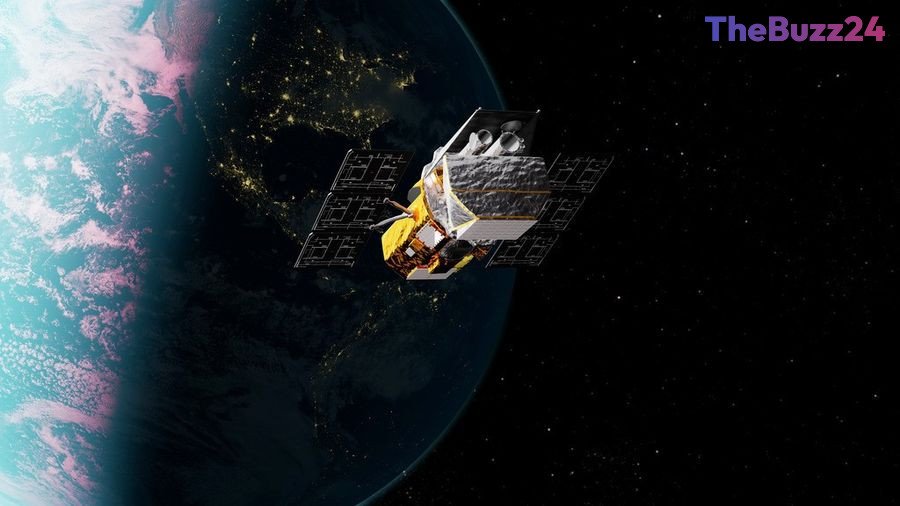
A pioneering commercial mission aimed at extending the life of NASA’s Neil Gehrels Swift Observatory has encountered a significant setback. NASA and its commercial partner, Katalyst Space, announced Wednesday that the LINK spacecraft will not proceed with its original plan to capture and boost the aging scientific satellite to a higher altitude. This decision comes after LINK experienced an ongoing attitude control issue following its launch.
Despite the primary objective being unachievable, the mission is not entirely abandoned. The LINK spacecraft will still attempt to perform rendezvous and proximity operations with the Swift Observatory. This revised effort is crucial for demonstrating key capabilities vital for the future of in-space satellite servicing and broader space exploration. NASA Administrator Jared Isaacman emphasized the agency’s willingness to take “smart risks” for potential high returns, acknowledging that while this wasn’t the desired outcome, the mission’s attempt was valuable for advancing future satellite servicing capabilities. Shawn Domagal-Goldman, director of Astrophysics Division at NASA Headquarters, echoed this sentiment, highlighting the mission’s high-risk, high-reward nature and the invaluable lessons learned throughout its development and initial operations.
The Neil Gehrels Swift Observatory, launched in 2004, has orbited Earth for over two decades, primarily studying gamma-ray bursts and other powerful cosmic events. Designed for a two-year prime mission, Swift’s low Earth orbit began to rapidly decay due to increased solar activity after 21 years of operation. Recognizing this, NASA awarded a contract to Katalyst Space in September 2025 to develop a robotic servicing mission for Swift within an ambitious timeframe of less than a year, aiming to extend its scientific contributions.
The LINK spacecraft successfully launched on July 3 aboard a Northrop Grumman Pegasus XL rocket from Kwajalein Atoll. Initial communications and in-orbit checkouts were successful, but the subsequent attitude control issues prevented the boost maneuver. Without intervention, Swift is now anticipated to re-enter Earth’s atmosphere later this year. NASA and Katalyst are diligently working to assess the next steps for the rendezvous attempt and to gather as much data as possible, ensuring that these experiences inform and strengthen America’s space industry pipeline and future satellite servicing operations.
Key Takeaways
- The commercial mission to boost NASA's Neil Gehrels Swift Observatory to a higher orbit has been canceled due to an attitude control issue with the LINK spacecraft.
- Despite the setback, the LINK spacecraft will still attempt rendezvous and proximity operations with Swift to demonstrate crucial capabilities for future satellite servicing.
- NASA views the mission as a valuable learning opportunity for advancing in-space servicing technology, even as Swift is now expected to re-enter Earth's atmosphere later this year.
Editor’s Analysis & Impact
This incident highlights the inherent complexities and risks within the nascent commercial in-space servicing market. While the primary objective of boosting the Swift Observatory was not met, the pivot to a rendezvous and proximity operations demonstration underscores a commitment to developing these critical capabilities. This setback, though disappointing, will provide invaluable data and lessons for future missions, potentially accelerating the development of more robust and reliable satellite servicing technologies. It also reinforces NASA’s strategy of taking ‘smart risks’ with commercial partners to push the boundaries of space technology, emphasizing the long-term vision for sustainable space operations and rapid response capabilities for aging orbital assets. The experience will undoubtedly shape future contracts and engineering approaches in this vital sector.
Frequently Asked Questions
Q: What was the original goal of the Swift Boost Mission?
A: The mission's primary goal was for Katalyst Space's LINK spacecraft to capture and boost NASA's Neil Gehrels Swift Observatory to a higher orbit, thereby extending its scientific mission.
Q: Why was the boost attempt canceled?
A: The boost attempt was canceled due to an ongoing attitude control issue experienced by the LINK spacecraft after its launch, which prevented it from performing the necessary maneuver.
Q: What will the LINK spacecraft still attempt to do?
A: Despite the inability to boost Swift, LINK will still attempt to conduct rendezvous and proximity operations with the observatory. This is crucial for demonstrating key capabilities essential for future in-space satellite servicing and exploration.
AI Disclosure: This article is based on verified data and official reports. Our Team and AI have cross-referenced every financial detail with primary sources to ensure total accuracy.
More from this Category