Cosmic Collision: Milky Way’s Ancient Galactic Partner Revealed
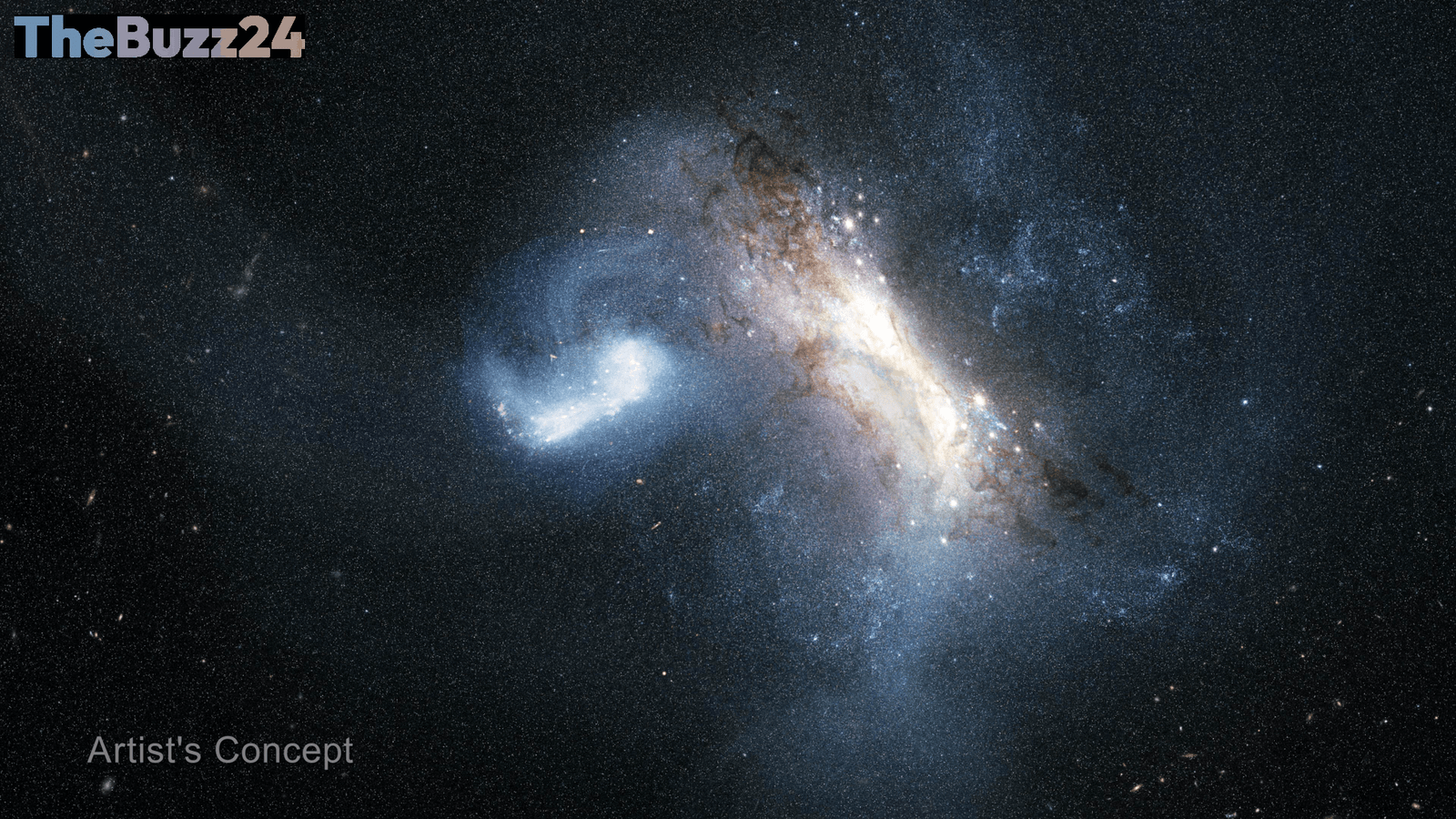
Astronomers have uncovered compelling evidence of a significant galactic merger that occurred approximately 12 billion years ago, involving our own Milky Way and a smaller dwarf galaxy designated LKH. This ancient celestial event, depicted in an artist’s concept, marks a pivotal moment in the early formation of our galaxy. The discovery, based on meticulous analysis of data from NASA’s Hubble Space Telescope, provides definitive proof of this collision during the Milky Way’s formative years.
This groundbreaking research, published in the journal Nature Astronomy, pushes back the timeline of our galaxy’s known history by an astonishing 1.8 billion years. By studying ancient star clusters, scientists were able to identify the distinct signature of the LKH dwarf galaxy, confirming its integration into the nascent Milky Way. This finding significantly enhances our understanding of how galaxies grow and evolve over cosmic timescales.
The merger with LKH represents one of the earliest major accretion events in the Milky Way’s history. Such collisions are fundamental to galactic evolution, contributing to the growth of galactic disks, the formation of spiral arms, and the overall structure we observe today. The detailed study of these ancient events through advanced telescopes like Hubble continues to unlock the secrets of our cosmic origins.
Key Takeaways
- Evidence confirms the Milky Way merged with the dwarf galaxy LKH about 12 billion years ago.
- The discovery, made using data from the Hubble Space Telescope, extends our knowledge of the Milky Way's history by 1.8 billion years.
- This ancient merger is crucial for understanding the early evolution and growth of our galaxy.
Editor’s Analysis & Impact
This discovery offers a profound glimpse into the Milky Way’s formative stages, highlighting the dynamic and often violent processes that shaped our galactic home. The confirmation of such an early and significant merger underscores the importance of galactic accretion in building large galaxies like our own. It suggests that the Milky Way’s structure and composition are the result of numerous such events over billions of years. Future research will likely focus on identifying other ancient galactic remnants within the Milky Way, further refining our understanding of its evolutionary path and its place in the broader cosmic landscape.
Frequently Asked Questions
Q: What is the LKH galaxy?
A: LKH is the designation given to a dwarf galaxy that merged with the Milky Way approximately 12 billion years ago. Its remnants are now integrated into our own galaxy.
Q: How was this ancient merger discovered?
A: The discovery was made by analyzing data from NASA's Hubble Space Telescope, specifically by studying globular star clusters which contain signatures of past galactic interactions.
Q: Why is this discovery important for understanding the Milky Way?
A: This finding pushes back the known timeline of the Milky Way's history by 1.8 billion years, providing crucial insights into the early stages of galactic evolution and how large galaxies like ours are formed through mergers.
AI Disclosure: This article is based on verified data and official reports. Our Team and AI have cross-referenced every financial detail with primary sources to ensure total accuracy.
More from this Category