NASA’s Underwater Moonwalk Lab: Simulating Space on Earth
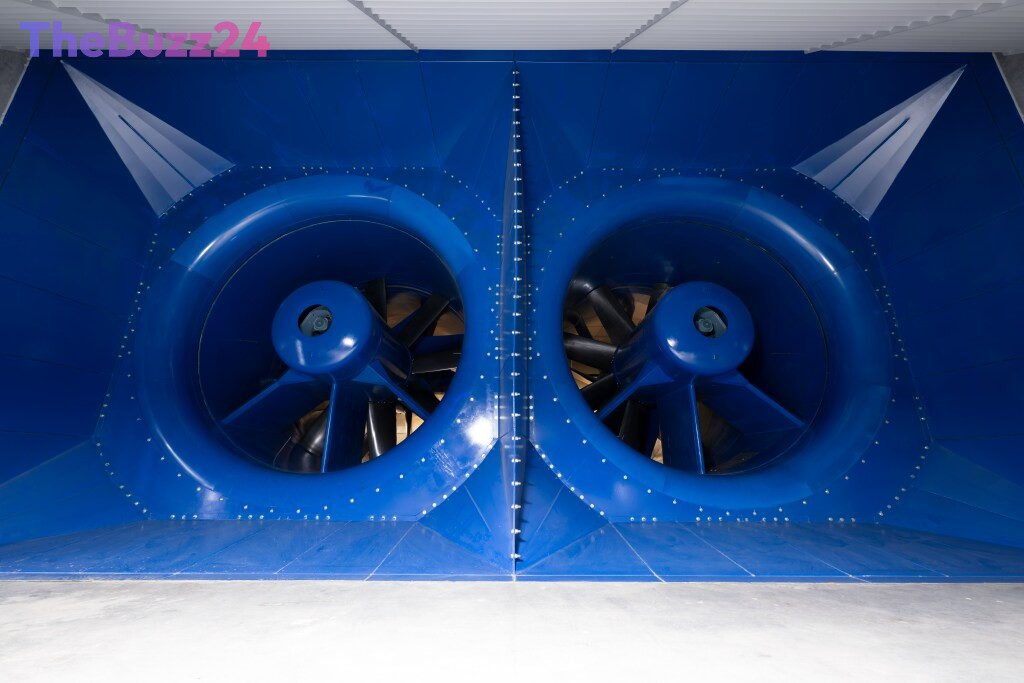
NASA is gearing up for its next phase of lunar exploration simulations, utilizing a unique facility that brings the challenges of space down to Earth – or rather, underwater. The Flight Dynamics Research Facility (FDRF) serves as a critical testing ground for understanding how spacecraft and astronauts behave in various flight conditions, including those that mimic the reduced gravity and dynamic forces experienced beyond our atmosphere.
This specialized wind tunnel, standing an impressive 131 feet tall, features a substantial vertical test section measuring 20 feet in diameter and 24 feet in height. Within this controlled environment, researchers can generate airspeeds up to 117 miles per hour, allowing for detailed studies on flight dynamics. The facility is equipped to test stability, controllability, free-fall scenarios, and crucial spin and spin-recovery maneuvers for atmospheric vehicles. These capabilities are vital for developing and refining the technologies and procedures needed for future space missions, particularly those involving lunar landings and surface operations.
The FDRF operates under atmospheric pressure and actively maintains a temperature of 79°F, using air as its test medium. The facility’s specifications, including dynamic pressure up to 35 psf and Reynolds numbers reaching 1.10 x 10^6 per foot, provide a robust platform for aerodynamic research. By simulating complex flight dynamics in a controlled terrestrial setting, NASA aims to enhance the safety and success of its ambitious space exploration goals, including upcoming lunar missions.
Key Takeaways
- NASA's Flight Dynamics Research Facility (FDRF) is used for simulating flight dynamics research, including preparations for moonwalks.
- The facility is a large, subsonic wind tunnel with a vertical test section capable of speeds up to 117 mph.
- Research conducted at the FDRF focuses on stability, controllability, free-fall, and spin recovery for atmospheric and potentially space vehicles.
Editor’s Analysis & Impact
The Flight Dynamics Research Facility represents a crucial, albeit terrestrial, component of NASA’s broader space exploration strategy. By leveraging advanced wind tunnel technology, the agency can rigorously test and refine critical flight dynamics parameters in a controlled environment before committing to costly and high-risk space missions. This approach to simulation, particularly for lunar operations, underscores the importance of ground-based research in mitigating potential risks and optimizing mission success. The FDRF’s capabilities highlight the ongoing innovation in aerospace engineering, ensuring that future missions benefit from meticulous preparation and a deep understanding of vehicle behavior under diverse conditions.
Frequently Asked Questions
Q: What is the primary purpose of the Flight Dynamics Research Facility (FDRF)?
A: The FDRF is a large wind tunnel designed for flight dynamics research, focusing on stability, controllability, free-fall, and spin recovery testing of atmospheric vehicles, and is used to simulate conditions relevant to space missions like lunar exploration.
Q: What are the key specifications of the FDRF's test section?
A: The test section has dimensions of 20 feet in diameter by 24 feet in height, can achieve speeds from 0 to 117 mph, and operates at atmospheric pressure with actively cooled air at 79°F.
Q: How does the FDRF contribute to space exploration?
A: By simulating complex aerodynamic and flight dynamics conditions, the FDRF allows NASA to test and refine vehicle designs and operational procedures in a controlled environment, enhancing the safety and success of future space missions, including lunar landings.
AI Disclosure: This article is based on verified data and official reports. Our Team and AI have cross-referenced every financial detail with primary sources to ensure total accuracy.
More from this Category