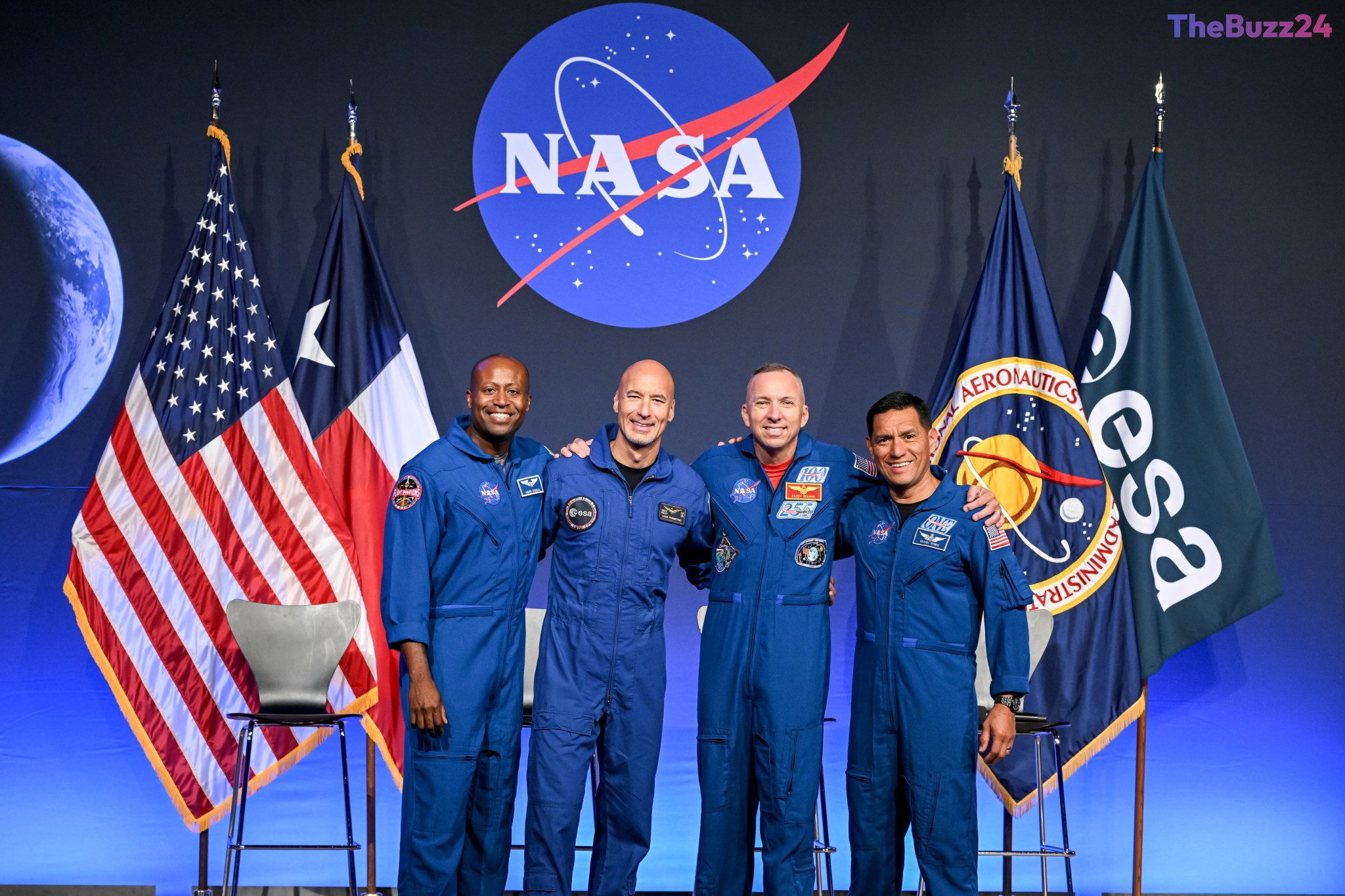
NASA and ESA Reveal Crew for Historic Artemis III Test Mission
In a major milestone for modern space exploration, the crew for the upcoming Artemis III mission has been officially announced. The selected team features a diverse group of experienced spacefarers, including NASA astronauts Andre Douglas, Randy Bresnik, and Frank Rubio, alongside European Space Agency (ESA) astronaut Luca Parmitano. This crew will spearhead a critical phase of the Artemis program, which aims to establish a sustainable human presence on and around the Moon.
Unlike subsequent lunar landing attempts, this specific phase of the Artemis III mission will operate in low Earth orbit. The primary objective of the mission is to conduct rigorous testing of integrated operations between the Orion spacecraft and the commercial human landing systems currently under development. The crew will evaluate how Orion interfaces with landers designed by private aerospace giants SpaceX and Blue Origin, ensuring that all systems are fully compatible and safe for deep-space transit.
The collaboration highlights the growing synergy between international space agencies and the commercial space sector. By utilizing low Earth orbit as a testing ground, the mission aims to mitigate risks before astronauts embark on longer, more hazardous journeys to the lunar surface. The integration of SpaceX’s and Blue Origin’s landing technologies with NASA’s Orion capsule represents a pivotal shift toward a multi-provider model for space exploration, fostering competition and technological redundancy.
Key Takeaways
- The Artemis III crew will consist of NASA astronauts Andre Douglas, Randy Bresnik, Frank Rubio, and ESA astronaut Luca Parmitano.
- The mission will take place in low Earth orbit to test critical docking and integration operations between the Orion spacecraft and commercial landers.
- Private aerospace companies SpaceX and Blue Origin are providing the landers being evaluated during this orbital test phase.
Editor’s Analysis & Impact
The announcement of the Artemis III crew marks a crucial transition from theoretical planning to operational execution in the modern space race. By utilizing low Earth orbit to test the integration of the Orion spacecraft with commercial landers from SpaceX and Blue Origin, space agencies are adopting a pragmatic, risk-reduction strategy. This mission underscores the vital role of public-private partnerships in contemporary aerospace. Rather than relying solely on government-designed hardware, the strategy leverages commercial innovation to drive down costs and accelerate development timelines. The success of these integrated tests will not only validate the hardware for future lunar landings but also solidify a sustainable economic model for deep-space exploration, paving the way for eventual crewed missions to Mars.
Frequently Asked Questions
Q: Who are the crew members selected for the Artemis III mission?
A: The crew includes NASA astronauts Andre Douglas, Randy Bresnik, and Frank Rubio, along with European Space Agency (ESA) astronaut Luca Parmitano.
Q: What is the main objective of this Artemis III mission phase?
A: The mission will take place in low Earth orbit to test integrated operations and compatibility between NASA's Orion spacecraft and commercial landers developed by SpaceX and Blue Origin.
Q: Why is this mission being conducted in low Earth orbit instead of the Moon?
A: Conducting these complex integration tests in low Earth orbit allows engineers and astronauts to safely evaluate and troubleshoot the docking and operational systems of the spacecraft and landers before committing to deep-space lunar missions.
AI Disclosure: This article is based on verified data and official reports. Our Team and AI have cross-referenced every financial detail with primary sources to ensure total accuracy.
More from this Category