Tyndall Glacier Sheds Icebergs as Climate Shifts Impact Patagonian Icefield
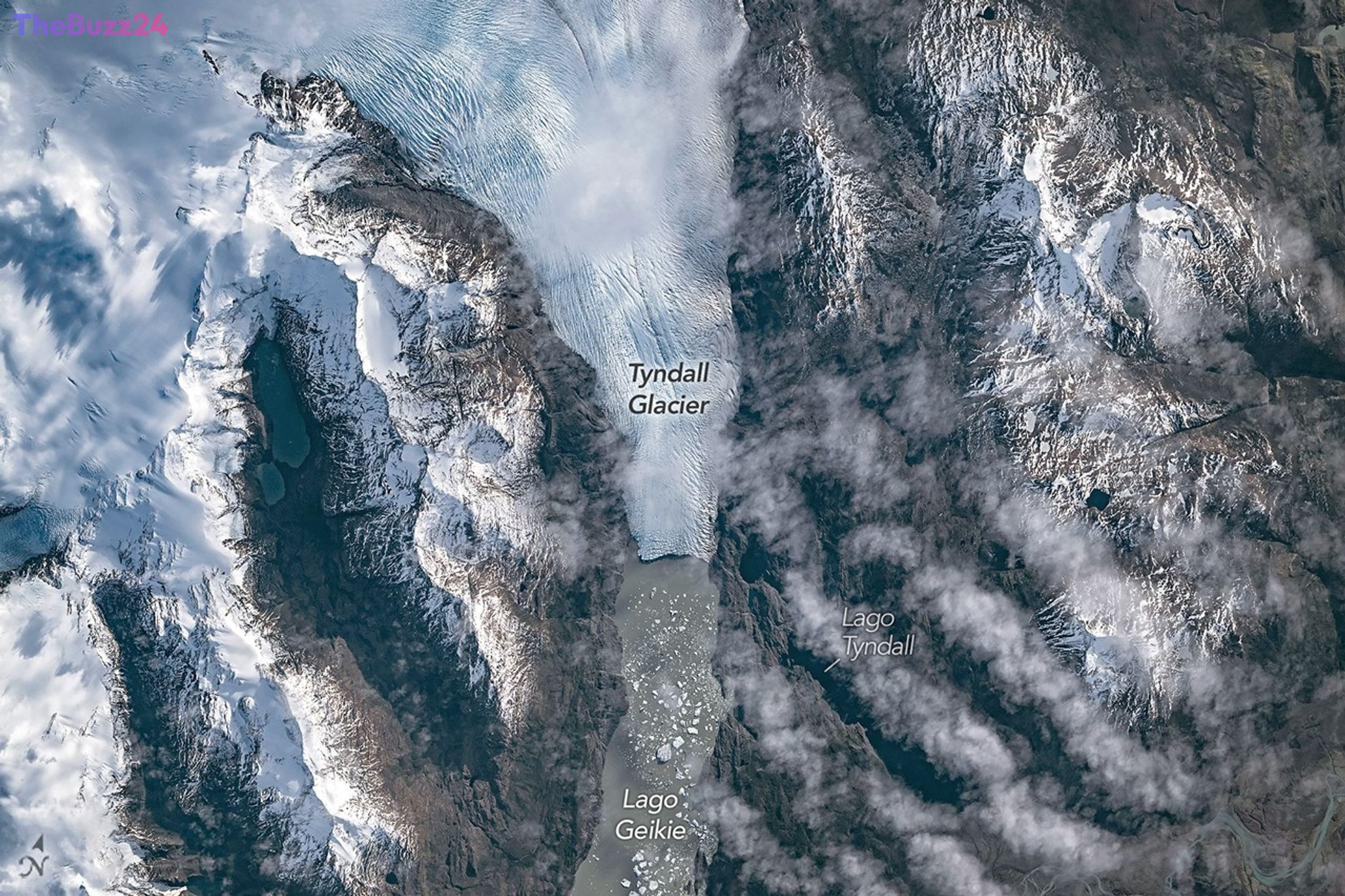
An astronaut aboard the International Space Station recently captured a striking image of Tyndall Glacier in southern Chile, revealing a dynamic scene of ice calving into Lago Geikie. The photograph, taken on May 10, 2026, offers a rare glimpse into the ongoing changes occurring within the Southern Patagonian Icefield, the largest ice mass in the Southern Hemisphere outside of Antarctica.
Tyndall Glacier, like many of its Patagonian counterparts, has been experiencing a significant retreat. Glaciologists note that Lago Geikie, where the glacier terminates, began forming around 1940 and has steadily expanded as the ice recedes. This retreat has not been uniform; by 2010, thinning ice caused the glacier to cut off its eastern outlet into Lago Tyndall. The exposed bedrock along this eastern edge has yielded significant paleontological discoveries, including numerous ichthyosaur fossils.
Recent observations indicate an acceleration in Tyndall Glacier’s retreat. A substantial calving event in March and April 2023 led to a noticeable increase in ice loss, with satellites documenting large icebergs breaking away from the glacier’s front. While the calving activity in the austral autumn of 2026 was more incremental compared to previous years, the glacier’s surface is marked by extensive crevasses near the calving front, leading to the continuous shedding of smaller icebergs. Scientists estimate the height of the glacier’s front to be between 30 to 40 meters (100 to 130 feet) above the lake surface, a measurement aided by the shadow cast by the ice cliff and the sun’s position.
These orbital observations, including astronaut photography, are invaluable for monitoring remote glacial environments where ground-based data is limited. The current state of Tyndall Glacier, characterized by heavy crevassing at its terminus, suggests a continued pattern of iceberg production. Experts anticipate a surge in smaller iceberg formation in the coming months, underscoring the ongoing impact of climate change on these critical ice formations.
Key Takeaways
- Tyndall Glacier in southern Chile is actively shedding icebergs into Lago Geikie, as documented by an astronaut on the ISS.
- The glacier has been in a state of retreat since the end of the Little Ice Age, with accelerated ice loss observed in recent years due to calving events.
- Orbital imagery and astronaut photographs are crucial tools for monitoring remote glaciers like Tyndall, providing insights into climate change impacts.
Editor’s Analysis & Impact
The ongoing retreat and calving of Tyndall Glacier highlight the vulnerability of Patagonian icefields to climate change. The formation and expansion of proglacial lakes, coupled with the shedding of large icebergs, are clear indicators of glacial mass loss. This phenomenon has broader implications for sea-level rise and regional hydrology. The reliance on remote sensing and astronaut photography underscores the challenges and importance of monitoring these remote yet critical Earth systems. Continued observation will be vital for understanding the long-term trajectory of these glaciers and their contribution to global climate patterns.
Frequently Asked Questions
Q: What is the Southern Patagonian Icefield?
A: The Southern Patagonian Icefield is the largest ice expanse in the Southern Hemisphere outside of Antarctica, located along the Andes mountain range and feeding numerous glaciers.
Q: Why is Tyndall Glacier retreating?
A: Tyndall Glacier, like most glaciers in the region, has been retreating since the end of the Little Ice Age approximately 150 years ago, a process exacerbated by current climate change trends leading to thinning and increased calving.
Q: How do astronauts help monitor glaciers?
A: Astronauts aboard the International Space Station can capture high-resolution photographs of Earth's features, including remote glaciers. These images provide valuable data for scientists to track changes, understand glacial dynamics, and monitor the impacts of climate change in areas where ground-based observations are difficult.
AI Disclosure: This article is based on verified data and official reports. Our Team and AI have cross-referenced every financial detail with primary sources to ensure total accuracy.
More from this Category