NASA’s X-59 Achieves Supersonic Milestone, Ushering in Era of Quiet Air Travel
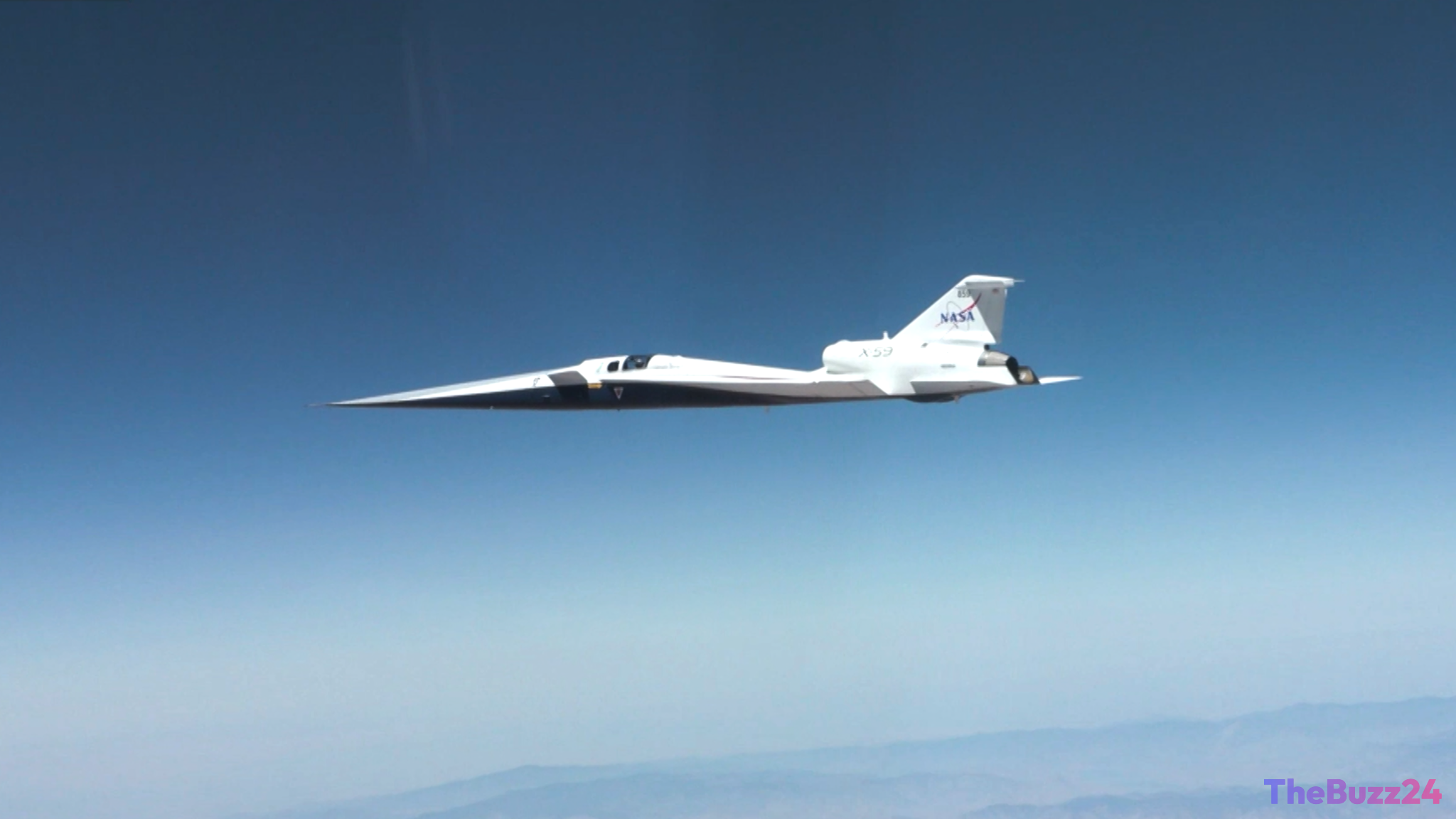
NASA’s experimental X-59 aircraft recently achieved a significant milestone, successfully breaking the sound barrier for the first time on June 5, 2026. Piloted by NASA test pilot Jim “Clue” Less, the innovative aircraft took off and landed at Edwards Air Force Base in California, reaching a top speed of approximately Mach 1.1, equivalent to 713 miles per hour. The 81-minute flight focused on evaluating the aircraft’s flying qualities at both subsonic and supersonic speeds, marking a crucial step in its development.
This groundbreaking flight is a pivotal moment for NASA’s Quesst mission, which positions the X-59 as its central component. The mission’s primary objective is to demonstrate the feasibility of quiet supersonic flight, a concept designed to mitigate the disruptive sonic boom typically associated with breaking the sound barrier. By developing technology that significantly reduces the noise signature, NASA aims to overcome a major regulatory hurdle that has historically restricted supersonic travel over populated areas.
The successful demonstration of quiet supersonic capabilities later this year is expected to pave the way for a new era of commercial air travel. The ultimate goal of the Quesst mission is to enable supersonic flights over land worldwide, dramatically cutting down travel times for passengers and transforming global connectivity. This advancement could redefine long-distance journeys, making destinations more accessible and reducing the time spent in transit.
Key Takeaways
- NASA's X-59 successfully completed its first supersonic flight on June 5, 2026, reaching Mach 1.1 (713 mph).
- The flight is a key step for the Quesst mission, aiming to demonstrate quiet supersonic technology later this year.
- The mission seeks to enable commercial supersonic flight over land globally, significantly reducing air travel times.
Editor’s Analysis & Impact
The successful supersonic flight of NASA’s X-59 marks a pivotal moment for the aviation industry, potentially ushering in a new era of air travel. For decades, the sonic boom has been a significant barrier to commercial supersonic flight over land, limiting its widespread adoption. The Quesst mission’s focus on “quiet supersonic” technology could dismantle these regulatory hurdles, opening up vast new markets for aerospace manufacturers and airlines. This breakthrough could stimulate significant investment in research and development for quieter, more efficient supersonic aircraft. The future outlook suggests a potential resurgence of supersonic passenger travel, offering dramatically reduced flight times for business and leisure travelers alike, thereby transforming global connectivity and potentially impacting economic sectors reliant on rapid transit.
Frequently Asked Questions
Q: What is the primary goal of NASA's X-59 aircraft?
A: The X-59 is an experimental aircraft designed to demonstrate quiet supersonic flight technology. Its main goal is to develop methods to significantly reduce the sonic boom, making supersonic travel over land feasible and acceptable.
Q: How fast did the X-59 fly during its first supersonic test?
A: During its inaugural supersonic flight on June 5, 2026, the X-59 reached a top speed of approximately Mach 1.1, which translates to about 713 miles per hour.
Q: What is the significance of the Quesst mission for future air travel?
A: The Quesst mission aims to gather data on quiet supersonic flight to help regulatory bodies establish new rules for supersonic travel over land. Its success could enable commercial airlines to offer faster routes worldwide, drastically cutting down travel times for passengers.
AI Disclosure: This article is based on verified data and official reports. Our Team and AI have cross-referenced every financial detail with primary sources to ensure total accuracy.
More from this Category