NASA’s Advanced INCUS Satellites Gear Up for 2027 Tropical Storm Study
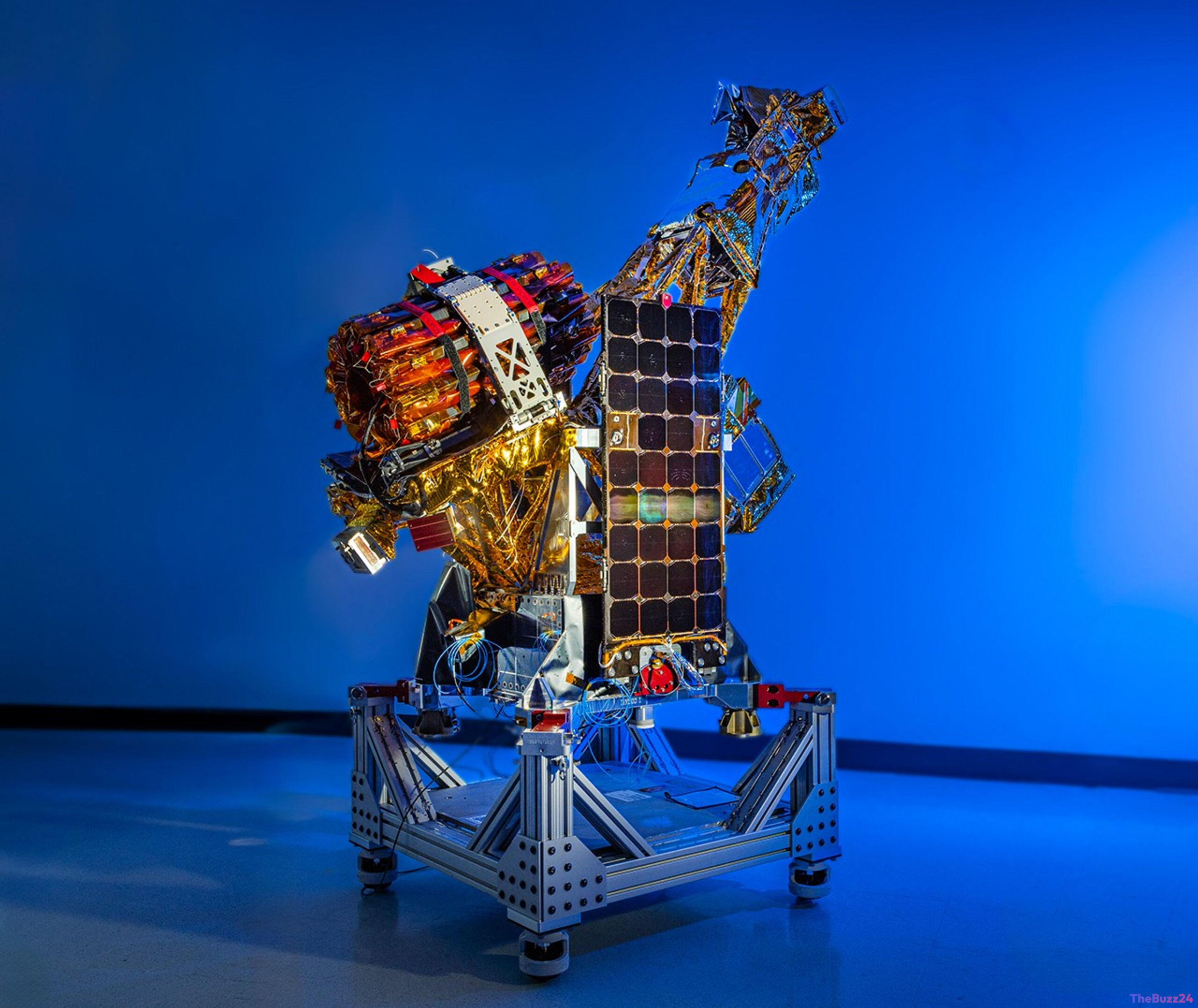
NASA’s innovative INCUS (Investigation of Convective Updrafts) mission is making significant strides toward its launch, with the three sophisticated satellites having successfully completed testing. These nearly identical spacecraft, assembled at Blue Canyon Technologies’ facility in Lafayette, Colorado, are poised to revolutionize our understanding of tropical convective storms.
The INCUS mission represents a groundbreaking effort to conduct the first-ever space-based survey focused on the dynamics of these powerful weather phenomena. The satellites will operate in a tightly coordinated formation in low Earth orbit, with precise launch sequencing designed to maximize data collection. The first and second satellites will be deployed with a 30-second interval, followed by a 90-second gap between the second and third, ensuring a comprehensive observational sweep.
Each satellite is equipped with advanced radar technology specifically engineered to measure the vertical movement of air and water vapor – a critical component known as convective mass flux – as storms develop and intensify. Notably, the central satellite will also carry a microwave radiometer, adding another layer of detailed atmospheric data. This ambitious project is slated for a 2027 launch from NASA’s Wallops Flight Facility in Virginia.
Funded under NASA’s Earth Venture Mission-3 program and spearheaded by principal investigator Sue van den Heever of Colorado State University, INCUS is a key component of NASA’s broader Earth System Observatory. This initiative aims to study Earth’s interconnected natural systems, with INCUS specifically addressing crucial requirements for observing clouds, convection, and precipitation. The mission also benefits from the FALCON initiative, a collaborative effort involving NASA centers, academic institutions, and commercial partners to deploy a fleet of atmosphere-observing satellites.
Key Takeaways
- NASA's INCUS mission, comprising three coordinated satellites, is advancing towards a 2027 launch to study tropical storms.
- The satellites will utilize radar to measure convective mass flux, providing the first space-based survey of tropical storm dynamics.
- INCUS is part of NASA's Earth System Observatory and involves collaboration with universities and commercial partners.
Editor’s Analysis & Impact
The INCUS mission signifies a critical step forward in Earth observation technology, particularly for understanding severe weather patterns. By deploying a coordinated constellation of satellites, NASA aims to gather unprecedented data on the complex dynamics of tropical convective storms. This enhanced insight is vital for improving weather forecasting models, aiding disaster preparedness, and deepening our comprehension of climate change impacts. The involvement of commercial partners and universities also highlights a growing trend towards public-private collaboration in space exploration and Earth science, potentially accelerating innovation and reducing costs for future missions.
Frequently Asked Questions
Q: What is the primary objective of the INCUS mission?
A: The primary objective of the INCUS mission is to conduct the first space-based survey of the dynamics of tropical convective storms, focusing on the vertical motion of air and water within these weather systems.
Q: When and where is the INCUS mission scheduled to launch?
A: The INCUS mission is scheduled to launch in 2027 from NASA's Wallops Flight Facility in Virginia.
Q: What technology will the INCUS satellites use to gather data?
A: Each INCUS satellite carries a radar designed to observe convective mass flux (the vertical motion of air and water). The middle satellite will also be equipped with a microwave radiometer.
AI Disclosure: This article is based on verified data and official reports. Our Team and AI have cross-referenced every financial detail with primary sources to ensure total accuracy.
More from this Category