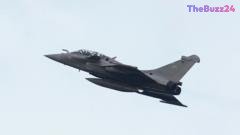
NATO Fighter Jets Intercept and Destroy Unidentified Drone Over Lithuanian Airspace
NATO fighter jets successfully intercepted and destroyed an unmanned aerial vehicle early Tuesday morning after it breached Lithuanian airspace. The unauthorized aircraft crossed the border from neighboring Belarus shortly after midnight, prompting immediate concern and defense maneuvers in the region, particularly affecting areas near Kaunas, the country’s second-largest city. Emergency alerts were subsequently triggered across the capital city of Vilnius and surrounding districts, prompting local authorities to review regional security protocols.
While the exact origin and ownership of the downed drone remain under active investigation, the incident highlights heightened vigilance along Europe’s eastern flank. Officials from the Lithuanian Ministry of Defence praised the rapid response of domestic armed forces alongside Italian pilots currently deployed under the NATO Air Defence Mission. Lithuanian leadership emphasized that continuous readiness is paramount, especially as regional tensions remain elevated due to ongoing conflicts in neighboring territories. Similar aerial incursions have raised alarm bells across Eastern Europe in recent months, with neighboring Poland also undertaking preventive aviation measures to secure its borders.
The broader defense landscape in the Baltic states has shifted significantly since the escalation of hostilities in Ukraine, leading to repeated scrambling of NATO jets to address stray or redirected drones. Electronic warfare interference has frequently been cited as a contributing factor to stray flight paths in the region. As Lithuania, Latvia, and Estonia continue to bolster their defensive capabilities under the collective security framework of the NATO alliance, incidents of this nature underscore the persistent vulnerability of European airspace to unintended spillover or targeted provocations.
Key Takeaways
- NATO fighter jets successfully shot down an unidentified drone that entered Lithuanian airspace from Belarus.
- Air raid alerts were activated across Vilnius and surrounding regions following the early-morning border breach.
- The incident highlights growing security concerns and the frequency of drone incursions along NATO's eastern flank.
Editor’s Analysis & Impact
The interception of an unidentified drone over Lithuanian airspace underscores the compounding security challenges facing NATO’s eastern member states as regional conflicts persist. Incidents involving stray or unauthorized unmanned aerial vehicles are no longer isolated anomalies; they represent a recurring operational stress test for European air defense systems. The rapid mobilization of NATO assets, including Italian allied pilots, demonstrates the tactical efficacy of the alliance’s collective air policing missions. However, frequent airspace violations risk accidental escalation and necessitate continuous investments in advanced radar technology, counter-drone systems, and electronic warfare countermeasures. For markets and industries tied to defense manufacturing, aerospace technology, and cybersecurity, these persistent geopolitical friction points will likely sustain long-term demand for robust, multi-layered national security infrastructure across the Baltic region.
Frequently Asked Questions
Q: Where did the drone enter Lithuanian airspace?
A: Authorities reported that the drone likely entered southern Lithuania from neighboring Belarus, near the city of Kaunas.
Q: How was the drone neutralized?
A: The drone was intercepted and destroyed by NATO fighter jets operating as part of the regional air defense mission.
Q: Have there been similar drone incidents in the Baltic region recently?
A: Yes, military drone incursions and stray aircraft alerts have become increasingly common across Lithuania, Poland, and other neighboring countries since the escalation of the conflict in Ukraine.
AI Disclosure: This article is based on verified data and official reports. Our Team and AI have cross-referenced every financial detail with primary sources to ensure total accuracy.
More from this Category