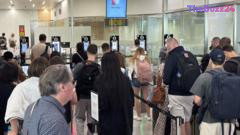
New EU Biometric Border System Sparks Warnings of Summer Travel Chaos and Massive Airport Delays
Major airlines and airport operators are sounding the alarm over potential widespread disruptions to summer travel caused by the European Union’s newly implemented digital border check system. The Entry-Exit System (EES), designed to modernize border control by registering biometric data for non-EU travelers, has reportedly triggered severe bottlenecks. Industry leaders, including representatives from Ryanair and Berlin Airport, are warning that the current infrastructure is unprepared for the peak holiday season, with some passengers already experiencing wait times of up to two hours.
The friction is particularly acute at major holiday destinations and transit hubs. Ryanair has urged European governments to suspend the rollout of the system until after the busy summer period, arguing that families should not be subjected to a half-baked process that leads to missed flights and extreme stress. Airports in popular destinations such as Tenerife, Palma, Malaga, and Milan are already reporting significant delays. The issue is compounded by technical glitches, with reports of out-of-order biometric kiosks and inconsistent software systems across different EU member states, which further slows down processing times.
The logistical challenges extend beyond airports to maritime borders. At the Port of Dover, critical French border check technology remains inactive due to unresolved technical issues, raising fears of gridlock during the peak summer weeks. While the European Commission maintains that the system is functioning smoothly in most locations and attributes delays to local staffing and infrastructure shortages, aviation trade groups warn that wait times could escalate to five hours during peak periods. As a result, airlines face the prospect of flying half-empty planes while passengers remain trapped in border queues.
Key Takeaways
- The EU's new Entry-Exit System (EES) is causing severe airport delays, with wait times reaching up to two hours for non-EU travelers.
- Aviation leaders and airport operators are calling for a temporary suspension of the system to prevent widespread chaos during the peak summer travel season.
- Technical inconsistencies and inactive biometric kiosks across different member states, including critical border points like the Port of Dover, are exacerbating the delays.
Editor’s Analysis & Impact
The rollout of the EU’s Entry-Exit System (EES) highlights a classic conflict between security modernization and operational readiness. While the transition to digital, biometric border tracking is a logical step for long-term security and efficiency within the Schengen zone, the premature deployment ahead of the peak summer travel season threatens to severely damage the aviation and tourism sectors. Airlines and airport operators are already operating under tight margins and high demand; prolonged delays of up to five hours could lead to massive financial losses from missed flights, compensation claims, and diminished consumer confidence. If European authorities do not implement pragmatic contingency measures—such as temporarily pausing checks during peak hours or standardizing the disparate software systems used by member states—the resulting travel bottlenecks could trigger a broader economic slowdown in tourism-dependent European regions.
Frequently Asked Questions
Q: What is the EU's Entry-Exit System (EES)?
A: The EES is a new digital border control system that registers biometric data, including facial images and fingerprints, of non-EU travelers entering and leaving the Schengen Area.
Q: Why is the new system causing travel delays?
A: Delays are primarily caused by technical glitches, out-of-order biometric kiosks, inconsistent software across different countries, and a lack of sufficient border personnel to handle the new processing requirements during peak travel times.
Q: Which airports and travel routes are most affected?
A: Major holiday hubs in Spain, Italy, Poland, and France, as well as key transit points like Berlin Airport and the Port of Dover, have reported significant disruptions and long queues.
AI Disclosure: This article is based on verified data and official reports. Our Team and AI have cross-referenced every financial detail with primary sources to ensure total accuracy.
More from this Category