New York Fed President Williams Projects End to Rate Hikes by 2027, Contrasting Trader Bets
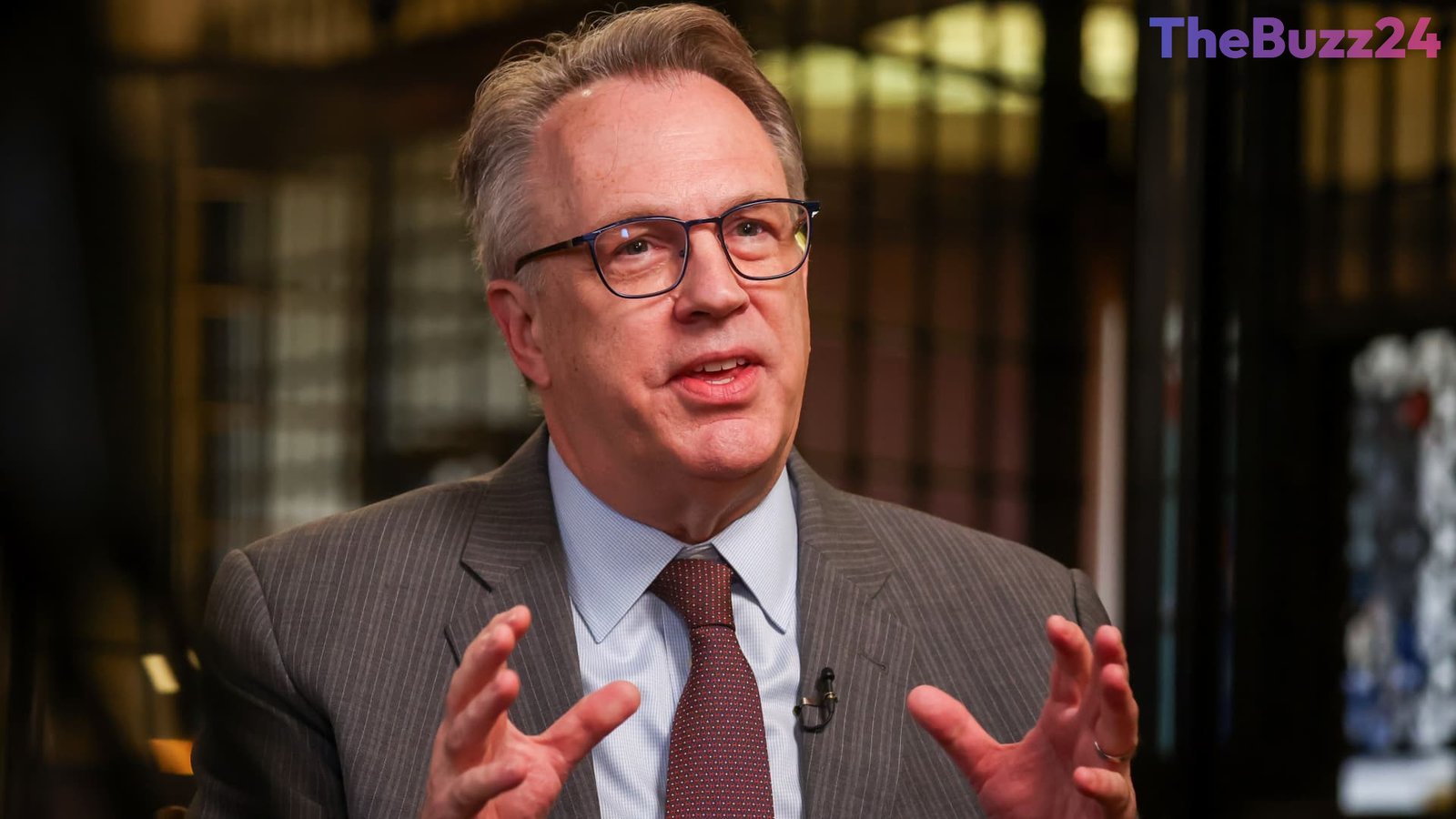
New York Federal Reserve President John Williams has indicated that he foresees no need for additional interest rate increases in 2027, following what he expects to be one more hike this year. This forward-looking assessment places Williams at odds with prevailing market sentiment, where traders are largely anticipating further tightening by the central bank in the coming years.
Williams elaborated on his perspective, suggesting that the Federal Reserve should prioritize “underlying trends” in inflation, rather than being overly swayed by transient price shocks, such as those observed in energy markets or related to artificial intelligence. He acknowledged the upward pressure from energy prices but noted their potential to offer annual relief in the future. Furthermore, Williams believes the impact of tariffs on price growth has largely materialized. He projects that overall inflation for 2027 will hover “near” the Fed’s 2% annual target, citing persistent disinflationary forces at play and a significant expected decline in inflation next year.
Despite Williams’ position, which aligns with a majority of Federal Open Market Committee (FOMC) members, a notable divergence exists within the broader economic landscape. Futures traders, for instance, are pricing in a high probability—around 90%—that the Fed’s overnight rate will be at least half a percentage point higher by the end of 2027 compared to current levels. Moreover, eight out of eighteen FOMC members who provided a rate forecast for 2027 anticipate more than one additional increase after this year. The Federal Reserve implemented its first rate increase since 2023 in September and has signaled plans for another hike in upcoming meetings this year.
Williams, a permanent voting member of the FOMC, underscored the dynamic nature of economic forecasting, stating that the economy is influenced by numerous factors and requires continuous monitoring of incoming data. His cautious outlook emphasizes a data-dependent approach as the central bank navigates future monetary policy decisions.
Key Takeaways
- New York Fed President John Williams anticipates no further interest rate hikes in 2027 after one more increase this year.
- This outlook contrasts with market expectations, where traders are largely betting on additional rate increases by the Federal Reserve in 2027.
- Williams bases his view on underlying disinflationary trends and expects inflation to approach the Fed's 2% target by 2027, despite current energy price pressures.
Editor’s Analysis & Impact
The divergence between New York Fed President John Williams’ outlook and market expectations introduces a layer of uncertainty into the financial landscape. If Williams’ more dovish stance proves accurate, it could signal a less aggressive tightening cycle than currently priced in by futures markets, potentially leading to a rally in bond markets and providing support for equity valuations. Conversely, if the market’s more hawkish view prevails, it could imply a longer period of higher interest rates, impacting corporate borrowing costs and economic growth. This split view highlights the ongoing debate within the Federal Reserve regarding the persistence of inflation and the appropriate path for monetary policy, underscoring the critical importance of upcoming economic data and the Fed’s collective communication for investor sentiment and market stability.
Frequently Asked Questions
Q: What is John Williams' current outlook on interest rates?
A: John Williams, President of the New York Federal Reserve, believes that after one more interest rate hike this year, there will be no need for additional increases in 2027.
Q: Why does Williams' view differ from market expectations?
A: Williams emphasizes focusing on "underlying trends" and disinflationary forces, expecting inflation to approach the Fed's 2% target by 2027. Market expectations, however, suggest a higher probability of further rate hikes in 2027, reflecting a more hawkish outlook on inflation and economic conditions.
Q: What are the "disinflationary forces" Williams refers to?
A: Williams points to factors such as the potential for energy prices to provide annual relief in the future and the belief that the effects of tariffs on price growth have largely been absorbed, contributing to a general trend of slowing price increases.
AI Disclosure: This article is based on verified data and official reports. Our Team and AI have cross-referenced every financial detail with primary sources to ensure total accuracy.
More from this Category