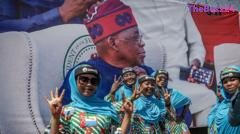
Nigeria’s President Tinubu Unveils Re-election Manifesto Amid Economic Strain
As Nigeria approaches its January 2027 general election, President Bola Ahmed Tinubu has officially launched his re-election manifesto, titled ‘From Reform to Prosperity.’ The platform outlines an ambitious roadmap aimed at stabilizing the nation’s economy, with targets to achieve 6% annual growth by 2031, construct 200,000 affordable homes, and bolster national security through the recruitment of 78,000 additional personnel. This policy document serves as a cornerstone for the All Progressives Congress (APC) as it seeks to regain public confidence following a first term defined by aggressive, albeit controversial, economic restructuring.
President Tinubu’s tenure has been marked by significant fiscal shifts, most notably the removal of fuel subsidies and the harmonization of foreign exchange rates. While these measures have received praise from international financial institutions for improving macroeconomic stability and reducing headline inflation from a 2024 peak of 34% to 14% by late 2026, the domestic impact has been severe. Many Nigerian households continue to struggle with the rising cost of living, as the price of essential staples has surged, leaving a large portion of the population feeling the weight of austerity measures.
Opposition candidates, including Peter Obi and former Vice-President Atiku Abubakar, are positioning themselves to challenge the incumbent by focusing on national unity and the reversal of unpopular policies. Atiku has explicitly campaigned on the restoration of fuel subsidies, though analysts warn that Nigeria’s current fiscal constraints—burdened by significant debt servicing—make such a move economically precarious. Meanwhile, the administration is attempting to mitigate voter dissatisfaction through targeted intervention packages for small businesses and manufacturers.
Beyond economic policy, the election will likely hinge on the government’s ability to address deep-seated insecurity and infrastructure deficits, particularly in the power sector. With the nation’s electricity generation capacity remaining far below its potential due to aging infrastructure and funding gaps, the promise of increased power output remains a critical test for the administration. As the campaign season intensifies, the APC faces the challenge of proving that its long-term reforms can eventually translate into tangible relief for the average citizen, while the opposition must overcome historical regional divisions to mount a unified front.
Key Takeaways
- President Tinubu’s re-election manifesto targets 6% annual economic growth by 2031 and includes plans for 200,000 new homes and 78,000 additional security personnel.
- While macroeconomic indicators like inflation have improved, the removal of fuel subsidies has caused significant cost-of-living challenges for Nigerian families.
- The 2027 election will feature a competitive field, with opposition candidates Peter Obi and Atiku Abubakar challenging the incumbent on issues of security, national unity, and economic relief.
Editor’s Analysis & Impact
The upcoming Nigerian election represents a critical juncture for the country’s economic trajectory. President Tinubu’s administration is betting that the ‘painful’ reforms implemented during his first term will serve as the foundation for long-term prosperity, a narrative that aligns with international investor sentiment but clashes with the immediate reality of the electorate. The primary risk for the incumbent is the ‘cost-of-living’ fatigue, which historically punishes incumbents in emerging markets. If the opposition can successfully coalesce around a unified platform, they could capitalize on this widespread dissatisfaction. However, the structural constraints—specifically the fiscal inability to return to heavy subsidies and the persistent insecurity in the north—limit the policy space for any candidate. The outcome will likely depend on whether voters prioritize the promise of future stability over the current economic hardship.
Frequently Asked Questions
Q: What are the main economic goals in President Tinubu's 2027 manifesto?
A: The manifesto aims to achieve 6% annual economic growth by 2031, build 200,000 affordable homes, and increase electricity generation toward 10,000MW.
Q: Why is the removal of fuel subsidies a central issue in the upcoming election?
A: The removal of fuel subsidies led to a sharp increase in the cost of living and the price of essential goods, making it a primary point of contention for opposition candidates who argue that the policy has caused undue hardship for Nigerian families.
AI Disclosure: This article is based on verified data and official reports. Our Team and AI have cross-referenced every financial detail with primary sources to ensure total accuracy.
More from this Category