North America Chokes on Wildfire Smoke as Blazes Rage Across Canada
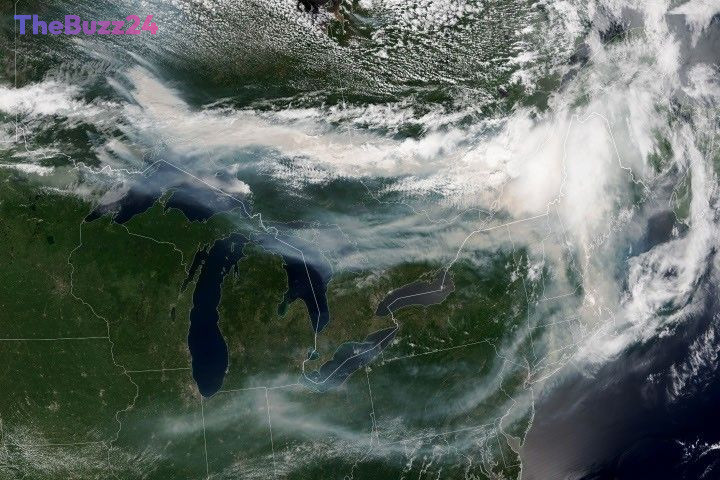
A significant surge in wildland fire activity across Canada during July 2026 blanketed large swaths of North America in smoke, leading to widespread air quality alerts. The blazes, exacerbated by typical seasonal lightning ignitions, sent plumes of particulate matter drifting across both the United States and Canada, impacting millions of residents.
The smoke, characterized by its distinct yellow, orange, and brown hues due to brown carbon aerosols, posed a considerable health risk. This organic component of smoke is a major contributor to fine particulate matter (PM2.5) pollution, known to worsen existing cardiovascular and respiratory conditions. An animation tracking the movement of this smoke from July 14 to July 20, 2026, revealed its extensive reach.
By mid-July, numerous fires, including over 180 in Ontario and several in northern Minnesota, were actively burning. Prevailing winds carried the smoke southeastward, causing hazy skies and declining air quality from southern Ontario down into the U.S. Upper Midwest and Northeast. Major cities such as Detroit experienced hazardous air quality for consecutive days, while Toronto, Chicago, New York City, and Washington, D.C., reported conditions ranging from unhealthy to hazardous.
As the week progressed, the smoke continued to affect air quality in downwind regions, including the Great Lakes area. While some areas in the East saw improvements as storms helped clear the air, new fires emerging in the Pacific Northwest began to degrade air quality in that region. The ability to distinguish between organic carbon from wildfires and human-made sources, thanks to recent model updates, provided a clearer picture of the pollution’s origins.
Key Takeaways
- Canadian wildfires in July 2026 produced extensive smoke plumes that significantly impacted air quality across North America.
- Brown carbon aerosols in the smoke contributed to PM2.5 pollution, posing health risks for respiratory and cardiovascular conditions.
- Major U.S. and Canadian cities experienced unhealthy to hazardous air quality due to the wildfire smoke.
Editor’s Analysis & Impact
The recurring and widespread nature of these smoke events underscores the growing impact of climate change on wildfire seasons. Increased frequency and intensity of wildfires pose significant public health challenges, straining healthcare systems and impacting daily life in affected regions. This situation highlights the urgent need for enhanced wildfire management strategies, improved air quality monitoring, and potentially, policy changes addressing the root causes of climate change. The economic implications, from tourism disruptions to healthcare costs, are substantial and likely to grow if such events become more common.
Frequently Asked Questions
Q: What are brown carbon aerosols?
A: Brown carbon aerosols are organic compounds emitted from burning biomass, such as wildfires. They contribute to the visible color of smoke plumes and are a component of fine particulate matter (PM2.5) pollution, which can harm human health.
Q: Which major cities were affected by the smoke?
A: Cities including Detroit, Toronto, Chicago, New York City, and Washington, D.C., experienced significant air quality degradation, with some reporting hazardous conditions.
Q: How is wildfire smoke tracked?
A: Sophisticated models like NASA's GEOS system, which assimilate data from satellites, aircraft, and ground-based sensors, are used to track smoke plumes. These models incorporate meteorological data like wind and temperature to predict the smoke's movement and behavior.
AI Disclosure: This article is based on verified data and official reports. Our Team and AI have cross-referenced every financial detail with primary sources to ensure total accuracy.
More from this Category