A History of Friction: The Contentious Relationship Between Donald Trump and Jerome Powell
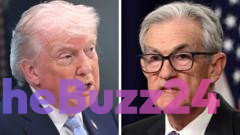
The professional relationship between President Donald Trump and Federal Reserve Chair Jerome Powell has been defined by persistent public hostility and fundamental disagreements over monetary policy. Since returning to the White House, Trump has frequently criticized Powell for the pace of interest rate adjustments, often employing inflammatory rhetoric to express his dissatisfaction. These public outbursts have ranged from questioning Powell’s competence to labeling him with derogatory nicknames, marking a significant departure from the traditional decorum usually observed between the executive branch and the nation’s central bank.
Despite Trump’s current disdain, the history of their professional association is marked by irony. It was Trump himself who originally appointed Powell to lead the Federal Reserve in 2017, praising him at the time as a strong and steady leader. The dynamic shifted dramatically as the Fed maintained a cautious approach to interest rates, prioritizing data-driven decisions regarding inflation and trade tariffs over the political timelines favored by the administration. This tension culminated in public confrontations, including a notable dispute over the budget and management of Federal Reserve building renovations, where the two leaders openly contradicted one another.
The conflict reached a critical juncture when the Department of Justice initiated an investigation into Powell’s testimony regarding agency infrastructure projects. Powell characterized the move as an unprecedented attempt to exert political pressure on the central bank’s independence. While the investigation was eventually dropped and the path cleared for Kevin Warsh to succeed Powell, the episode highlighted deep-seated concerns among lawmakers regarding the sanctity of the Federal Reserve’s autonomy. The saga underscores the ongoing struggle to maintain a firewall between political objectives and the technical management of the American economy.
Key Takeaways
- President Trump and Jerome Powell have maintained a highly adversarial relationship, characterized by public insults and disagreements over interest rate policy.
- The tension escalated into a legal dispute involving a Department of Justice investigation into Powell's testimony, which critics viewed as a threat to the Federal Reserve's independence.
- Despite the current friction, Trump was the original architect of Powell's appointment to the Federal Reserve chair position in 2017.
Editor’s Analysis & Impact
The public feud between Donald Trump and Jerome Powell serves as a case study in the fragility of institutional norms. By openly attacking the head of the central bank, the administration has signaled a desire for greater executive influence over monetary policy, which historically remains independent to prevent short-term political gains from undermining long-term economic stability. The market impact of such rhetoric is significant; investors rely on the predictability and independence of the Fed to manage inflation and growth. As the transition to a new Fed chair begins, the broader implication is a potential shift in how the central bank communicates its autonomy. If the market perceives that the Fed is becoming an extension of the executive branch, it could lead to increased volatility and a loss of confidence in the dollar’s long-term stability.
Frequently Asked Questions
Q: Why did Donald Trump criticize Jerome Powell?
A: Trump frequently criticized Powell for not lowering interest rates fast enough and for the Fed's cautious approach to inflation, which Trump felt hindered his economic agenda.
Q: What was the nature of the investigation into Jerome Powell?
A: The Department of Justice opened a probe into testimony Powell provided to a Senate committee regarding the costs and management of Federal Reserve building renovations. The investigation was later dropped.
Q: Who is set to replace Jerome Powell as Fed chair?
A: Kevin Warsh has been nominated by President Trump to succeed Jerome Powell as the chair of the Federal Reserve.
AI Disclosure: This article is based on verified data and official reports. Our Team and AI have cross-referenced every financial detail with primary sources to ensure total accuracy.
More from this Category