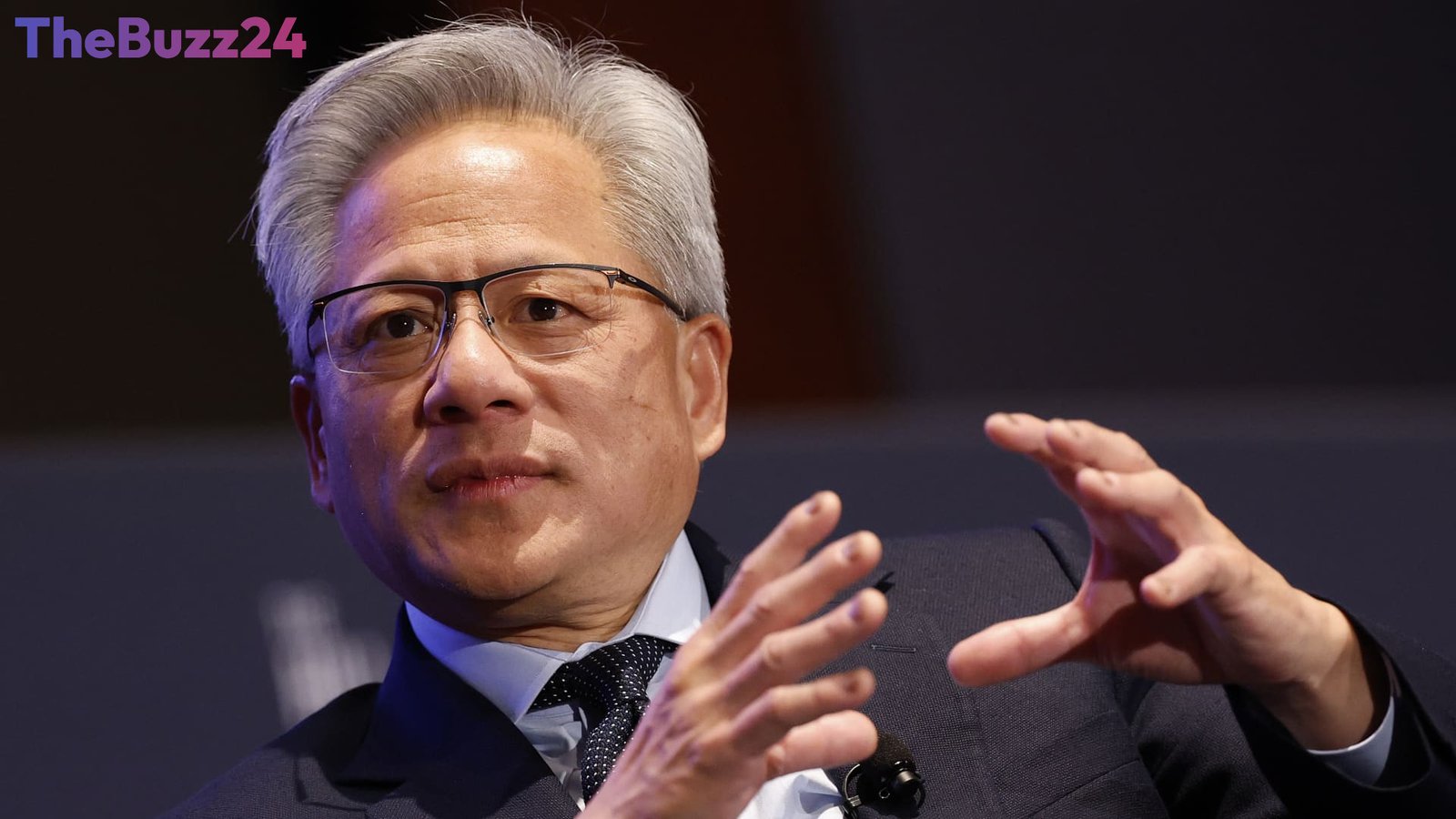
Nvidia’s Stock Tumbles Amid CEO Departure: Market Pros Weigh In on Buying the Dip
Nvidia, a titan in the semiconductor industry and a key player in the artificial intelligence revolution, is experiencing a significant stock price decline following the unexpected resignation of its co-founder, president, and CEO, Jensen Huang. The company announced Huang’s departure on Thursday, and the market reacted swiftly, with shares dropping over 5% by mid-afternoon. This downturn places the chipmaking giant’s stock approximately 31% below its recent peak on October 6.
The departure of Jensen Huang, who has led Nvidia for 33 years and overseen its transformation into a company valued at roughly $4 trillion, comes amidst reports of his alleged romantic ties to an individual suspected by U.S. intelligence of being a Chinese spy. This development has understandably unsettled investors, raising concerns about leadership stability and the company’s future trajectory.
Industry analysts are divided on the implications. Some, like Michael Monaghan, portfolio manager of the Founders 100 ETF, argue that the departure of a “generational founder” like Huang creates a void that is difficult, if not impossible, to fill. His fund, which focuses on founder-led companies, is mandated to divest under such circumstances. However, Monaghan also acknowledges that for other investors, this price drop represents a potential “buying opportunity” for a fundamentally strong company.
Experts suggest that the strategy of “buying the dip”—investing in a stock after a price decline in anticipation of a rebound—requires careful consideration. Tom Hainlin, national investment strategist at U.S. Bank Asset Management, advises investors to re-evaluate their initial investment thesis. If the reasons for buying or holding the stock remain valid despite the recent downturn, and if the stock is part of a diversified portfolio, buying dips can be a sound strategy, especially given the historical upward trend of the broader stock market. However, for individual stocks, a significant slide necessitates a thorough re-examination of the company’s long-term prospects and its position within one’s portfolio.
Key Takeaways
- Nvidia's stock price has fallen significantly following the resignation of CEO Jensen Huang.
- The departure raises questions about leadership succession and potential impacts on the company's future growth.
- Market professionals are debating whether the stock's decline presents a 'buying the dip' opportunity or a signal of deeper issues.
Editor’s Analysis & Impact
Jensen Huang’s departure marks a pivotal moment for Nvidia, a company that has become synonymous with the AI boom. While the immediate stock reaction reflects investor anxiety over losing a visionary leader, the long-term impact remains to be seen. The semiconductor industry, particularly the segment powering AI, continues to exhibit robust demand, which could provide a floor for Nvidia’s stock. However, the challenge of replacing a founder with such a profound influence on a company’s vision and execution cannot be understated. Investors will be closely watching Nvidia’s upcoming earnings reports and its ability to maintain its competitive edge and growth trajectory without Huang at the helm. The situation underscores the inherent risks in investing in founder-led companies and the importance of rigorous due diligence.
Frequently Asked Questions
Q: Why has Nvidia's stock price fallen?
A: Nvidia's stock price has fallen significantly following the announcement of CEO and co-founder Jensen Huang's resignation. This news, coupled with reports concerning his personal life, has created investor uncertainty.
Q: What does 'buying the dip' mean in investing?
A: 'Buying the dip' refers to the investment strategy of purchasing an asset after its price has declined, with the expectation that it will rebound. It's a bet on the underlying value of the asset despite short-term negative price movement.
Q: What are the potential long-term implications of Jensen Huang's departure for Nvidia?
A: The long-term implications are uncertain. While Huang's leadership has been instrumental in Nvidia's success, particularly in the AI sector, the company faces the challenge of maintaining its growth and innovation without his direct guidance. The continued strong demand for AI-related chips may mitigate some of these concerns.
AI Disclosure: This article is based on verified data and official reports. Our Team and AI have cross-referenced every financial detail with primary sources to ensure total accuracy.
More from this Category