NY Fed President Signals Potential for Year-End Rate Hike
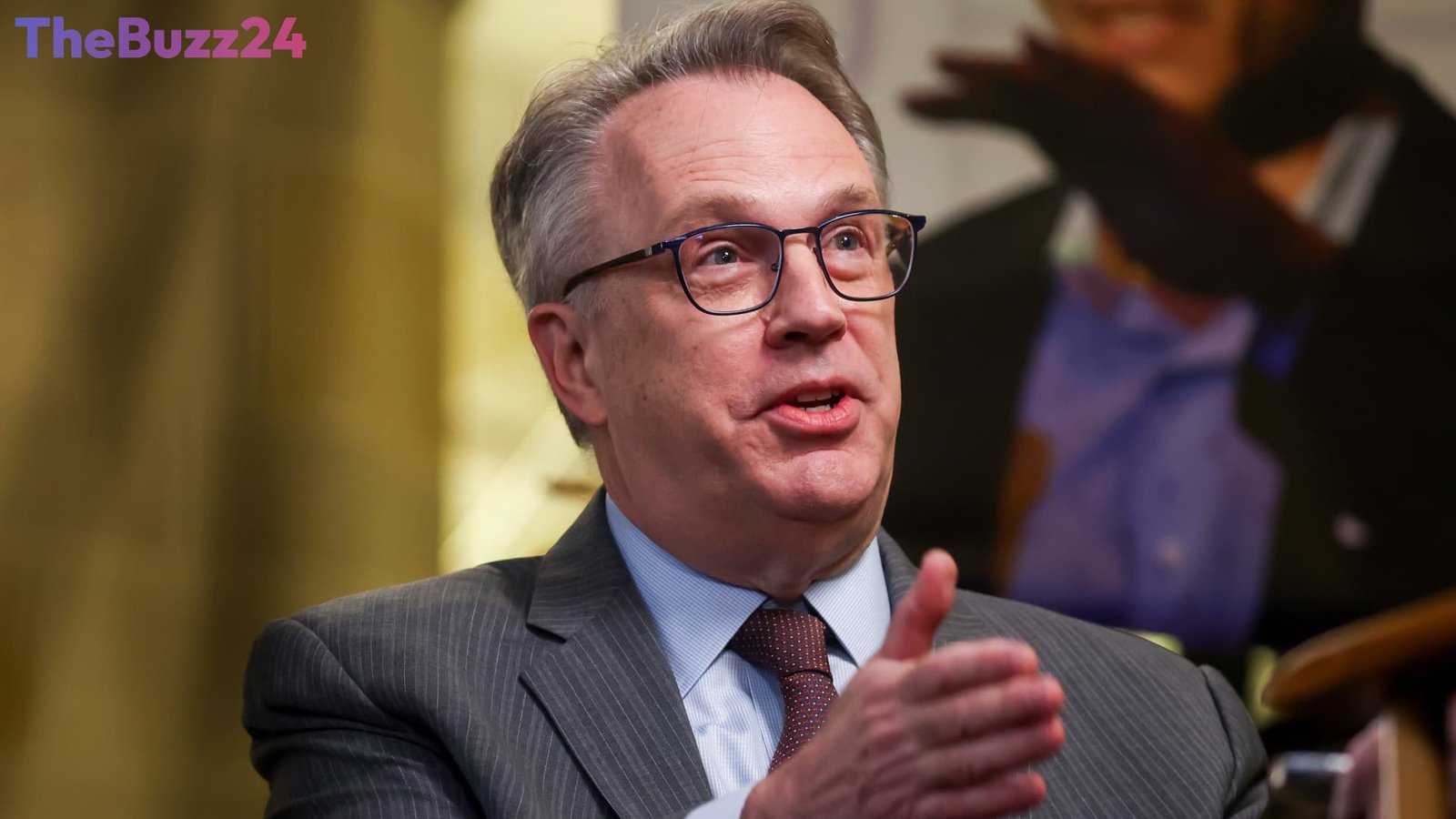
New York Federal Reserve President John Williams indicated on Thursday that another increase in interest rates by the end of the year is a “reasonable” expectation. Speaking at the London Macro Policy Forum, Williams suggested that market sentiment aligns with the possibility of further tightening.
Williams elaborated that the Federal Reserve is moving away from explicit forward guidance, a strategy where policymakers directly signal future intentions. Instead, the central bank will now focus on assessing incoming economic data to inform its decisions on future monetary policy moves. This approach emphasizes flexibility and responsiveness to evolving economic conditions.
The Federal Reserve recently implemented a quarter-percentage-point rate hike, bringing its benchmark interest rate to a target range of 3.75% to 4%. This move, coupled with recent commentary from other Fed officials, has bolstered market expectations for an additional hike in the near future. Data indicates a resilient U.S. economy, though inflation remains above the Fed’s target, prompting ongoing consideration of further policy adjustments.
Market indicators reflect this sentiment, with tools like CME Group’s FedWatch showing a significant probability assigned to an October rate increase. This expectation is influenced by recent economic data suggesting continued economic strength and persistent inflation above the desired levels. Other Federal Reserve officials, including Boston Fed President Susan Collins and Governor Michael Barr, have also recently voiced concerns about inflation and the potential need for further policy actions.
Key Takeaways
- New York Fed President John Williams deems another interest rate hike by year-end a 'reasonable' possibility.
- The Federal Reserve is shifting away from explicit forward guidance, prioritizing data-driven decisions.
- Market expectations, supported by recent economic data and Fed official commentary, lean towards a potential rate hike in the coming months.
Editor’s Analysis & Impact
The comments from New York Fed President John Williams underscore the ongoing hawkish stance within the Federal Reserve, signaling a continued focus on combating inflation. The shift away from explicit forward guidance suggests a more agile monetary policy approach, allowing the Fed to react more dynamically to economic indicators. This data-dependent strategy introduces a degree of uncertainty for markets, which will be closely scrutinizing upcoming economic reports, particularly on inflation and employment. The potential for a year-end rate hike, if realized, could further impact borrowing costs and economic growth, highlighting the delicate balancing act the Fed faces between price stability and economic expansion.
Frequently Asked Questions
Q: What is 'forward guidance' in the context of monetary policy?
A: Forward guidance refers to communication from a central bank about its future policy intentions, such as the likely path of interest rates. The Federal Reserve is moving away from explicitly stating these intentions.
Q: Why is the Federal Reserve considering another rate hike?
A: The Federal Reserve is considering another rate hike primarily to combat inflation, which remains above its target. Recent economic data suggests the U.S. economy is strong, providing room for further tightening without immediately risking a recession.
Q: What does it mean for markets if the Fed raises rates again?
A: A further rate hike typically leads to higher borrowing costs for consumers and businesses, potentially slowing down economic activity. It can also influence investment decisions, making fixed-income investments more attractive relative to riskier assets.
AI Disclosure: This article is based on verified data and official reports. Our Team and AI have cross-referenced every financial detail with primary sources to ensure total accuracy.
More from this Category