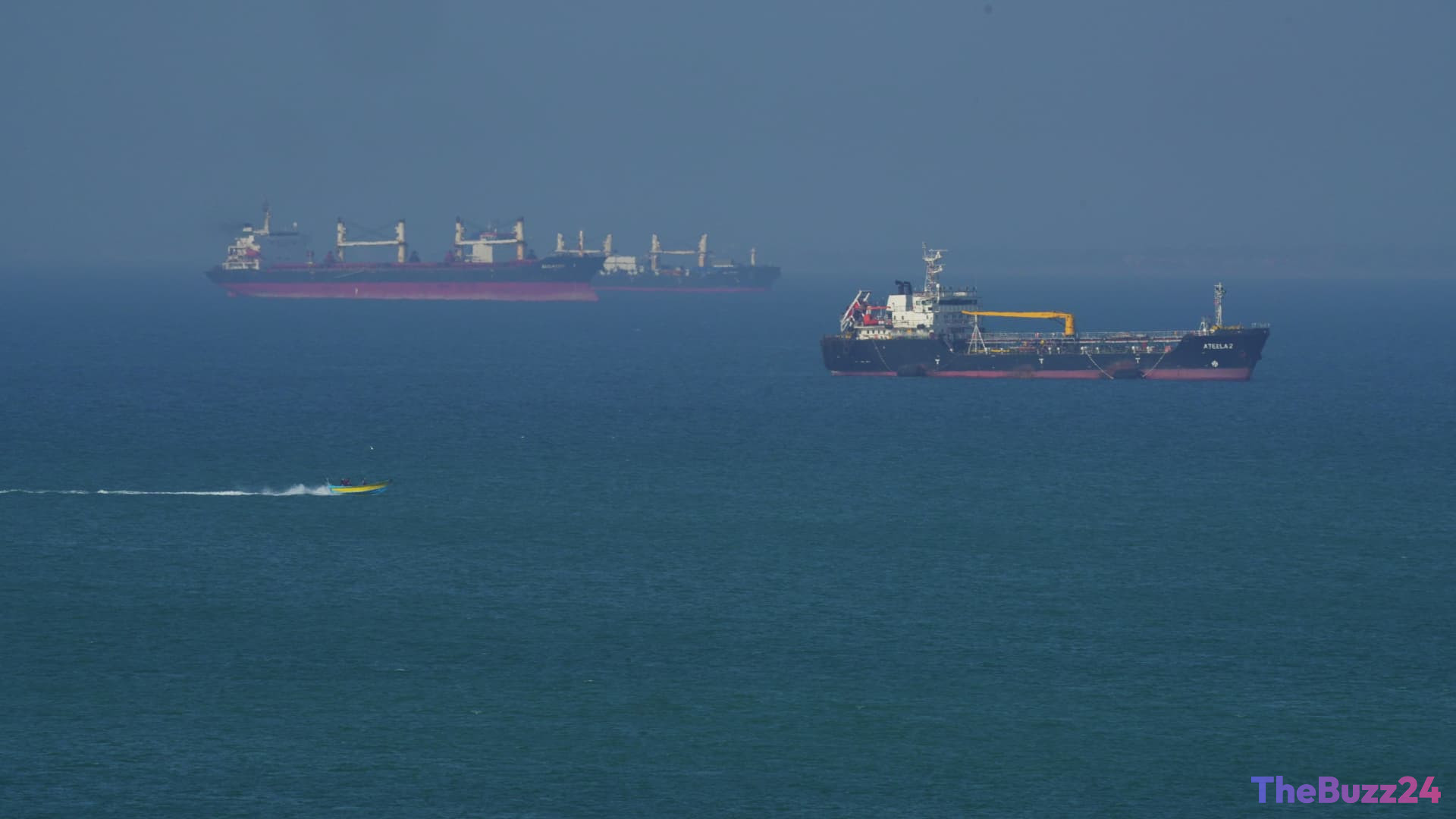
Trump Launches ‘Project Freedom’ to Escort Stranded Ships in Blockaded Strait of Hormuz as Oil Prices Dip
Global oil markets experienced volatile trading on Monday as investors reacted to U.S. President Donald Trump’s announcement of a major military initiative to rescue stranded civilian vessels in the blockaded Strait of Hormuz. Dubbed “Project Freedom,” the operation aims to escort non-conflict-affiliated commercial ships out of the critical maritime chokepoint, which has been largely paralyzed by the ongoing conflict involving Iran. Following the announcement, international benchmark Brent crude dipped 0.35% to $107.77 per barrel, while U.S. West Texas Intermediate (WTI) fell 0.57% to $101.31 per barrel.
The Strait of Hormuz, which historically facilitated the transit of approximately 20% of the world’s petroleum supplies, has seen maritime traffic grind to a near-total halt. The persistent dangers of the region were underscored on Monday when the United Kingdom Maritime Trade Operations reported that a commercial tanker was struck by projectiles north of Fujairah in the United Arab Emirates. In response to these escalating threats, the U.S. Central Command confirmed that “Project Freedom” will deploy significant military assets, including guided-missile destroyers, over 100 aircraft, multi-domain unmanned systems, and 15,000 service members to secure safe passage for civilian shipping.
Simultaneously, energy traders are weighing the impact of a recent OPEC+ decision to boost oil production by 188,000 barrels per day. This supply adjustment marks the cartel’s first major policy move since the United Arab Emirates officially exited the alliance. While the production increase offers some relief, market analysts warn that the broader macroeconomic outlook remains fragile. Financial experts caution that if geopolitical tensions keep Brent crude sustained at or above $125 per barrel, the global economy could face a severe risk of sliding into a recession.
Key Takeaways
- U.S. President Donald Trump has initiated 'Project Freedom,' deploying 15,000 service members and naval assets to escort stranded civilian ships through the blockaded Strait of Hormuz.
- Oil prices saw a slight decline, with Brent crude trading around $107.77 and WTI at $101.31, amid choppy market conditions and a newly announced OPEC+ production hike of 188,000 barrels per day.
- A commercial tanker was hit by projectiles near Fujairah, UAE, highlighting the severe security risks in the region that threaten to push oil prices toward recession-inducing levels of $125 per barrel.
Editor’s Analysis & Impact
The launch of ‘Project Freedom’ represents a high-stakes geopolitical gamble by the United States to stabilize global energy supply chains. By deploying substantial military assets to the Strait of Hormuz, the U.S. aims to restore confidence in maritime shipping and alleviate the supply bottlenecks that have kept oil prices elevated. However, the direct involvement of U.S. military forces in a highly volatile conflict zone carries the risk of escalation, which could trigger sudden price spikes rather than stabilization. Furthermore, while the modest OPEC+ production increase of 188,000 barrels per day provides some psychological relief to the market, it may not be sufficient to offset the structural disruptions caused by the blockade. If military escorts fail to guarantee safe passage and Brent crude breaches the $125 threshold, the resulting inflationary pressures could severely dampen global economic growth and trigger a widespread recession.
Frequently Asked Questions
Q: What is 'Project Freedom'?
A: 'Project Freedom' is a U.S. military-led initiative announced by President Donald Trump to escort and safely extract stranded civilian cargo ships from the blockaded Strait of Hormuz. The operation involves guided-missile destroyers, over 100 aircraft, and 15,000 military personnel.
Q: Why is the Strait of Hormuz so important to global markets?
A: The Strait of Hormuz is a vital maritime chokepoint that historically handled about one-fifth of the world's total petroleum transit. Its closure or blockade severely disrupts global oil distribution, leading to supply shortages and volatile energy prices.
Q: How is OPEC+ responding to the current energy crisis?
A: OPEC+ has agreed to increase oil production by 188,000 barrels per day. This decision marks the group's first major policy action following the departure of the United Arab Emirates from the oil cartel.
AI Disclosure: This article is based on verified data and official reports. Our Team and AI have cross-referenced every financial detail with primary sources to ensure total accuracy.
More from this Category