U.S. Commits $3 Billion to Critical Minerals to Fortify Defense Supply Chains and Energy Security
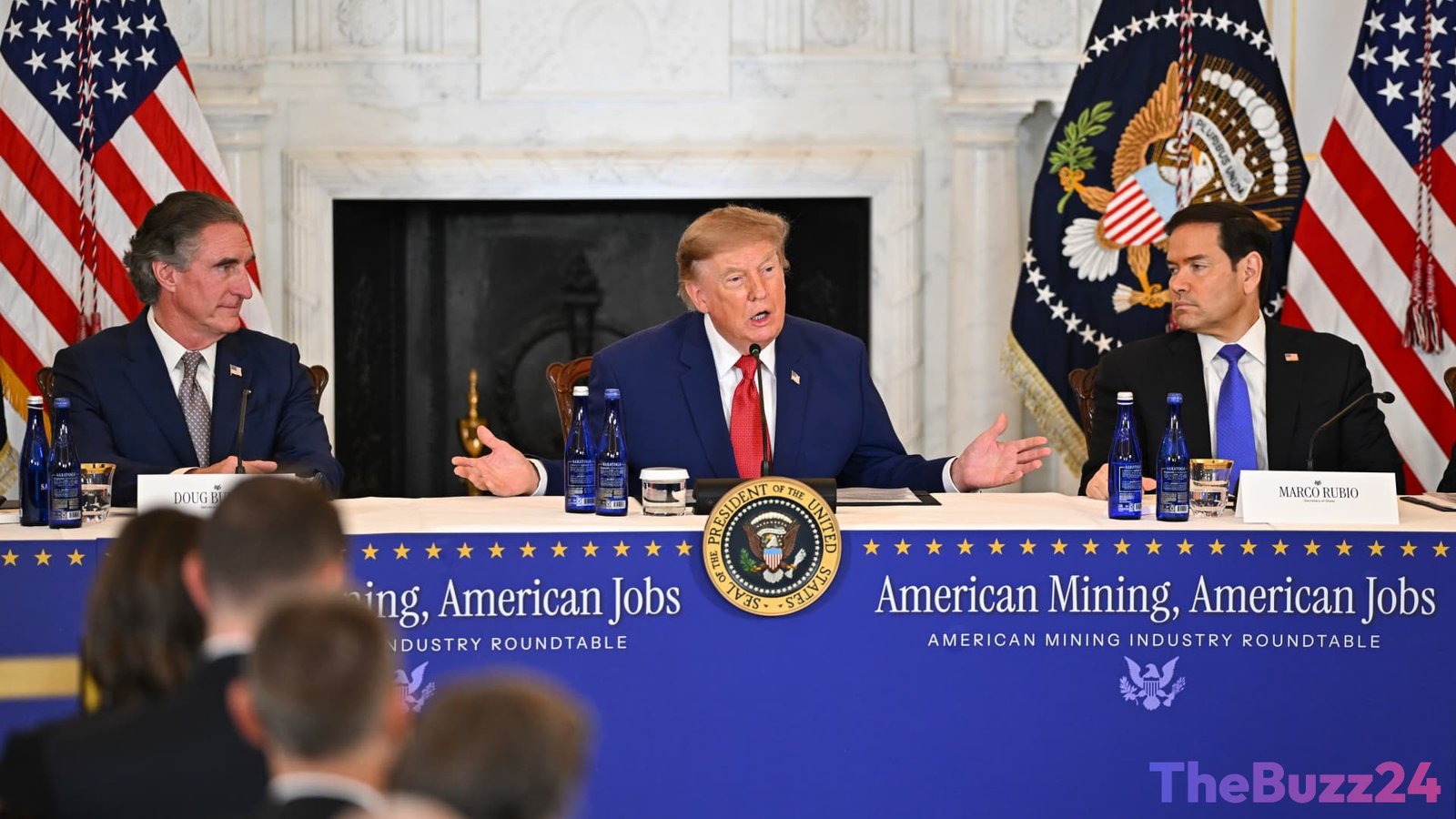
In a major strategic initiative to safeguard national defense assets and industrial independence, the U.S. government has announced a $3 billion investment package dedicated to critical minerals and battery technology. Speaking before hundreds of mining industry executives, academic leaders, and government officials at the State Department, President Donald Trump outlined plans to revitalize the domestic mining sector and position the nation as an international minerals power. The multi-billion-dollar effort aims to eliminate foreign reliance on critical raw materials—particularly from China—while ramping up local refining and processing capability for defense hardware and clean energy products.
A significant share of the newly announced financial support will flow through targeted federal backing and conditional loans. The Department of Defense’s Office of Strategic Capital is extending a $1.4 billion loan to Sila Nanotechnologies for battery materials, $400 million to Sunrise Energy Metals for scandium development, and $150 million to Niron Magnetics. Concurrently, the U.S. Export-Import Bank is providing $58 million to Westwater Resources, Global Advanced Metals, and 5E Advanced Materials. These investments focus heavily on essential components needed by major defense contractors, such as Lockheed Martin, as well as industrial giants like General Motors.
The push to secure vital raw materials comes amid mounting defense concerns, as ongoing military engagements in the Middle East have rapidly depleted stockpiles of advanced munitions and air-defense interceptors. Key elements including germanium, tungsten, rare earths, and scandium are mandatory for manufacturing precision-guided weapons, fighter jets, infrared sensors, and armored vehicles. To address long-term workforce gaps in the sector, federal agencies are also committing nearly $180 million toward educational programs, setting a strategic target to double the number of graduates from U.S. mining universities over the next two years.
This funding expansion aligns with a broader national strategy that includes a $12 billion federal minerals stockpile and direct public sector investments in domestic processing infrastructure. Officials argue that state support is necessary to offset decades of foreign dominance in global mineral processing and refining. International allies have also welcomed the move, with Australian officials praising joint efforts on high-grade scandium projects designed to bolster mutual aerospace and defense capabilities.
Key Takeaways
- The U.S. government is deploying $3 billion in loans and grants to strengthen domestic mining and critical mineral refining.
- Stockpile depletion from recent Middle East military actions highlighted strategic vulnerabilities in precision munition supply chains.
- Nearly $180 million in grants will go toward domestic mining universities to double the graduate workforce within two years.
Editor’s Analysis & Impact
This $3 billion federal commitment represents an aggressive shift toward state-supported industrial policy designed to break foreign monopoly over strategic raw materials. By deploying defense-oriented financing mechanisms through the Office of Strategic Capital and the Export-Import Bank, the administration is derisking capital-intensive mining and processing operations for private enterprise. Geopolitical tensions have exposed vulnerable bottlenecks in defense manufacturing, making supply chain independence an urgent national security priority. While direct loans to companies like Sila Nanotechnologies and MP Materials will accelerate short-term development, domestic environmental permitting timelines and severe skilled labor shortages remain key hurdles. The concurrent funding for academic mining programs acknowledges this human capital deficit, though building out fully integrated processing capacity will take years to reach complete industrial capacity.
Frequently Asked Questions
Q: Why is the U.S. investing heavily in domestic critical minerals?
A: The investment seeks to secure critical materials needed for national defense systems and commercial technologies while reducing strategic dependence on foreign supply chains, particularly China.
Q: Which companies are receiving major federal funding?
A: Key recipients of conditional loans and grants include Sila Nanotechnologies ($1.4 billion), Sunrise Energy Metals ($400 million), Niron Magnetics ($150 million), and Westwater Resources, alongside other mineral developers.
Q: How does the initiative address workforce shortages in the mining industry?
A: The Department of Energy and the Pentagon are deploying nearly $180 million to U.S. mining schools to expand academic programs and double the number of mining graduates within two years.
AI Disclosure: This article is based on verified data and official reports. Our Team and AI have cross-referenced every financial detail with primary sources to ensure total accuracy.
More from this Category