OpenAI Enhances ChatGPT with Business Profiles, Mimicking Google’s Approach
OpenAI is introducing a significant update to ChatGPT, aiming to transform it into a more comprehensive platform for business discovery and interaction. The company has launched a beta version of its “Business Hub,” a new feature designed to allow companies to establish verified profiles within ChatGPT. This move mirrors the functionality already present in search engines like Google, where businesses can manage and present information about their products and services.
The Business Hub will enable eligible companies to create specialized “business agents.” These agents will allow ChatGPT users to directly inquire about a company’s offerings, fostering a more interactive and informative user experience. OpenAI stated that as users increasingly rely on AI for product discovery and decision-making, ChatGPT is evolving to become a central point for connecting people and businesses through artificial intelligence.
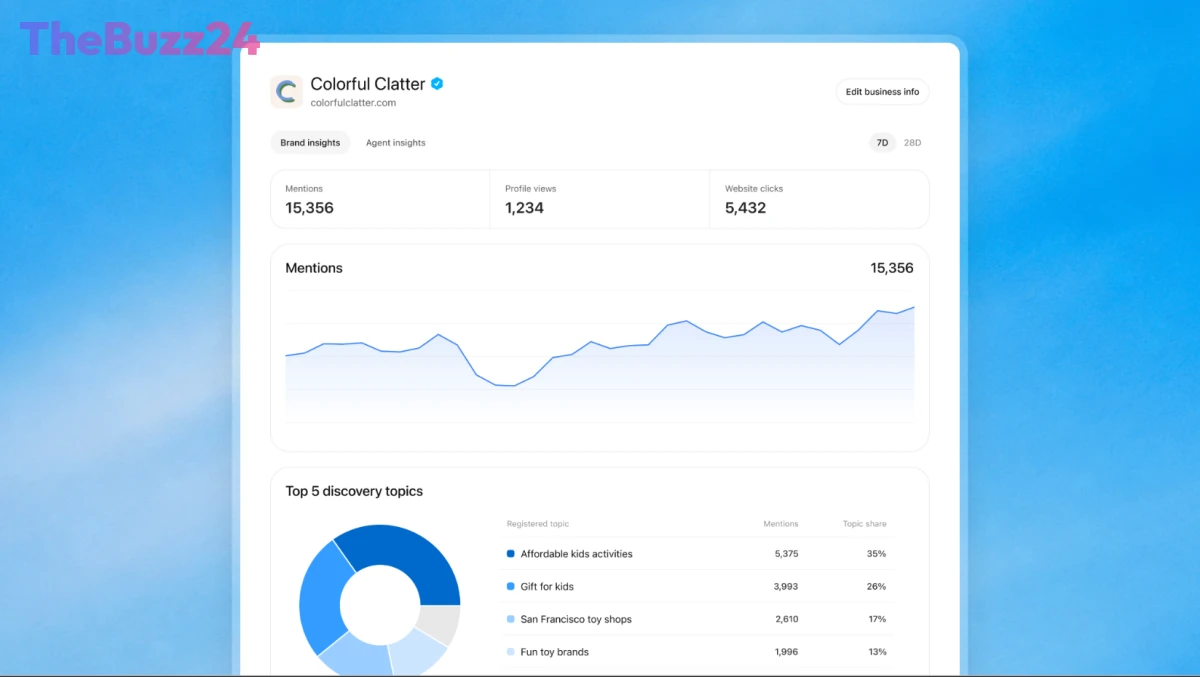
Furthermore, the Business Hub will provide businesses with access to limited analytics, similar to Google Analytics. These insights will track user engagement with their profiles, including profile views, mentions within ChatGPT, and website clicks. While the specifics of the verification process remain undisclosed, OpenAI has indicated that multiple methods will be employed to ensure profile authenticity across different business types and markets.
This strategic pivot follows OpenAI’s previous attempt to establish ChatGPT as a direct e-commerce platform, which did not gain significant traction. By integrating business profiles and intelligence, OpenAI appears to be positioning ChatGPT as a more direct competitor to Google’s role in helping users find and understand businesses online, rather than solely focusing on direct transactions.
Key Takeaways
- OpenAI has launched a Business Hub for ChatGPT, allowing companies to create verified profiles and specialized agents.
- The new feature aims to make ChatGPT a more comprehensive platform for business discovery, similar to Google's business listings.
- Businesses will gain access to user engagement insights and can enable direct Q&A about their products and services through AI agents.
Editor’s Analysis & Impact
OpenAI’s latest move with the Business Hub signifies a strategic shift, moving beyond direct e-commerce aspirations to emulate Google’s established role in business discovery. By integrating verified business profiles and AI-powered agents, ChatGPT could become a crucial touchpoint for consumers researching products and services. This approach leverages AI’s growing influence in consumer decision-making, potentially offering businesses a new avenue for engagement and lead generation. While the success of this initiative hinges on user adoption and the effectiveness of the verification process, it positions ChatGPT as a more versatile platform with significant implications for digital marketing and consumer search behavior.
Frequently Asked Questions
Q: What is the OpenAI Business Hub?
A: The OpenAI Business Hub is a new feature in beta that allows companies to create verified profiles on ChatGPT. These profiles enable businesses to share information about their products and services and can be used to create specialized AI agents for user interaction.
Q: How does this new feature compare to Google?
A: The Business Hub's functionality, particularly the creation of business profiles with verifiable information, closely resembles the business listing and information services offered by Google. It aims to make ChatGPT a platform where users can discover and learn about businesses, much like they do through search engines.
Q: Will businesses get data on how users interact with their ChatGPT profiles?
A: Yes, eligible businesses will have access to limited business insights through the Business Hub. These insights include metrics such as profile views, mentions within ChatGPT, and website clicks, providing an understanding of user engagement.
AI Disclosure: This article is based on verified data and official reports. Our Team and AI have cross-referenced every financial detail with primary sources to ensure total accuracy.
More from this Category