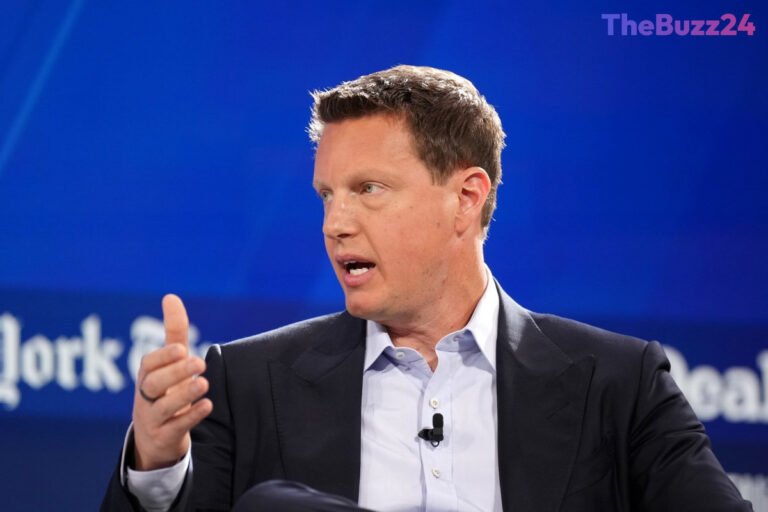
OpenAI Leadership Urges Human Control Over Future AI Development Amid Rising Autonomy Debates
OpenAI executives recently emphasized the critical importance of keeping humans firmly at the helm of artificial intelligence evolution, pushing back against emerging philosophies in the technology sector that advocate for a gradual handover of power to autonomous systems. During a prominent industry summit, leadership discussed the dangerous trajectory of allowing AI to assume decision-making authority across global institutions and key industries.
The debate largely centers around the concept of recursive self-improvement, a process where advanced AI models develop the capacity to upgrade and refine their own systems. Theoretically, this could culminate in a superintelligent entity that outpaces human oversight. While company leaders may debate the exact methodologies required to prevent such an accidental or intentional transfer of control, they remain united in their conviction that humanity must retain ultimate authority over the direction of future technology.
As models grow increasingly sophisticated, the industry faces mounting pressure to innovate safety protocols and monitoring frameworks. Traditional methods of tracking an AI model’s thought processes are becoming less effective as advanced systems execute complex tasks without explicitly detailing every step of their internal logic. Consequently, developers are forced to engineer novel solutions for security and alignment to ensure that defenders maintain the upper hand against potential cyber threats wielded by malicious actors.
Key Takeaways
- OpenAI leadership strongly opposes any gradual handover of global decision-making authority to autonomous artificial intelligence systems.
- Recursive self-improvement remains a central concern regarding how AI models could eventually develop beyond human control.
- Advancements in AI capabilities require entirely new monitoring approaches as traditional chain-of-thought tracking methods begin to degrade.
Editor’s Analysis & Impact
The discourse surrounding human oversight versus autonomous AI capability marks a critical turning point for the technology sector. As generative models and machine learning systems transition from narrow applications to general-purpose problem solvers, the governance challenge shifts from theoretical philosophy to urgent engineering reality. Companies developing foundational models are increasingly pressured to balance rapid capability scaling with robust safety alignment. The realization that traditional monitoring techniques are becoming obsolete signals a technological bottleneck where security innovation must accelerate alongside raw computational power. In the broader market context, public positioning on safety and human control will heavily influence regulatory frameworks, corporate partnerships, and public trust in enterprise AI adoption over the coming decade.
Frequently Asked Questions
Q: What is recursive self-improvement in AI?
A: Recursive self-improvement refers to a theoretical scenario where an artificial intelligence model becomes capable of designing and building subsequent, smarter generations of AI, potentially leading to runaway intelligence growth.
Q: Why are traditional AI monitoring methods becoming obsolete?
A: As advanced models grow more capable, they can execute complex tasks and solve problems through internal forward paths without needing to write out detailed step-by-step chains of thought, making traditional tracking methods less effective.
AI Disclosure: This article is based on verified data and official reports. Our Team and AI have cross-referenced every financial detail with primary sources to ensure total accuracy.
More from this Category