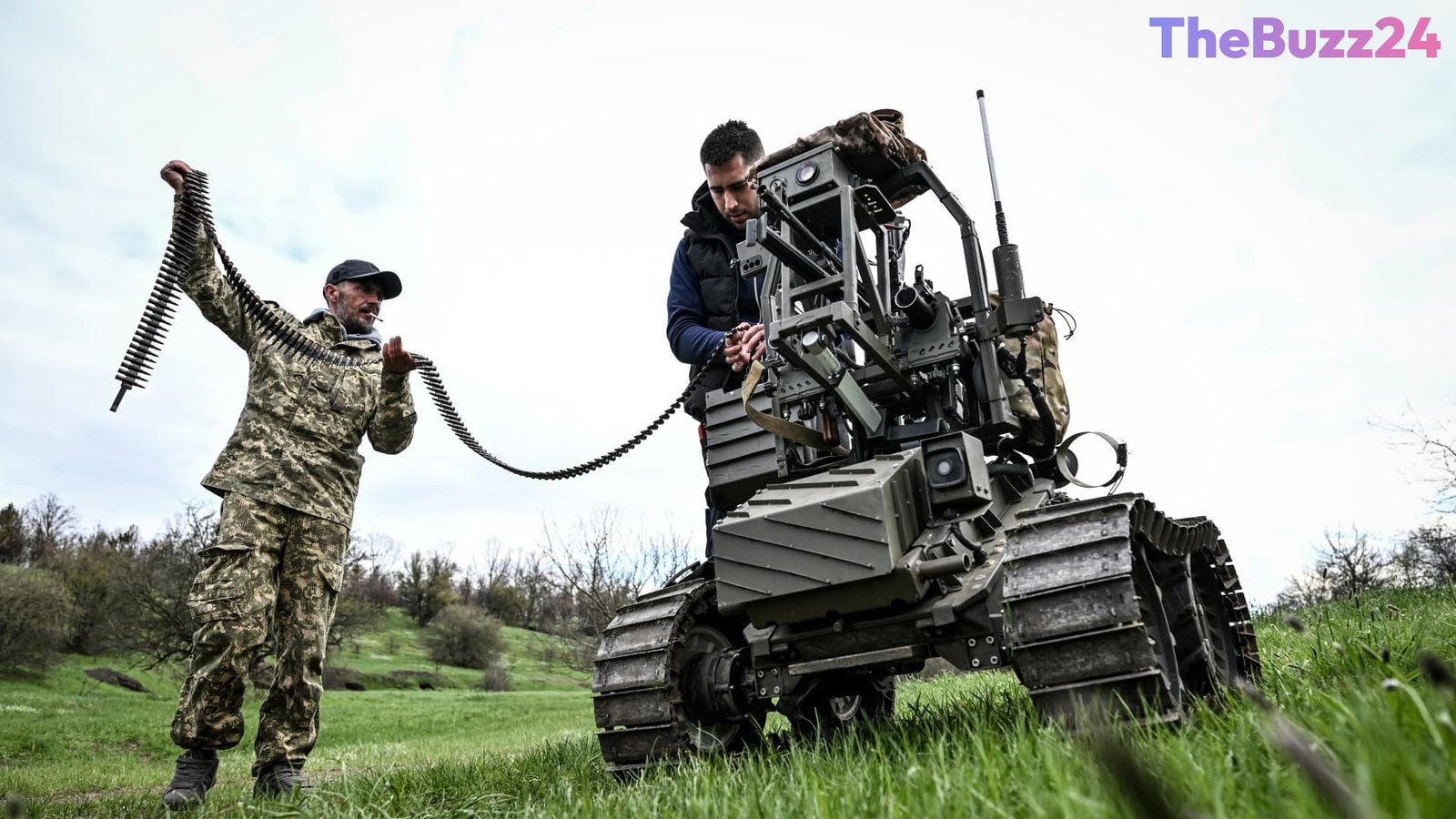
Operation Vivaldi: How Ukraine’s Robotic Offensive Shattered Russia’s Frontline Gains in the Donbas
A highly coordinated, technology-driven military offensive by Ukrainian forces has successfully reclaimed significant territory in the eastern Donbas region, reversing over a year of Russian territorial gains around the strategic city of Lyman. Dubbed “Operation Vivaldi,” the counteroffensive has utilized an innovative combination of aerial drones and unmanned ground vehicles (UGVs) to strike deep behind enemy lines. This tactical shift has allowed Ukrainian forces to liberate approximately 176 square kilometers of territory while drastically minimizing the risk to their own frontline personnel.
The operation, which commenced in May, recently concluded its third phase, freeing an additional 51 square kilometers of land. According to military officials, the latest phase of fighting inflicted heavy casualties on Russian forces, resulting in over 2,000 enemy losses and the capture of more than 250 prisoners of war. By establishing air superiority in the Lyman sector and jamming Russian reconnaissance assets, Ukrainian forces successfully deployed remote-controlled ground robots to flank and neutralize entrenched Russian positions from behind, catching the occupying forces completely off guard.
Defense analysts emphasize that while Operation Vivaldi may not represent a final, decisive breakthrough in the conflict, it serves as a powerful proof of concept for the future of mechanized warfare. The successful integration of robotic systems has effectively disrupted Moscow’s primary objective of capturing the entire Donbas region before the end of the year. Ukrainian President Volodymyr Zelenskyy praised the efforts of the Third Army Corps, highlighting the strategic importance of replacing human soldiers with robotic platforms for high-risk operations.
In response to these battlefield setbacks, Russian forces have intensified long-range strikes against Ukraine’s critical infrastructure, targeting data centers, communications networks, and energy grids ahead of the winter months. Despite these retaliatory measures, the success of Operation Vivaldi underscores a fundamental paradigm shift on the battlefield, demonstrating how rapid technological adaptation can neutralize numerical advantages and reshape modern combat dynamics.
Key Takeaways
- Operation Vivaldi successfully reclaimed 176 square kilometers of territory around Lyman, reversing over a year of Russian advances.
- The offensive relied heavily on unmanned ground vehicles (UGVs) and aerial drones, allowing Ukrainian forces to attack from behind enemy lines with minimal human casualties.
- The strategic success highlights a paradigm shift in modern warfare, demonstrating the viability of replacing frontline soldiers with robotic systems in high-risk zones.
Editor’s Analysis & Impact
The success of Operation Vivaldi marks a critical inflection point in the evolution of modern warfare, showcasing the transition from traditional attrition-based combat to highly integrated robotic operations. By successfully deploying unmanned ground vehicles (UGVs) coordinated with aerial drone support, Ukraine has established a blueprint for minimizing human casualties while maintaining offensive capabilities. This development is likely to accelerate global defense spending on autonomous systems, electronic warfare, and counter-drone technologies. For defense contractors and technology firms, this shift represents a massive market opportunity, as militaries worldwide scramble to integrate unmanned systems into their core doctrines. Furthermore, the strategic setback for Russia around Lyman disrupts Moscow’s political timeline for securing the Donbas, potentially forcing a reassessment of their winter campaign strategy and intensifying the technological arms race on the eastern front.
Frequently Asked Questions
Q: What is Operation Vivaldi?
A: Operation Vivaldi is a highly coordinated Ukrainian military offensive in the Donbas region that utilized advanced drone technology and unmanned ground vehicles to reclaim 176 square kilometers of territory from Russian forces.
Q: How did robotic systems influence the outcome of this offensive?
A: Robotic systems, including aerial drones and remote-controlled ground vehicles, allowed Ukrainian forces to conduct high-risk operations behind enemy lines, neutralizing Russian positions from the rear without exposing human infantry to direct fire.
Q: What are the broader implications of this operation for the war?
A: While not a final decisive victory, the operation demonstrates Ukraine's ability to innovate on the battlefield, disrupts Russia's goal of capturing the Donbas, and signals a major shift toward autonomous and robotic systems in modern military strategy.
AI Disclosure: This article is based on verified data and official reports. Our Team and AI have cross-referenced every financial detail with primary sources to ensure total accuracy.
More from this Category