Outrage in Delhi as Female Journalists Accuse Police of Sexual Harassment Amid Massive Voter Roll Protests
Street demonstrations in India’s capital have taken a controversial turn after three female journalists accused Delhi police officers of sexual harassment during recent protests. The allegations surfaced following the detention of numerous demonstrators calling for the resignation of Chief Election Commissioner Gyanesh Kumar. In response to the complaints of inappropriate touching and physical manhandling, the Delhi Police announced that the case has been transferred to its crime branch for an impartial investigation. The Press Club of India strongly condemned the incident, stating that such behavior cannot be normalized in a democracy and demanding immediate action to safeguard journalists’ ability to report freely.
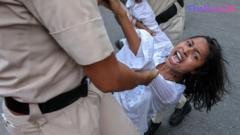
The protests, which have drawn thousands of participants to Delhi and Mumbai, center on a massive and highly controversial revision of the country’s voter rolls. Demonstrators at the Jantar Mantar protest site in central Delhi were met with a heavy-handed police response, with videos showing activists being forcibly dragged away. Among those detained was Jawaharlal Nehru University student and activist Aahna Singh, who accused the police of brutality, claiming she was dragged by her hair. Opposition leader Rahul Gandhi also weighed in on the escalating situation, demanding answers from the home ministry regarding the safety of women at the demonstrations.
At the heart of the civil unrest is the Election Commission’s Special Intensive Revision (SIR), which has resulted in the removal of approximately 130 million names from the voter lists. While the Election Commission maintains the cleanup is a necessary update to eliminate duplicate and deceased voters for the first time in nearly 25 years, opposition parties argue the move is designed to benefit Prime Minister Narendra Modi’s ruling Bharatiya Janata Party (BJP). Public distrust deepened following revelations that election commissioners Sukhbir Singh Sandhu and Vivek Joshi had formally objected 14 times over ten months to decisions allegedly made without their knowledge, sparking accusations of internal manipulation.
Fueling the demonstrations is the Cockroach Janta Party (CJP), an influential pressure group that originated as an online satirical movement. The CJP, which previously forced the resignation of the education minister in July, mobilized supporters after internal rifts within the Election Commission became public. Although the Election Commission has defended its operations, asserting that all final decisions are reached unanimously despite differing internal opinions, the political storm shows no signs of abating as citizens and opposition leaders continue to demand transparency and accountability.
Key Takeaways
- Three female journalists have accused Delhi police of sexual harassment and inappropriate touching during protests in the capital.
- The protests target Chief Election Commissioner Gyanesh Kumar over a controversial voter roll revision that removed 130 million names.
- Internal friction within the Election Commission has been exposed, with two commissioners reportedly objecting 14 times to decisions made without their knowledge.
Editor’s Analysis & Impact
The escalating tensions in India highlight a dangerous intersection of democratic backsliding, press freedom violations, and institutional distrust. The allegations of sexual harassment against journalists by law enforcement officers underscore the growing risks faced by media professionals covering civil dissent in the country. Furthermore, the controversy surrounding the Special Intensive Revision (SIR) of voter rolls threatens the perceived integrity of India’s electoral process. With 130 million names purged and internal dissent leaking from within the Election Commission itself, public faith in democratic institutions is severely tested. The rise of grassroots movements like the Cockroach Janta Party (CJP) demonstrates a shift toward digital-first activism capable of mobilizing massive real-world protests. Moving forward, the government’s handling of both the police misconduct inquiry and the electoral transparency demands will be critical in determining whether India can stabilize its domestic political climate or face prolonged civil unrest.
Frequently Asked Questions
Q: Why are people protesting against Chief Election Commissioner Gyanesh Kumar?
A: Protesters are demanding his resignation over the Special Intensive Revision (SIR), which removed 130 million names from the voter rolls. Critics and opposition parties allege the purge was manipulated to favor the ruling Bharatiya Janata Party (BJP), though the Election Commission denies these claims.
Q: What are the specific allegations against the Delhi Police?
A: Three female journalists accused police officers of sexual harassment and inappropriate touching while they were covering the protests. Additionally, activists have accused the police of brutality, including physically dragging demonstrators away from protest sites.
Q: What is the Cockroach Janta Party (CJP)?
A: The CJP is an influential Indian pressure group that began as an online satirical movement. It has transitioned into a powerful activist force, previously forcing the resignation of the education minister and now leading protests against the Election Commission.
AI Disclosure: This article is based on verified data and official reports. Our Team and AI have cross-referenced every financial detail with primary sources to ensure total accuracy.
More from this Category