Global Outcry Erupts After Israeli Soldier Vandalizes Religious Statue in Lebanon
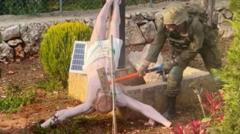
A disturbing image showing an Israeli soldier using a sledgehammer to damage a statue of Jesus in southern Lebanon has triggered widespread international condemnation. The incident, which occurred near the village of Debel, involved the destruction of a crucifix situated outside a private residence. The act has drawn sharp criticism from religious leaders and global observers, who view the desecration of sacred symbols as a profound violation of human rights and cultural sensitivity during an already volatile regional conflict.
In response to the growing backlash, Israeli leadership has publicly addressed the incident. Prime Minister Benjamin Netanyahu expressed shock and regret over the footage, while Foreign Minister Gideon Saar issued a formal apology to the Christian community. The Israel Defense Forces (IDF) confirmed the authenticity of the imagery, labeling the soldier’s behavior as a direct contradiction of military values. The IDF has committed to disciplinary action against those involved and is currently coordinating with local Christian clergy to facilitate the restoration of the damaged statue.
Local religious leaders, including Father Fadi Flaifel, have strongly denounced the act, characterizing it as an affront to civilized conduct and religious freedom. The incident has also drawn scrutiny from international political figures, including U.S. Ambassador Mike Huckabee, who emphasized the need for accountability. This controversy unfolds amidst a fragile ceasefire between Israel and Hezbollah, adding a layer of diplomatic tension to an already precarious situation. Observers are concerned that such acts of vandalism could further inflame sectarian animosity and undermine efforts to maintain religious harmony in the region.
Key Takeaways
- An Israeli soldier was captured on video vandalizing a statue of Jesus in southern Lebanon, sparking global condemnation.
- Israeli officials, including the Prime Minister and Foreign Minister, have apologized and pledged to hold the soldier accountable.
- The incident has complicated the already fragile diplomatic environment following the recent ceasefire between Israel and Hezbollah.
Editor’s Analysis & Impact
The vandalism of a religious icon in a conflict zone carries significant symbolic weight that transcends the physical damage. In the context of the Middle East, where religious identity is deeply intertwined with political and territorial disputes, such acts risk escalating sectarian tensions and alienating international allies. The swift apology from Israeli leadership suggests an awareness of the potential for this incident to damage the nation’s diplomatic standing and complicate the enforcement of the current ceasefire. Moving forward, the ability of the IDF to transparently discipline the individual responsible will be a key test of their commitment to maintaining order and respecting religious sites. Failure to address this effectively could lead to further erosion of trust among local minority populations and increase pressure from international stakeholders to ensure the protection of cultural and religious heritage during military operations.
Frequently Asked Questions
Q: How did the Israeli government respond to the incident?
A: The Israeli government, including Prime Minister Benjamin Netanyahu and Foreign Minister Gideon Saar, expressed regret and issued apologies, while the IDF confirmed it would take disciplinary action against the soldier involved.
Q: What is the current status of the statue?
A: The IDF is reportedly working with local Christian leaders in the region to facilitate the restoration of the damaged statue.
AI Disclosure: This article is based on verified data and official reports. Our Team and AI have cross-referenced every financial detail with primary sources to ensure total accuracy.
More from this Category