Pacific Fusion Breaks Ground on Advanced New Mexico Facility to Accelerate Commercial Fusion
Pacific Fusion has officially commenced construction on a pioneering facility in Albuquerque, New Mexico, marking a significant milestone in the global race to achieve viable commercial fusion power. The project is specifically engineered to reach ‘net facility gain,’ a critical threshold where the energy produced by the fusion process exceeds the total energy required to operate the entire facility. While other research institutions have demonstrated net energy gain in isolated fusion reactions, Pacific Fusion aims to prove that the entire infrastructure can operate at a surplus, a necessary step for grid-scale energy production.
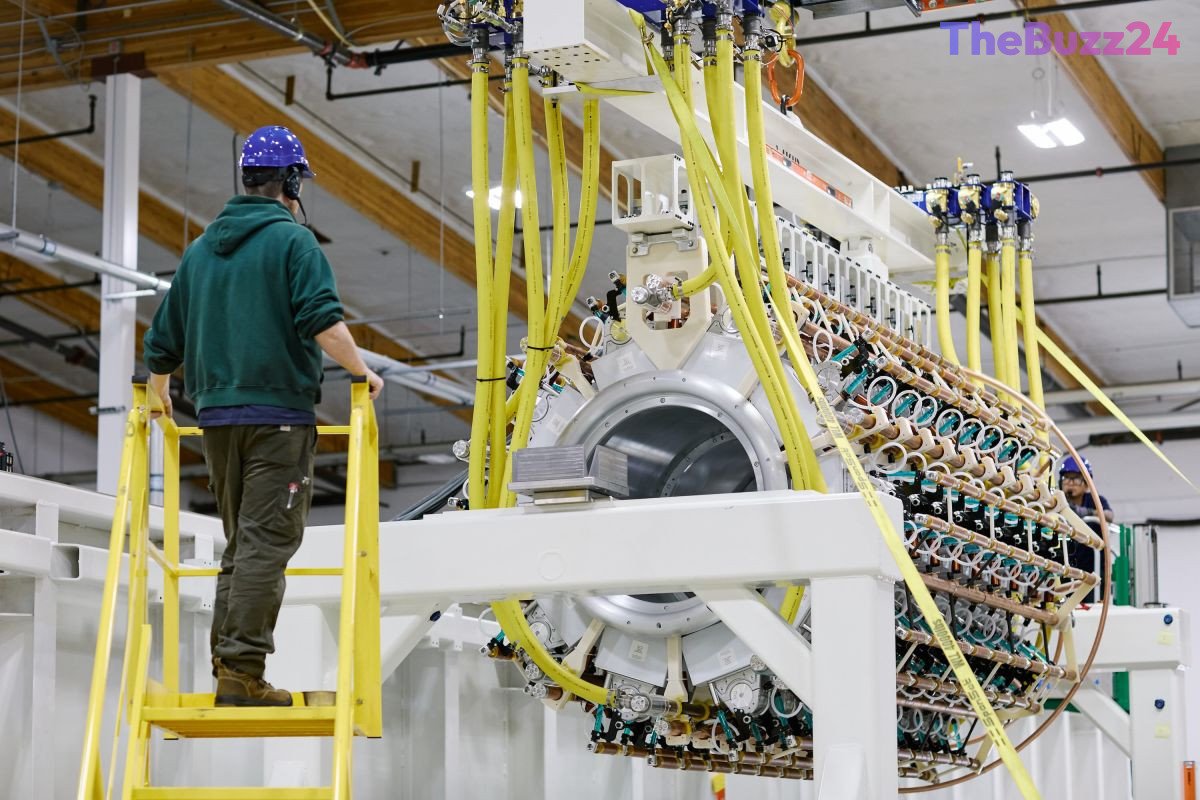
The company’s proprietary approach utilizes intense, synchronized electrical pulses to generate powerful magnetic fields. These fields compress fuel targets roughly the size of a pencil eraser, triggering fusion. The new Albuquerque site will house 156 specialized pulser modules, a design validated by successful tests of a one-third-scale prototype earlier this year. According to company leadership, the facility is designed to produce approximately 100 megajoules per pulse, which is ten times the output capacity of the aging National Ignition Facility.
Founded in 2023, Pacific Fusion has rapidly emerged as a leader in the sector, bolstered by a substantial $1 billion Series A funding round. This capital structure has allowed the company to bypass the traditional, fragmented fundraising cycles that often slow down deep-tech startups. With a target to achieve net facility gain by 2030 and a goal of launching a commercial power plant by the mid-2030s, the company is positioning itself to compete with other major players like Commonwealth Fusion Systems and Helion Energy in the race to provide clean, limitless energy to the power grid.
Key Takeaways
- Pacific Fusion has begun construction on a New Mexico facility designed to achieve 'net facility gain' by 2030.
- The company utilizes a high-intensity pulsed magnetic field approach, with a goal of reaching one fusion shot per second in future commercial plants.
- Backed by over $1 billion in funding, the startup aims to outperform international competitors and modernize fusion research capabilities.
Editor’s Analysis & Impact
The fusion energy sector is currently transitioning from theoretical physics experiments to industrial-scale engineering. Pacific Fusion’s strategy of securing massive, milestone-based capital upfront is a game-changer, allowing for long-term infrastructure planning that is often impossible for startups reliant on incremental funding. By focusing on ‘net facility gain’ rather than just ‘net energy gain,’ the company is addressing the practical reality of power plant economics. If successful, this facility could provide the U.S. with a significant strategic advantage in energy independence and national security research. However, the technical challenge of scaling from a few shots per day to one shot per second remains a formidable hurdle. The next five years will be critical as the company moves from prototype validation to full-scale operational testing, setting the stage for a potential paradigm shift in global energy markets by the mid-2030s.
Frequently Asked Questions
Q: What is 'net facility gain' in the context of fusion power?
A: Net facility gain refers to the point where the total energy produced by a fusion reactor exceeds the total energy consumed by the entire facility, including all auxiliary equipment required for operation.
Q: How does Pacific Fusion's technology differ from traditional fusion methods?
A: Pacific Fusion uses intense, tightly coordinated pulses of electricity to create magnetic fields that compress fuel targets, rather than relying on the massive, long-duration laser arrays used by older facilities like the National Ignition Facility.
AI Disclosure: This article is based on verified data and official reports. Our Team and AI have cross-referenced every financial detail with primary sources to ensure total accuracy.
More from this Category