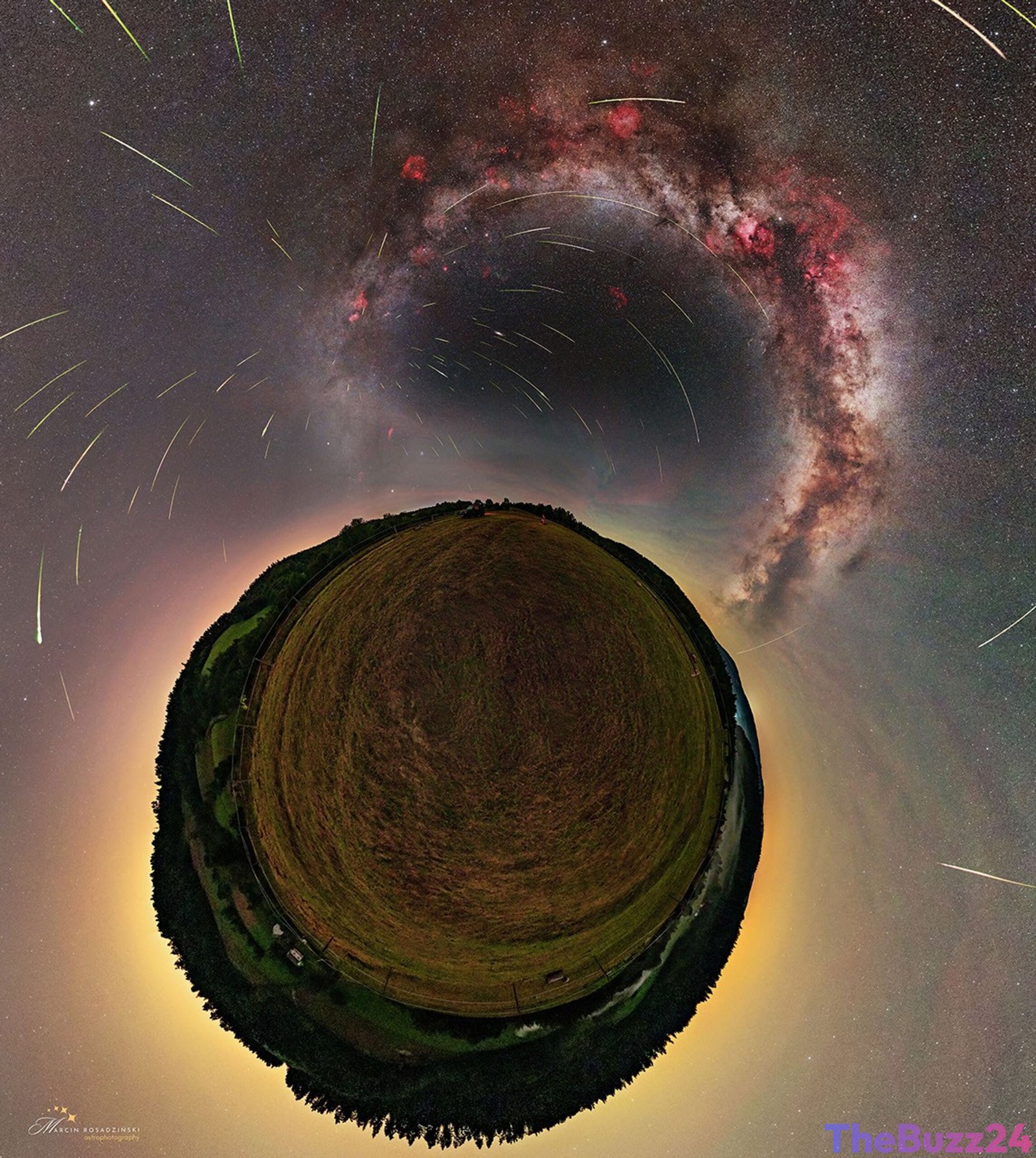
Perseid Meteor Shower Peaks Tonight: A Celestial Spectacle Over Poland
Stargazers in the Northern Hemisphere are in for a treat as the annual Perseid meteor shower reaches its peak tonight, August 12, 2026. The celestial event promises a dazzling display, with an estimated 50 to 100 meteors expected to streak across the sky per hour. This year’s shower is particularly anticipated due to its coincidence with a new moon, which will provide darker skies and enhance the visibility of the meteors.
The Perseids are a beloved summer phenomenon, originating from debris left behind by Comet Swift-Tuttle as Earth passes through its orbital path. A stunning photograph captured over the Bieszczady Mountains in Poland showcases the radiant arch of the Milky Way, interspersed with vibrant red nebulas and over a hundred meteors. The image evokes a sense of wonder, reminiscent of a view from a distant, fictional planet.
For optimal viewing, experts recommend looking towards the sky between midnight and the pre-dawn hours. While binoculars are not necessary to witness the meteors, a comfortable lawn chair and a location far from city lights will significantly improve the experience. This natural light show offers a fantastic opportunity for amateur astronomers and casual observers alike to connect with the cosmos.
Key Takeaways
- The Perseid meteor shower peaks on August 12, 2026, with an expected 50-100 meteors per hour.
- The new moon phase this year will enhance visibility of the meteor shower.
- The best viewing times are between midnight and pre-dawn, with dark, clear skies recommended.
Editor’s Analysis & Impact
The Perseid meteor shower continues to be a significant event for public engagement with astronomy. Its annual occurrence, coupled with favorable conditions like a new moon this year, provides a consistent opportunity to capture public interest in space science. Events like these highlight the accessibility of astronomical observation, requiring minimal equipment and offering maximum visual reward. The continued popularity of such phenomena underscores a broader public fascination with the cosmos and can serve as a gateway to further scientific curiosity and education.
Frequently Asked Questions
Q: What causes the Perseid meteor shower?
A: The Perseid meteor shower is caused by the Earth passing through the debris trail left behind by Comet Swift-Tuttle.
Q: When is the best time to watch the Perseids?
A: The best time to observe the Perseid meteor shower is typically between midnight and the pre-dawn hours, especially when the moon is not bright.
Q: Do I need special equipment to see the Perseids?
A: No, you do not need binoculars or a telescope to see the Perseid meteors. However, finding a dark location away from city lights and using a comfortable chair will enhance your viewing experience.
AI Disclosure: This article is based on verified data and official reports. Our Team and AI have cross-referenced every financial detail with primary sources to ensure total accuracy.
More from this Category