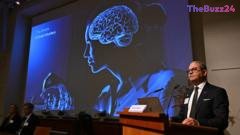
Pioneering Optogenetics Research Earns Nobel Prize, Unlocking Brain’s Mysteries
The prestigious Nobel Prize in Physiology or Medicine has been awarded to US psychiatrist and neurologist Karl Deisseroth, alongside his German colleagues Peter Hegemann and Georg Nagel, for their groundbreaking contributions to the field of optogenetics. Their collaborative research has fundamentally transformed our understanding of the brain’s intricate workings, offering unprecedented insights into how the human mind functions.
Optogenetics represents a revolutionary approach to neuroscience, enabling scientists to precisely control neural circuits using light. The technique relies on a special protein, channelrhodopsin, originally discovered in algae by Hegemann and Nagel in the early 2000s. Deisseroth subsequently developed methods to utilize this light-sensitive protein to activate or deactivate nerve cells within the brains of experimental animals, such as mice. This innovation allows researchers to map brain pathways and investigate the roles of specific neurons in various physiological and behavioral processes, including the formation of memories, the generation of feelings, and the initiation of complex behaviors.
The profound impact of optogenetics extends beyond basic research, with significant potential for clinical applications. Scientists are actively exploring its use in medical treatments, notably in ongoing clinical trials aimed at restoring vision in individuals suffering from retinitis pigmentosa, a degenerative eye disease. By introducing a therapeutic algae protein into the damaged retinal region and activating it with specialized light-emitting glasses, patients have shown promising signs of regaining some visual function. This pioneering work lays the foundation for a new era in neuroscience, offering hope for novel interventions in neurological and psychiatric disorders.
Key Takeaways
- US psychiatrist and neurologist Karl Deisseroth, along with German colleagues Peter Hegemann and Georg Nagel, received the Nobel Prize in Physiology or Medicine for their foundational work in optogenetics.
- Optogenetics is a revolutionary technique that uses light to precisely control neural circuits, offering unprecedented insights into brain function, memory, feelings, and behaviors by utilizing a light-sensitive protein (channelrhodopsin) from algae.
- The technology holds significant promise for clinical applications, including ongoing trials to restore sight in individuals with visual impairment like retinitis pigmentosa, marking a new era in neuroscience and potential treatments for neurological disorders.
Editor’s Analysis & Impact
The awarding of the Nobel Prize for optogenetics underscores its monumental impact on neuroscience, transforming how we study and understand the brain. This breakthrough has not only accelerated fundamental research into complex brain functions, memory, and behavior but has also spurred significant investment in neurotechnology and the development of new therapeutic strategies for neurological and psychiatric disorders. The future outlook for optogenetics is incredibly promising, with ongoing advancements in precision, non-invasiveness, and the potential for targeted treatments for conditions like Parkinson’s, Alzheimer’s, depression, and epilepsy. Broader implications include the potential for advanced brain-computer interfaces and diagnostics, fundamentally reshaping our approach to brain health and disease and highlighting the power of interdisciplinary scientific collaboration.
Frequently Asked Questions
Q: What is optogenetics?
A: Optogenetics is a biological technique that involves using light to control neurons that have been genetically modified to express light-sensitive ion channels. This allows researchers to precisely turn specific neural circuits on or off, providing a powerful tool for studying brain function.
Q: Who were the recipients of the Nobel Prize in Physiology or Medicine for optogenetics?
A: The Nobel Prize was awarded to US psychiatrist and neurologist Karl Deisseroth, along with his German colleagues Peter Hegemann and Georg Nagel, for their foundational work in the field of optogenetics, which has revolutionized neuroscience.
Q: What are some potential medical applications of optogenetics?
A: Beyond fundamental brain research, optogenetics is being explored for clinical applications such as restoring sight in patients with conditions like retinitis pigmentosa. It also holds significant promise for developing novel treatments for various neurological and psychiatric disorders by precisely modulating brain activity.
AI Disclosure: This article is based on verified data and official reports. Our Team and AI have cross-referenced every financial detail with primary sources to ensure total accuracy.
More from this Category