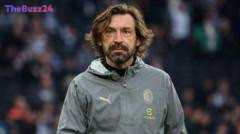
Pirlo Withdraws from Italy Coaching Role Amidst Russian Betting Firm Controversy
Andrea Pirlo has officially withdrawn his candidacy for the Italian national football team’s head coaching position, citing the controversy surrounding his association with a Russian betting company. The former football legend’s potential appointment, which had been widely anticipated but not yet formally confirmed by the Italian Football Federation (FIGC), faced significant backlash from Italian politicians.
The criticism stemmed from Pirlo’s role as a global ambassador for Fonbet, a Russian betting firm, which he accepted last October. The company has been linked to sporting events involving individuals associated with Russia’s military actions in Ukraine and has hosted events where Pirlo appeared alongside pro-Kremlin figures. Politicians argued that such affiliations were incompatible with a national coaching role, especially in the current geopolitical climate.
Pirlo expressed his disappointment and clarified his position in a statement, emphasizing that his professional collaborations were strictly commercial and sporting in nature, and not reflective of any political beliefs. He stated that any attempt to assign political meaning to his work was a misrepresentation of his values. The debate has cast a shadow over the FIGC’s recent leadership changes, with concerns raised about the potential impact on the federation’s technical director, Paolo Maldini, who was tasked with finding a new coach.
This situation unfolds as Italian football grapples with a period of introspection following the national team’s failure to qualify for consecutive World Cups. The search for a new coach has been challenging, with previous approaches to high-profile managers like Pep Guardiola and Carlo Ancelotti proving unsuccessful. The controversy surrounding Pirlo’s ties adds another layer of complexity to the FIGC’s efforts to rebuild and regain credibility.
Key Takeaways
- Andrea Pirlo has withdrawn his application for the Italian national team coaching job due to controversy over his ties to a Russian betting firm.
- The controversy involved Pirlo's role as a global ambassador for Fonbet, a company linked to pro-Russian events and individuals.
- The situation highlights ongoing challenges for the Italian Football Federation in selecting a coach amidst national team performance issues and geopolitical sensitivities.
Editor’s Analysis & Impact
The withdrawal of Andrea Pirlo from contention for the Italian national team coaching role underscores the increasing scrutiny on public figures regarding their affiliations, particularly in the context of international relations. This incident serves as a stark reminder for sports organizations and individuals alike that professional engagements can carry significant reputational risks, extending beyond purely commercial or sporting considerations. For the FIGC, this setback complicates an already challenging period of rebuilding after World Cup qualification failures. It suggests a need for more rigorous vetting processes for high-profile appointments, balancing desired expertise with public perception and ethical considerations in a sensitive global landscape. The fallout could influence future coaching appointments and the FIGC’s strategic direction.
Frequently Asked Questions
Q: Why did Andrea Pirlo withdraw from the coaching position?
A: Andrea Pirlo withdrew due to controversy surrounding his role as a global ambassador for Fonbet, a Russian betting company, which faced criticism for its ties to pro-Russian events and individuals.
Q: What is Fonbet?
A: Fonbet is a Russian betting company that Pirlo was appointed as a global ambassador for in October.
Q: What are the implications for the Italian Football Federation (FIGC)?
A: The incident complicates the FIGC's search for a new national team coach, especially after recent failures to qualify for the World Cup. It may lead to more stringent vetting processes for future appointments.
AI Disclosure: This article is based on verified data and official reports. Our Team and AI have cross-referenced every financial detail with primary sources to ensure total accuracy.
More from this Category