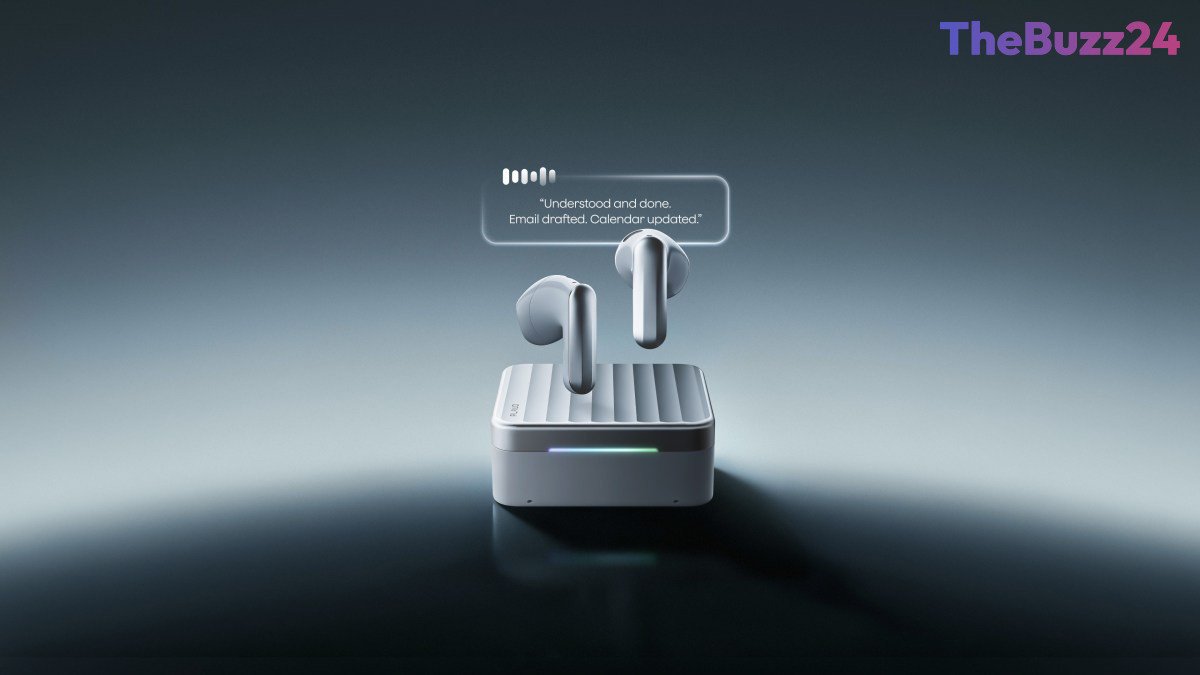
Plaud Unveils AI-Powered Earphones Featuring eSIM Connectivity
Plaud is expanding its footprint in the AI hardware market with the introduction of the Plaud One, a new pair of earphones designed specifically for seamless note-taking and AI interaction. While the market is currently saturated with various AI-enabled pendants, rings, and recording pucks, Plaud is betting that the familiar earphone form factor will resonate with users who prioritize convenience and integration. The device features a design reminiscent of standard wireless earbuds but distinguishes itself with a specialized charging case equipped with eSIM support, allowing users to interact with AI agents independently of a smartphone or computer.
Beyond simple audio recording, the Plaud One leverages the company’s existing software ecosystem to automate complex workflows. Once conversations are transcribed, the integrated AI agent can interface with productivity platforms such as Slack, Notion, Gmail, and Google Calendar to draft follow-up emails or generate structured documents. The hardware itself includes 12mm drivers and active noise cancellation, with the case capable of capturing clear audio from up to five meters away. Users can expect up to 25 hours of total recording time when utilizing the case, with a monthly allowance of 300 minutes of free transcription included with the purchase.
Currently, the Plaud One is being positioned as a limited-run product as the company gauges consumer interest in AI-centric audio wearables. Priced at $249, the device is available for preorder with shipping expected in the fourth quarter of 2026. As the company prepares to roll out more advanced agentic capabilities in the coming months, it is also introducing a credit-based system for task execution, providing early adopters with $200 in credits to explore these features. Despite stiff competition from established audio brands and software-based note-taking solutions, Plaud maintains that its focus on a dedicated, always-ready wearable interface will carve out a unique niche in the productivity space.
Key Takeaways
- The Plaud One earphones feature an eSIM-enabled case, allowing for remote AI interaction without a connected smartphone.
- The device integrates with major productivity tools like Slack, Notion, and Gmail to automate follow-up tasks and document creation.
- Plaud is launching the product as a limited-run trial with a $249 price point and a scheduled shipping date in Q4 2026.
Editor’s Analysis & Impact
The launch of the Plaud One highlights a significant shift in the AI hardware sector: the transition from novelty ‘AI gadgets’ to the integration of intelligence into essential, everyday wearables. By adopting the earphone form factor, Plaud is attempting to solve the ‘friction’ problem that plagues many AI wearables—namely, that users are often reluctant to wear additional devices. However, the company faces a steep uphill battle. The market for audio hardware is dominated by tech giants with massive R&D budgets and entrenched ecosystems. Plaud’s success will likely depend on whether its software-driven workflow automation is compelling enough to convince users to abandon their current high-fidelity earbuds. If successful, this could set a new standard for ‘ambient computing,’ where the hardware becomes a transparent conduit for AI-driven productivity rather than just a media playback device.
Frequently Asked Questions
Q: How does the eSIM feature in the Plaud One case work?
A: The eSIM allows the charging case to maintain a cellular connection independently, enabling users to trigger and interact with AI agents without needing to be tethered to a smartphone or computer.
Q: What happens after the 300 minutes of free monthly transcription are used?
A: Users who exceed the 300-minute monthly limit will need to subscribe to additional transcription plans, which start at $8.33 per month when billed annually.
AI Disclosure: This article is based on verified data and official reports. Our Team and AI have cross-referenced every financial detail with primary sources to ensure total accuracy.
More from this Category