Political Turmoil in Delhi: Opposition Lawmakers Detained Amid Massive Protests Against India’s Election Chief
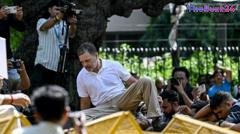
High drama unfolded on the streets of New Delhi as police detained several prominent opposition lawmakers, including Congress party leaders Rahul Gandhi and Priyanka Gandhi, during a high-profile march toward the Election Commission headquarters. The demonstration, which drew hundreds of lawmakers from various political factions, was organized to demand the immediate resignation of Chief Election Commissioner (CEC) Gyanesh Kumar. Protesters accuse the election chief of bias and manipulating the country’s voter registration system to favor the ruling Bharatiya Janata Party (BJP), allegations that both the BJP and the election body have strongly denied.
The spark for the escalating political confrontation is the controversial Special Intensive Revision (SIR) of electoral rolls. Initiated in Bihar in mid-2025 before expanding nationwide, the program has resulted in the removal of over 130 million names from draft voter lists. While the Election Commission maintains the purge is a routine cleanup to eliminate duplicate and ineligible entries, opposition parties and civil rights activists argue that millions of legitimate voters have been disenfranchised. Tensions have been further inflamed by internal leaks revealing that the other two election commissioners formally objected multiple times to decisions made by Kumar without their consent.
The ruling BJP has strongly condemned the protests, labeling them a coordinated attempt to destabilize democratic institutions and foster anarchy. Meanwhile, the battle has reached India’s Supreme Court. A petition challenging Kumar’s unilateral decision-making has prompted the apex court to seek formal responses from both the federal government and the Election Commission. While the court declined to suspend the CEC immediately, it emphasized that commission decisions must be collective, warning that unauthorized actions could be overturned.
Key Takeaways
- Over 200 opposition MPs marched in Delhi demanding the resignation of Chief Election Commissioner Gyanesh Kumar over controversial voter roll purges.
- The dispute centers on the Special Intensive Revision (SIR) program, which has removed more than 130 million names from India's voter lists.
- India's Supreme Court has intervened, demanding explanations regarding allegations that the CEC bypassed collective decision-making protocols.
Editor’s Analysis & Impact
The escalating conflict over India’s electoral integrity marks a critical juncture for the nation’s democratic framework. The sheer scale of the voter roll revision—affecting over 130 million citizens—has transformed a bureaucratic cleanup into a high-stakes political battleground. By challenging the unilateral authority of the Chief Election Commissioner, the opposition is attempting to frame the upcoming electoral cycles as fundamentally compromised. This dispute not only threatens to erode public trust in the Election Commission, historically viewed as an impartial referee, but also places immense pressure on the Supreme Court to define the limits of executive power within independent institutions. If the court uncovers systemic procedural bypasses, it could trigger unprecedented administrative reforms, potentially delaying future elections and deepening the polarization between the ruling BJP and the united opposition front.
Frequently Asked Questions
Q: Why are opposition lawmakers protesting against Chief Election Commissioner Gyanesh Kumar?
A: Opposition parties accuse Kumar of unilaterally managing a voter roll revision program that has purged over 130 million names, alleging the process unfairly targets eligible voters to benefit the ruling BJP.
Q: What is the Special Intensive Revision (SIR) program?
A: The SIR is an initiative launched by the Election Commission of India to clean up voter databases by removing duplicate, deceased, or ineligible voters.
Q: How has the Supreme Court of India responded to the controversy?
A: The Supreme Court has requested formal responses from the government and the Election Commission regarding allegations of unilateral decision-making by the CEC, though it has declined to suspend him while the review is ongoing.
AI Disclosure: This article is based on verified data and official reports. Our Team and AI have cross-referenced every financial detail with primary sources to ensure total accuracy.
More from this Category