Putin Reasserts Demands for European Security Overhaul in Ukraine Peace Talks
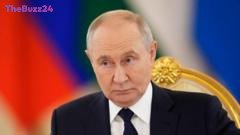
Russian President Vladimir Putin is reportedly maintaining a firm stance on his demands for a significant restructuring of European security as a prerequisite for peace in Ukraine. Following recent discussions with U.S. envoys Steve Witkoff and Jared Kushner, the Kremlin reiterated its call for a “new, long-term architecture of indivisible security and peace.” This proposal, first introduced in December 2021, seeks to fundamentally alter the post-Cold War security landscape in Europe to Russia’s perceived benefit.
The core of Moscow’s proposal involves preventing NATO’s eastward expansion, specifically guaranteeing that countries like Ukraine and Georgia would not be admitted into the alliance. Furthermore, Russia is pushing for the rollback of NATO military infrastructure from Eastern European nations that joined after the Soviet Union’s collapse. Western nations initially dismissed these demands as an unacceptable ultimatum, preceding Russia’s full-scale invasion of Ukraine.
Now, these proposals have resurfaced, with Russian officials suggesting that new considerations may be added to the list of demands in response to Western efforts to achieve a “strategic defeat” of Russia. While Western governments have not indicated acceptance, the renewed focus on European security in the context of Ukraine discussions is seen by some in Moscow as a diplomatic victory. Russian media has highlighted this shift, suggesting it forces the West to acknowledge Russia’s security concerns regarding NATO enlargement.
However, the European Union’s top diplomat has characterized Russia’s demands as a “trap” aimed at diverting attention from the immediate need for a ceasefire. The emphasis, according to this view, should be on de-escalation and a peace agreement before broader security architecture discussions can take place. Despite recent talks involving Ukraine, Russia, and the U.S., the Kremlin has indicated that a final decision on European participation in future peace negotiations has not been made, pending an assessment of their willingness to facilitate the peace process.
Key Takeaways
- Russia is reiterating its pre-invasion demands for a new European security framework, including halting NATO expansion, as a condition for peace in Ukraine.
- Western nations previously rejected these demands as an ultimatum, and the EU views the current proposals as a tactic to distract from ceasefire negotiations.
- Despite battlefield losses and economic pressure, President Putin appears unwilling to end the conflict without significant concessions on European security arrangements.
Editor’s Analysis & Impact
President Putin’s re-emphasis on his pre-war security demands signals a strategic effort to leverage ongoing diplomatic engagements for long-term geopolitical gains. By linking peace in Ukraine to a fundamental reshaping of European security, Moscow aims to regain influence and counter perceived threats from NATO expansion. This approach, while potentially alienating Western partners focused on immediate de-escalation, positions Russia as a key player in any future European security architecture. The success of this strategy hinges on the West’s willingness to engage with these demands, a prospect currently met with skepticism, and Russia’s ability to sustain its military and economic position amidst ongoing conflict and sanctions.
Frequently Asked Questions
Q: What are Russia's main demands for European security?
A: Russia's core demands include guarantees against NATO's eastward expansion, particularly concerning Ukraine and Georgia, and the rollback of NATO military infrastructure from Eastern European member states.
Q: How has the West responded to Russia's security proposals?
A: Western leaders have largely dismissed these demands as an unacceptable ultimatum. The EU views them as a potential 'trap' designed to shift focus away from achieving a ceasefire in Ukraine.
Q: What is the current status of European participation in peace talks?
A: While there have been discussions about involving European representatives in future peace talks, the Kremlin has stated that a final decision has not been made and depends on assessing their readiness to facilitate the peace process.
AI Disclosure: This article is based on verified data and official reports. Our Team and AI have cross-referenced every financial detail with primary sources to ensure total accuracy.
More from this Category