Record-Breaking T. Rex Fossil ‘Gus’ Fetches Historic $50.1 Million at Auction
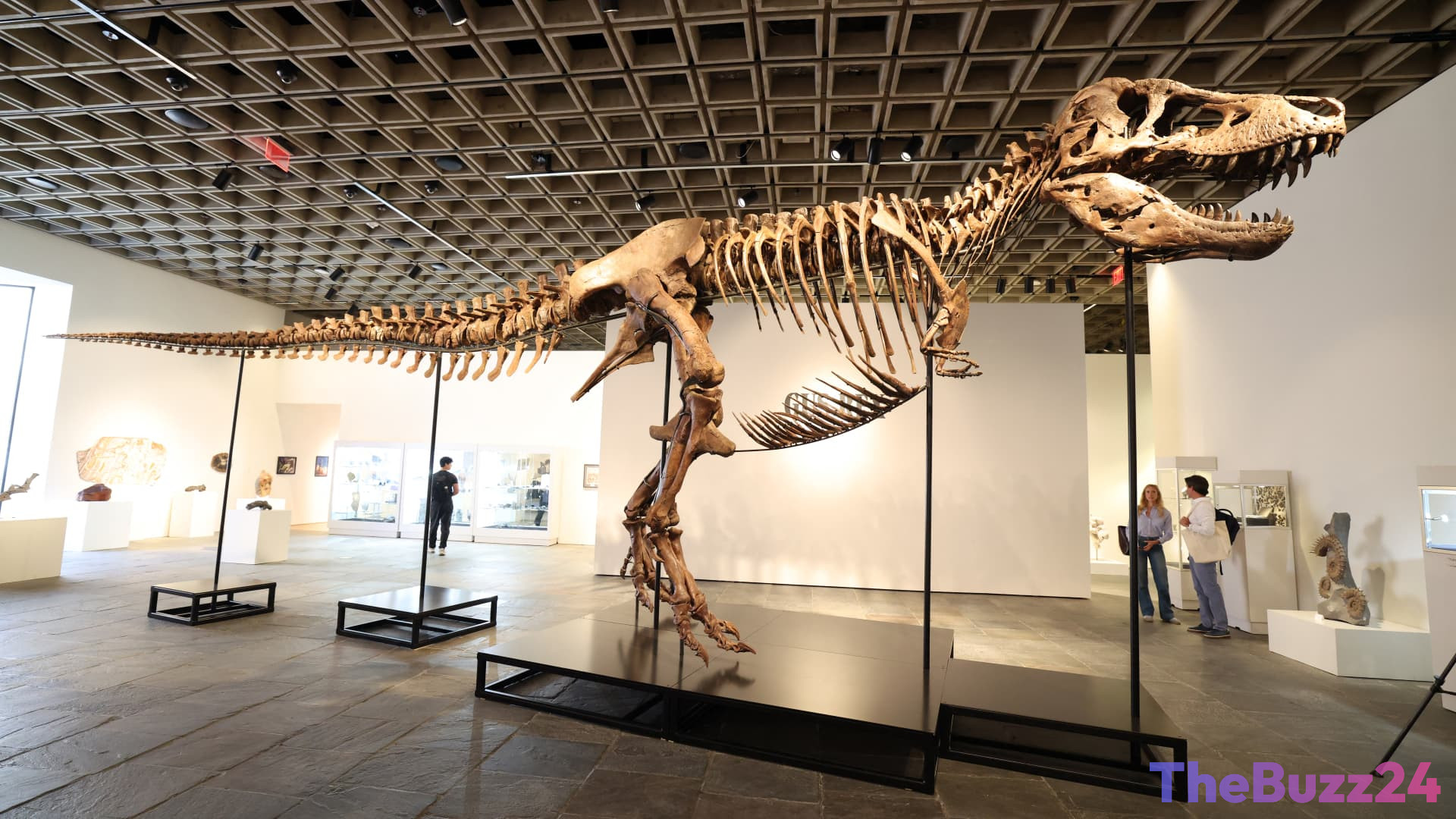
A prehistoric giant has made history in the modern art and collectibles market. A remarkably preserved Tyrannosaurus rex skeleton, affectionately named “Gus,” has sold for a staggering $50.1 million at a recent auction. This monumental sale officially crowns Gus as the most expensive dinosaur fossil ever sold, eclipsing the previous record set just last year when a Stegosaurus skeleton named “Apex” was purchased by billionaire Ken Griffin for $44.6 million.
The auction itself was a highly competitive affair, lasting roughly ten minutes as seven eager bidders drove the price far past its initial estimate of $20 million to $30 million. Discovered in South Dakota, the 67-million-year-old fossil is celebrated for its exceptional completeness. Gus boasts 183 fossil bone elements, representing approximately 61% of its original skeletal structure. Measuring 38 feet in length and standing 12.5 feet tall, the specimen features a massive 54-inch skull, making it one of the largest T. rex discoveries to date.
Beyond its sheer size, Gus offers a fascinating window into prehistoric life, bearing physical evidence of ancient battles. The fossilized bones show healed fractures in several ribs and gastralia, alongside distinct bite marks on the skull. While the sale highlights the soaring demand for paleontological treasures among wealthy private collectors, it also underscores a growing debate. Paleontologists continue to express concern over the commercialization of these rare specimens, warning that private acquisitions limit scientific access and pointing out the lack of standardized verification safeguards in the rapidly expanding fossil market.
Key Takeaways
- The 67-million-year-old T. rex fossil named 'Gus' sold for a record-breaking $50.1 million, making it the most expensive dinosaur skeleton ever auctioned.
- Gus is exceptionally well-preserved, containing 183 bone elements (61% complete) and showing unique signs of prehistoric injuries, including healed rib fractures and skull bite marks.
- The soaring prices of dinosaur fossils highlight a booming alternative asset class for the ultra-wealthy, though scientists warn this trend could restrict research access and lacks industry-wide authentication standards.
Editor’s Analysis & Impact
The multi-million-dollar sale of ‘Gus’ highlights a significant shift in the luxury collectibles market, where ancient fossils are increasingly viewed as high-value alternative assets alongside fine art and rare blue-chip commodities. For auction houses, diversifying into natural history has proven highly lucrative, tapping into a demographic of ultra-high-net-worth individuals seeking unique status symbols. However, this commercial boom presents a double-edged sword. While high-profile auctions generate public excitement for paleontology, they also price out public museums and academic institutions. This trend risks locking invaluable scientific data behind the closed doors of private estates. Moving forward, the industry will likely face mounting pressure to establish stricter provenance and authenticity standards, as well as collaborative frameworks that allow researchers access to privately owned specimens.
Frequently Asked Questions
Q: Why is the T. rex fossil named 'Gus' so significant?
A: Gus is one of the most complete T. rex specimens ever discovered, featuring 183 fossil bone elements (about 61% complete). It also displays unique pathological features, including healed rib fractures and bite marks on its skull, offering rare insights into the dinosaur's life and battles.
Q: What was the previous record for the most expensive dinosaur fossil?
A: The previous record was held by a Stegosaurus skeleton named 'Apex,' which sold for $44.6 million in 2024 to billionaire hedge fund manager Ken Griffin. Prior to that, a T. rex named 'Stan' sold for $31.8 million in 2020.
Q: Why are scientists concerned about the private sale of dinosaur fossils?
A: Paleontologists worry that when important fossils are purchased by private collectors, they are lost to the scientific community for research and public education. Additionally, experts warn that the rapidly growing commercial fossil market lacks robust safeguards for verifying authenticity and provenance.
AI Disclosure: This article is based on verified data and official reports. Our Team and AI have cross-referenced every financial detail with primary sources to ensure total accuracy.
More from this Category