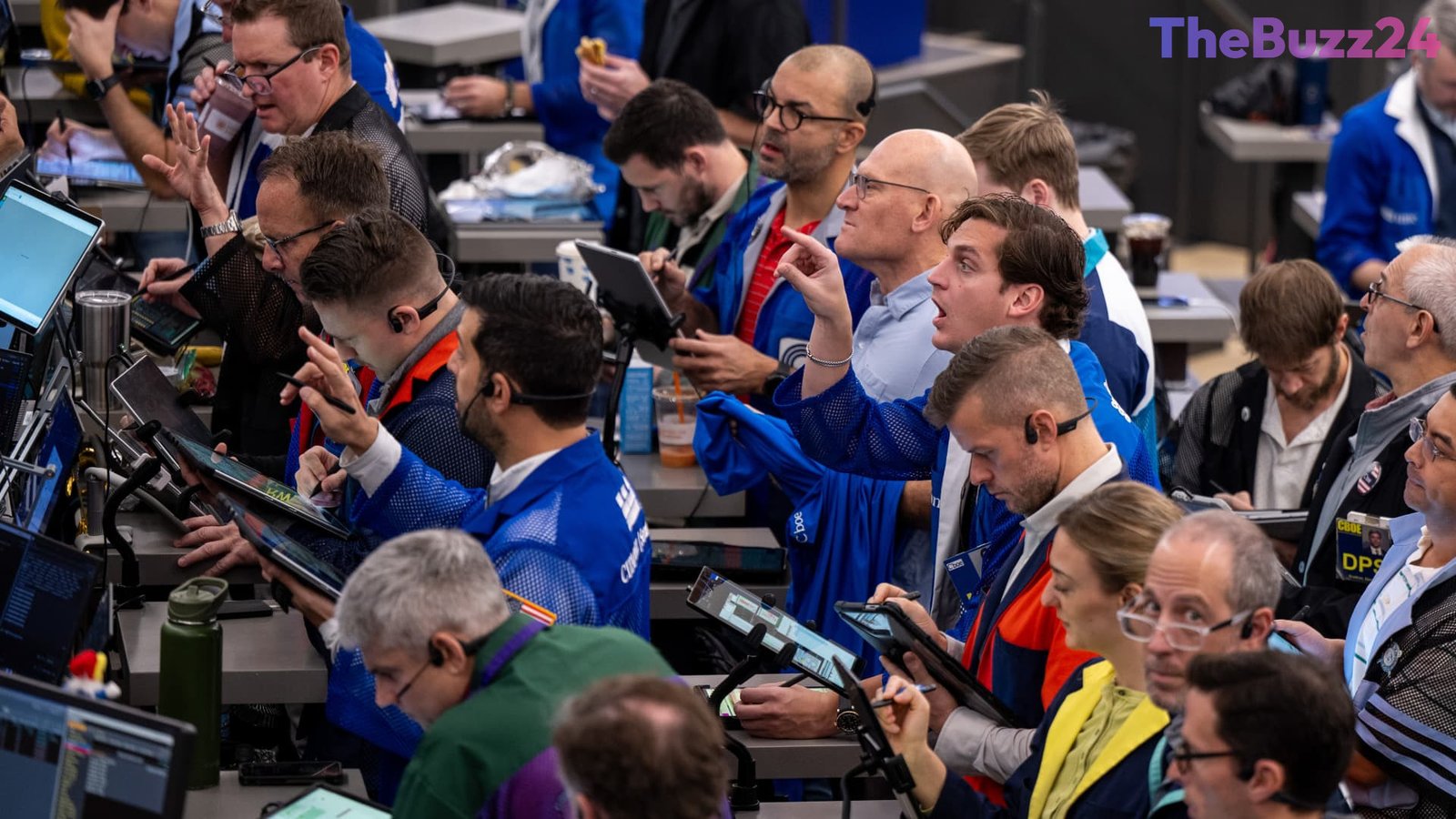
Retail Investors Drive Bullish Options Frenzy in Key Stocks Amid Market Volatility Shift
Despite the historical tendency for the current month to be challenging for equity markets, options traders are demonstrating a strong bullish sentiment, particularly in a selection of retail investor favorites known for their significant price movements and speculative appeal. Recent trading sessions have seen an surge in options volume for companies such as Robinhood Markets, Palantir Technologies, and Elon Musk’s ventures, Tesla and SpaceX, with the latter two ranking among the most actively traded stocks by options volume.
The trading patterns distinctly lean bullish, with call options being traded at least twice as frequently as put options for each of these companies. This heightened activity coincides with a notable decrease in implied volatility across both the broader S&P 500 index and individual stocks, as indicated by the Cboe Volatility Index (VIX) trading below 15. This environment often makes options contracts more attractive to traders.
Robinhood, a popular platform among retail traders, has experienced particularly strong bullish action. Call options have been trading more than twice as heavily as puts, with nearly three times as many calls purchased relative to puts. Furthermore, put selling has outpaced put buying, signaling robust confidence from traders. This activity has propelled Robinhood’s stock into positive territory for the year, nearing a fresh year-to-date high. Similarly, Palantir Technologies has seen a substantial stock price increase, translating into elevated options activity, with calls significantly outnumbering puts.
The anticipation surrounding Tesla’s Cybercab event in Austin, Texas, has fueled considerable interest in both Tesla and SpaceX. Traders are buying calls at twice the rate of puts for both entities, accompanied by a significant volume of put selling. SpaceX’s stock recently reclaimed the key $150 level, a price point not consistently held since early July, amidst a sharp decline in its 30-day implied volatility, which currently sits in the 4th percentile and is roughly half its historical average since its public debut.
Key Takeaways
- Retail traders are making significant bullish bets on stocks like Robinhood, Palantir, Tesla, and SpaceX through options contracts.
- Call options are heavily outpacing put options, and put selling is prevalent, indicating strong positive sentiment from traders.
- This surge in speculative activity coincides with a notable decrease in overall market implied volatility, making options more attractive to investors.
Editor’s Analysis & Impact
The recent surge in bullish options trading for retail favorites like Robinhood, Palantir, Tesla, and SpaceX highlights a renewed appetite for speculative investments among individual traders. This trend, occurring amidst a period of historically low market volatility, suggests that investors are actively seeking opportunities for outsized gains, potentially viewing the reduced VIX as an opportune moment to enter options positions at lower premiums. The focus on event-driven catalysts, such as Tesla’s Cybercab event and broader market movements like Bitcoin’s rally, underscores a tactical approach to trading. While this activity can drive significant short-term price movements, it also introduces increased volatility and risk for these stocks. The sustained engagement of retail investors in complex derivatives like options could reshape market dynamics, emphasizing the growing influence of individual trading communities on specific company valuations and broader market sentiment.
Frequently Asked Questions
Q: What are call and put options?
A: Call options give the holder the right, but not the obligation, to buy an underlying asset at a specified price (strike price) by a certain date. Put options give the holder the right, but not the obligation, to sell an underlying asset at a specified price by a certain date. Traders use calls to bet on price increases and puts to bet on price decreases.
Q: Why is low implied volatility attractive to options traders?
A: Implied volatility is a key factor in options pricing; lower implied volatility generally means options contracts are cheaper. When implied volatility is low, traders can purchase options at a reduced cost, potentially increasing their leverage and the profitability of their bets if the underlying stock moves significantly in their favor.
Q: What does 'retail trading favorites' mean in this context?
A: 'Retail trading favorites' refers to stocks that are particularly popular and actively traded by individual, non-professional investors, often through online brokerage platforms. These stocks frequently experience high trading volumes and can be subject to rapid price swings due to coordinated or widespread interest from the retail trading community.
AI Disclosure: This article is based on verified data and official reports. Our Team and AI have cross-referenced every financial detail with primary sources to ensure total accuracy.
More from this Category