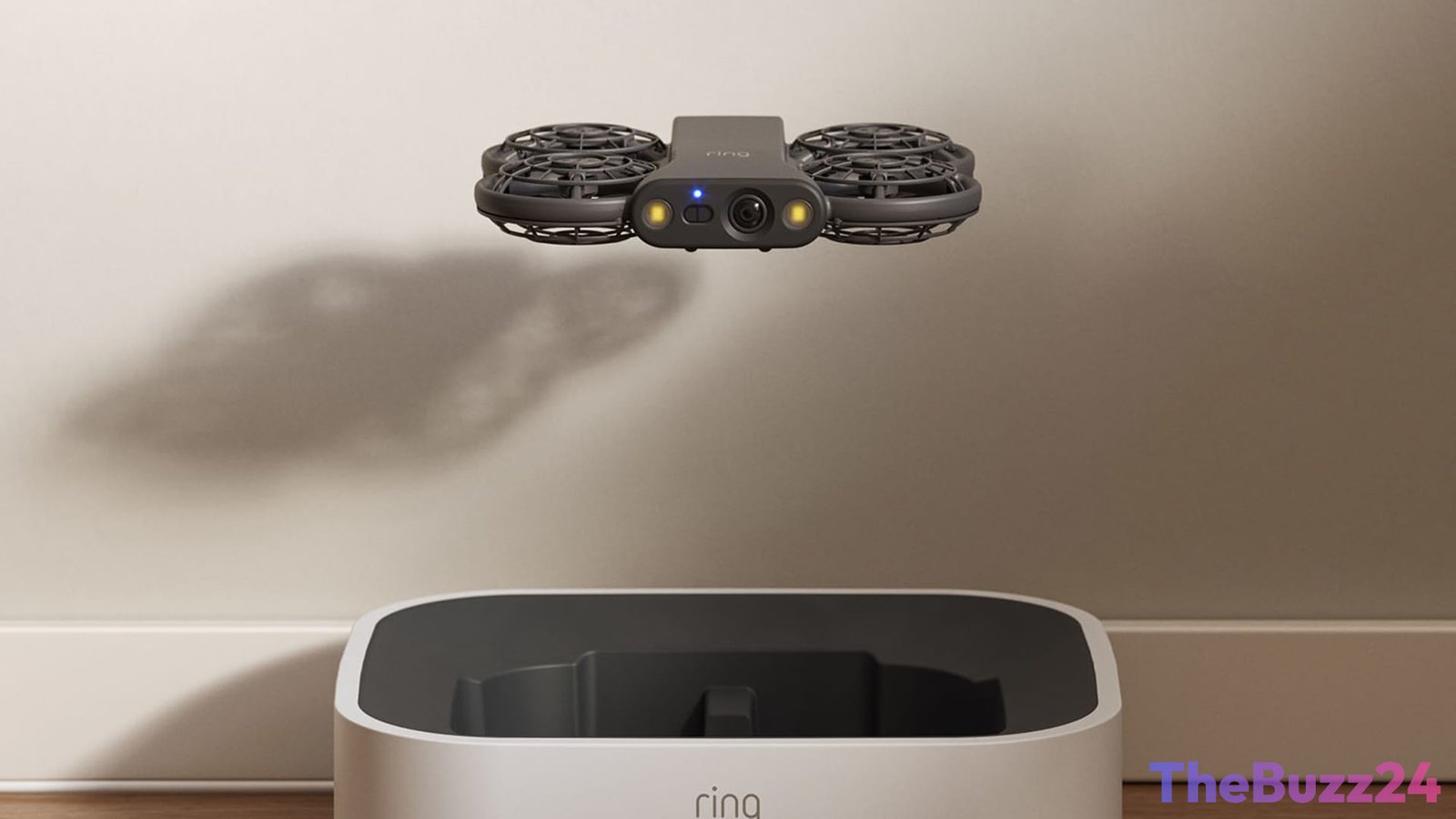
Ring Unveils Autonomous Security Duo: Flying Drone for Homes, Patrolling Robot for Businesses
Ring, a subsidiary of Amazon, is expanding its security offerings with the introduction of two new autonomous surveillance devices: a flying indoor drone for home monitoring and a patrolling robot designed for commercial environments. These innovations aim to deepen Ring’s presence in the rapidly growing smart home and business security markets.
The $250 Ring Drone Cam is an indoor security camera capable of flying autonomously from room to room, including upstairs, to investigate suspicious activity. Equipped to capture footage day or night, the drone follows a preset path when an alarm or sensor is triggered. Users can also deploy it on demand. Ring CEO Jamie Siminoff highlighted its potential as a crime deterrent, noting that its built-in LED lights and distinctive buzz could discourage intruders. The drone can fly for up to eight minutes before returning to its charging dock and is slated to ship in the U.S. on January 27, pending FCC approval.
For businesses, Ring is launching the $1,000 Ring Rover Cam, which repurposes Amazon’s Astro home robot. This device is engineered to patrol offices, warehouses, and other workspaces, offering mobile surveillance. The Rover Cam features a display mounted on a two-wheeled base, an extendable periscope camera, a built-in siren, two-way audio, and a light tower to indicate its location. Siminoff emphasized that both the drone and robot allow users to monitor multiple areas with a single device, addressing the desire for comprehensive coverage without installing numerous static cameras.
These new products arrive as Ring continues to navigate privacy discussions, a recurring theme for the company, particularly concerning its past partnerships with law enforcement. Ring asserts that privacy is the default setting for both new devices, which illuminate an LED light when recording. Furthermore, the Drone Cam is strictly an indoor device, with Ring implementing safeguards to prevent outdoor flight in compliance with Federal Aviation Administration regulations. The Ring Rover Cam is scheduled to begin shipping to users on December 16.
Key Takeaways
- Ring has launched two new autonomous security devices: the $250 Drone Cam for indoor home monitoring and the $1,000 Rover Cam, a repurposed Astro robot for business patrols.
- The Drone Cam flies preset paths to investigate triggered alarms and capture footage, while the Rover Cam offers mobile surveillance for offices and warehouses.
- The releases come amidst ongoing discussions about privacy in smart home technology, a recurring theme for Ring, though the company emphasizes privacy features like LED recording indicators and adherence to FAA regulations for the drone.
Editor’s Analysis & Impact
Ring’s introduction of autonomous security devices marks a significant evolution in both home and business surveillance markets. By offering mobile monitoring solutions, the company aims to capture a larger share of the expanding smart home sector, estimated to reach $200 billion this year, while also venturing deeper into commercial applications. This move could spur competitors like Apple and Google to accelerate their own advanced security offerings. However, the launch also intensifies the ongoing debate surrounding privacy and data collection, a sensitive area for Ring given its past controversies. Future success will hinge on consumer and business trust, regulatory navigation, and the perceived value these dynamic systems provide against potential privacy trade-offs. The trend towards autonomous monitoring is clear, but its widespread acceptance will depend on robust security protocols and transparent data practices.
Frequently Asked Questions
Q: What are Ring's new security devices?
A: Ring has introduced two new autonomous security devices: the Ring Drone Cam, an indoor flying camera for home monitoring, and the Ring Rover Cam, a patrolling robot designed for businesses.
Q: How do the new devices address privacy concerns?
A: Ring states that privacy is the default mode for both devices. They are designed to flash an LED light when actively recording, providing a visual indicator to users and those being monitored.
Q: Can the Ring Drone Cam be used outdoors?
A: No, the Ring Drone Cam is strictly for indoor use. Federal Aviation Administration (FAA) regulations restrict the operation of drones outside the line of sight of a pilot, and Ring has implemented guardrails to prevent outdoor flight.
AI Disclosure: This article is based on verified data and official reports. Our Team and AI have cross-referenced every financial detail with primary sources to ensure total accuracy.
More from this Category