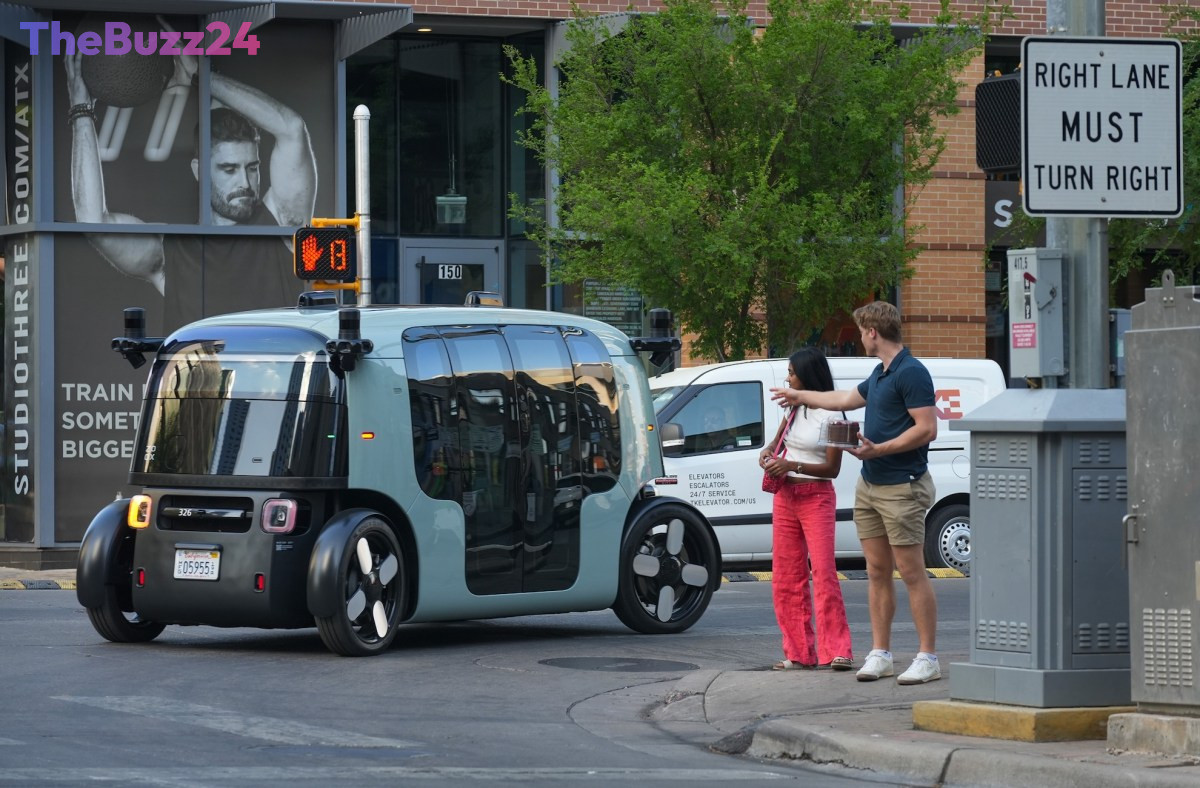
Robotaxi Race Accelerates Amidst Regulatory Crosswinds
The autonomous vehicle industry is experiencing a period of dynamic tension, with federal regulators pushing for faster development while state and local authorities apply the brakes. Recent actions by the National Highway Traffic Safety Administration (NHTSA) aim to streamline regulations, signaling a strong federal push to accelerate the deployment of self-driving technology.
One significant development is the temporary exemption granted to Zoox from several federal motor vehicle safety standards. This crucial step paves the way for Zoox to begin charging passengers for rides in its custom-designed robotaxis, with initial services slated for Las Vegas. This exemption removes a key regulatory obstacle, bringing Zoox closer to launching its commercial operations.
However, the path forward for robotaxis is not without its challenges. Companies like Waymo are facing increased scrutiny regarding their vehicles’ interactions with emergency services. Following incidents where Waymo vehicles caused traffic disruptions in San Francisco, Mayor Daniel Lurie has called for enhanced regulations. Adding to these concerns, a new bill proposed by Rep. Kevin Mullin (D-Calif.) seeks to establish national minimum safety standards for autonomous vehicle operators, highlighting a growing demand for clearer federal guidelines.
Beyond the robotaxi sector, other areas of mobility are also seeing significant activity. Lucid Motors has secured additional investment from Saudi Prince Al Waleed bin Talal Al Saud. Elon Musk’s The Boring Company is reportedly in discussions to raise $4 billion at a $20 billion valuation. In the commercial fleet space, Terminal, a Toronto-based startup, has raised $20 million in Series A funding. The drone delivery sector is also heating up, with Walmart, Alphabet’s Wing, and DoorDash all expanding their services or developing new drone delivery capabilities.
Meanwhile, established automakers are navigating shifts in their electrification strategies. A recent analysis of earnings calls for General Motors and Ford reveals a decreased emphasis on electric vehicles compared to pre-pandemic levels, despite ongoing EV sales and product development. This suggests a strategic recalibration as the industry grapples with evolving market demands and technological advancements.
Key Takeaways
- Federal regulators are easing rules to speed up autonomous vehicle development, exemplified by NHTSA's exemption for Zoox.
- State and local officials are increasing scrutiny on robotaxis due to concerns about safety and interference with emergency services.
- Significant investments and developments are occurring across the mobility sector, including electric vehicles, drone delivery, and tunneling technology.
Editor’s Analysis & Impact
The autonomous vehicle landscape is at a critical juncture, characterized by a divergence between federal ambition and local caution. While regulatory hurdles are being lowered at the federal level to foster innovation, incidents involving robotaxis are prompting stricter oversight from state and city governments. This regulatory tug-of-war creates uncertainty for AV developers and investors. The industry’s future hinges on finding a balance that ensures public safety and trust while enabling technological progress. Furthermore, shifts in focus by major automakers like GM and Ford away from aggressive EV expansion, as indicated by reduced discussion in earnings calls, suggest a broader industry recalibration towards more pragmatic electrification strategies.
Frequently Asked Questions
Q: What is the main conflict in the robotaxi industry right now?
A: The primary conflict lies between federal efforts to accelerate the development and deployment of autonomous vehicles by reducing regulatory burdens, and state/local authorities who are increasing scrutiny and implementing stricter rules due to safety concerns and operational incidents.
Q: Which companies are making significant moves in the autonomous vehicle and related sectors?
A: Key players include Zoox, which is preparing to launch paid robotaxi services; Waymo, facing increased regulatory oversight; The Boring Company, seeking substantial funding; and various drone delivery companies like Walmart, Alphabet's Wing, and DoorDash.
Q: How are traditional automakers like GM and Ford approaching electric vehicles?
A: Analysis suggests that GM and Ford are discussing EVs less frequently in their earnings calls compared to previous periods, indicating a potential shift in strategic focus or pace regarding their electrification plans, despite continuing to sell EVs and develop new models.
AI Disclosure: This article is based on verified data and official reports. Our Team and AI have cross-referenced every financial detail with primary sources to ensure total accuracy.
More from this Category