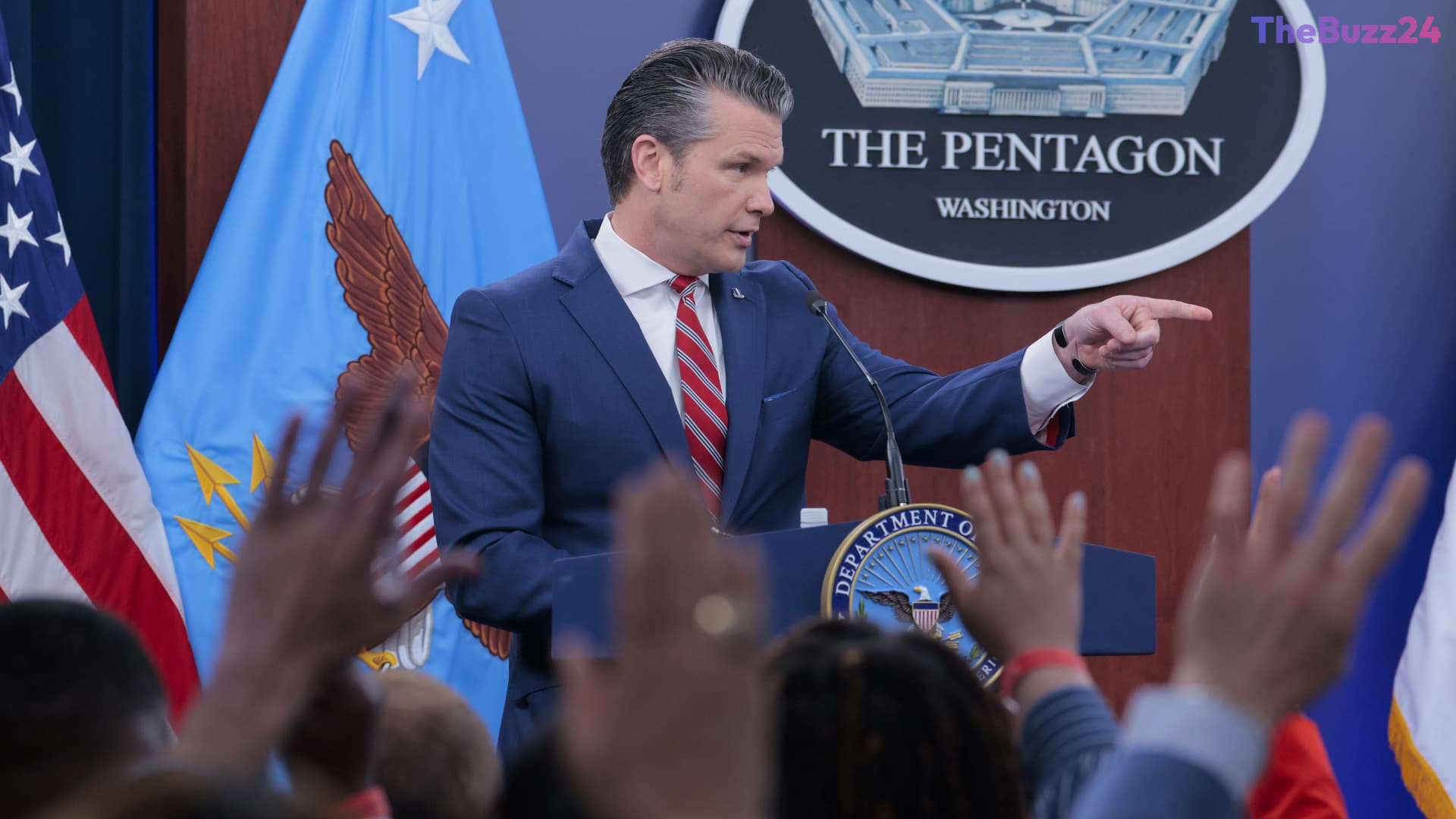
Secretary of War Hegseth Demands Increased Defense Spending from Global Allies
Secretary of War Pete Hegseth has unveiled a major recalibration of American defense policy, placing a renewed emphasis on the financial and military responsibilities of international partners. During a recent address at the IISS Shangri-La Dialogue in Singapore, Hegseth highlighted the Indo-Pacific as a critical theater, commending nations like Australia, the Philippines, Malaysia, Singapore, and Indonesia for bolstering their military readiness. These countries are now positioned to receive preferential treatment regarding intelligence sharing, industrial partnerships, and arms procurement as part of a strategy to counter regional hegemony.
Central to this policy shift is a firm commitment to preventing any single power from dominating the Indo-Pacific. While Hegseth described the current diplomatic relationship with China as stable, he issued a stern warning against any attempts to disrupt the regional status quo, citing concerns over China’s rapid military expansion. The U.S. strategy aims to maintain a balance of power that ensures the sovereignty of its regional partners remains intact.
In a stark contrast to his praise for Indo-Pacific allies, Hegseth directed sharp criticism toward European nations, accusing many of allowing their defense capabilities to wither while relying excessively on American military support. He established a clear benchmark, insisting that allies must commit at least 3.5% of their GDP to defense spending. Hegseth warned that failure to meet these financial obligations would result in a fundamental restructuring of security ties with Washington. He emphasized that the current ‘America First’ doctrine is not a retreat into isolationism, but rather a call for more capable and self-reliant sovereign partners.
However, the new strategy has not been without its detractors. Some U.S. lawmakers, including Senator Tammy Duckworth, have voiced concerns that the administration’s rhetoric could be misconstrued as a waning commitment to the Indo-Pacific. Duckworth cautioned that a shift toward more subtle diplomatic maneuvers might undermine the credibility of long-standing security guarantees, potentially creating a power vacuum that could be exploited by regional rivals.
Key Takeaways
- Secretary of War Pete Hegseth is prioritizing Indo-Pacific allies who demonstrate increased military readiness and defense investment.
- The U.S. is demanding that international allies commit at least 3.5% of their GDP to defense spending or face a change in security relations.
- Lawmakers have expressed concern that the new 'America First' defense strategy could be interpreted as a weakening of U.S. commitment to regional security.
Editor’s Analysis & Impact
The shift in defense policy signaled by Secretary Hegseth represents a significant departure from traditional post-WWII security arrangements. By explicitly linking security guarantees to a 3.5% GDP defense spending threshold, the administration is attempting to force a transition from a U.S.-dependent security model to a more decentralized, partner-led framework. This strategy reflects a broader geopolitical pivot toward the Indo-Pacific to counter Chinese influence, while simultaneously pressuring European allies to address long-standing concerns regarding defense underinvestment. The long-term implication is a more transactional approach to international alliances, which may increase regional military capabilities but risks creating diplomatic friction and uncertainty regarding the reliability of U.S. security umbrellas. Future market impacts may include increased demand for domestic defense industrial bases and a potential shift in global arms procurement patterns.
Frequently Asked Questions
Q: What is the new defense spending benchmark for U.S. allies?
A: Secretary of War Pete Hegseth has stated that the U.S. expects its allies to commit at least 3.5% of their GDP to defense spending.
Q: Why are some lawmakers concerned about the new defense strategy?
A: Critics, such as Senator Tammy Duckworth, fear that the administration's rhetoric and shift in diplomatic approach could be perceived as a lack of commitment to the Indo-Pacific, potentially undermining existing security guarantees.
AI Disclosure: This article is based on verified data and official reports. Our Team and AI have cross-referenced every financial detail with primary sources to ensure total accuracy.
More from this Category