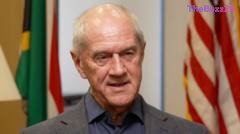
South Africa’s US Ambassador Refutes Claims of White Afrikaner Genocide
South Africa’s newly appointed ambassador to Washington has firmly rejected assertions made by the US administration alleging a targeted genocide against white Afrikaners. Speaking from a perspective as a lifelong Afrikaner and a key historical mediator who helped end apartheid in the 1990s, the ambassador asserted that such claims are entirely unfounded and misrepresent the complex reality of crime and social dynamics within the nation.
The diplomatic friction intensified following executive actions and special refugee pathways established by Washington to admit thousands of white South Africans, citing safety concerns and alleged systemic persecution. While certain right-wing factions and emigrants argue that rural communities and farmers face targeted violence, local law enforcement data and independent experts clarify that crime in South Africa is widespread, heavily impacting black communities in urban townships rather than serving as an ethnic cleansing campaign.
Critics of the fast-track refugee program, including domestic religious leaders and former US refugee officials, argue that the initiative mischaracterizes the situation, potentially siphoning limited humanitarian resources away from genuine victims of war and ethnic persecution elsewhere. Many local observers suggest that the grievances driving some Afrikaner communities stem from a natural redistribution of societal privileges and post-apartheid equity reforms rather than active state-sponsored persecution.
As diplomatic efforts continue, South African officials are actively seeking to mend bilateral relations and encourage Washington to revoke executive restrictions. The ambassador emphasizes that constructive engagement and resource-sharing in broader crime-fighting initiatives would yield far better results than political rhetoric that inaccurately portrays the nation’s ongoing struggles with general criminality.
Key Takeaways
- South Africa's US ambassador has formally refuted claims of a white Afrikaner genocide, calling the allegations entirely unfounded.
- The US administration has established a unique refugee pathway for white Afrikaners, admitting thousands under the premise of rural safety concerns.
- Local experts and officials emphasize that South Africa's high crime rates affect all demographics equally and do not constitute targeted ethnic persecution.
Editor’s Analysis & Impact
The diplomatic disagreement between Washington and Pretoria highlights the complexities of navigating post-apartheid historical grievances on the global stage. By weaponizing unverified narratives of demographic persecution, foreign administrations can inadvertently strain international partnerships and disrupt trade and diplomatic ties. For multinational corporations and regional observers, this situation underscores the importance of relying on empirical, data-driven security assessments rather than politically charged rhetoric. Looking ahead, resolving these tensions will require deliberate, high-level diplomatic dialogue focused on mutual cooperation in law enforcement and economic equity, rather than punitive visa measures or polarizing refugee policies.
Frequently Asked Questions
Q: Is there evidence of a white genocide in South Africa?
A: No. Extensive data from law enforcement and independent experts show that violent crime affects all racial groups in South Africa, with black citizens in urban townships suffering the highest proportion of homicides.
Q: What is the US refugee pathway for Afrikaners?
A: The US administration established a specialized refugee program intended to resettle white Afrikaners fleeing South Africa, citing unverified claims of systemic persecution and farm violence.
Q: How has the South African government responded to these claims?
A: South African officials, including the ambassador to Washington, have strongly pushed back against the genocide narrative, calling for the revocation of US executive orders and emphasizing that crime is a generalized national issue rather than a targeted ethnic attack.
AI Disclosure: This article is based on verified data and official reports. Our Team and AI have cross-referenced every financial detail with primary sources to ensure total accuracy.
More from this Category