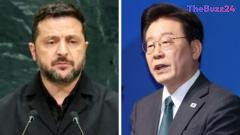
South Korea Summons Ukraine Envoy Over Disclosed North Korean POW Transfer
South Korea has formally expressed “strong regret” to Ukraine, summoning its acting ambassador following Ukrainian President Volodymyr Zelensky’s public announcement last week regarding the transfer of two captured North Korean soldiers to Seoul. Vice Foreign Minister Park Yoon-joo lodged a complaint with Andrii Vieshkin, emphasizing Seoul’s disappointment that the transfer, which they claim was meant to be confidential, was revealed.
The two North Korean individuals, who had been supporting Russian forces in the conflict and expressed a desire to be sent to South Korea, were the subject of over a year of negotiations between Seoul and Kyiv. President Lee Jae Myung described the disclosure as “greatly disappointing,” labeling the transfer a “highly sensitive issue” with national security implications. Seoul asserts that an agreement was in place to keep the transfer secret, partly to safeguard the soldiers’ families and to prevent criticism that Ukraine had foregone an opportunity for a prisoner exchange. However, Zelensky’s office has countered this, claiming no non-disclosure agreement existed between the two nations.
The diplomatic spat has led to a demand from Seoul for an apology from Ukraine, citing damage to trust. Domestically, President Lee faced significant criticism, with opposition parties accusing him of attempting to conceal the transfer to placate Pyongyang, a move inconsistent with his party’s conciliatory stance towards the North. This incident unfolds against a backdrop of South Korea’s complex relationship with the conflict: while sympathetic to Ukraine and providing non-lethal aid, Seoul maintains a policy against supplying lethal weapons to active war zones. Kyiv, however, has intensified pressure for advanced anti-air missiles, particularly after North Korean troops were deployed to support Russia, arguing that South Korea’s long-term security interests are at stake.
The situation is further complicated by Russia’s warning of retaliation if South Korea provides arms to Ukraine. Seoul traditionally balances its alliance with the U.S. with efforts to maintain cordial ties and deepen diplomatic relations with neighbors like Russia and China, viewing them as crucial partners in influencing North Korea. This delicate geopolitical balancing act underscores the broader implications of the disclosed transfer and the ongoing pressure on South Korea’s foreign policy.
Key Takeaways
- South Korea formally protested Ukraine's public announcement of transferring two North Korean POWs to Seoul, claiming a breach of a secrecy agreement.
- The disclosure has created a diplomatic rift, with South Korea citing national security concerns and damage to trust, while Ukraine denies any non-disclosure agreement.
- The incident highlights South Korea's delicate geopolitical position, balancing support for Ukraine with its policy against providing lethal aid and its complex relations with Russia and North Korea.
Editor’s Analysis & Impact
This diplomatic incident underscores the intricate geopolitical tightrope South Korea walks. The public disclosure of the North Korean POW transfer, regardless of a formal non-disclosure agreement, has clearly strained trust between Seoul and Kyiv. For South Korea, the sensitivity stems from national security implications, potential repercussions for the POWs’ families, and domestic political fallout for President Lee. The broader implication is a potential re-evaluation of South Korea’s aid strategy to Ukraine, especially as Kyiv continues to press for lethal weapons. This event could also complicate Seoul’s efforts to engage with Pyongyang and manage its relationships with Moscow and Beijing, who are key players in regional stability and North Korean affairs. The incident serves as a stark reminder of how seemingly isolated events can ripple through complex international relations.
Frequently Asked Questions
Q: Why was the transfer of North Korean POWs to South Korea considered a sensitive issue?
A: South Korea deemed it sensitive due to national security implications, the need to protect the soldiers' families in North Korea, and to avoid potential criticism that Ukraine had missed an opportunity for a prisoner exchange.
Q: What is South Korea's stance on providing military aid to Ukraine?
A: South Korea has provided significant non-lethal assistance to Ukraine but maintains a longstanding policy of not supplying lethal weapons to countries engaged in active conflict, despite increasing pressure from Kyiv.
Q: How has this incident impacted relations between South Korea and Ukraine?
A: The incident has caused a diplomatic rift, with South Korea expressing "strong regret" and demanding an apology, citing damage to trust. Ukraine, however, denies any wrongdoing regarding the disclosure.
AI Disclosure: This article is based on verified data and official reports. Our Team and AI have cross-referenced every financial detail with primary sources to ensure total accuracy.
More from this Category