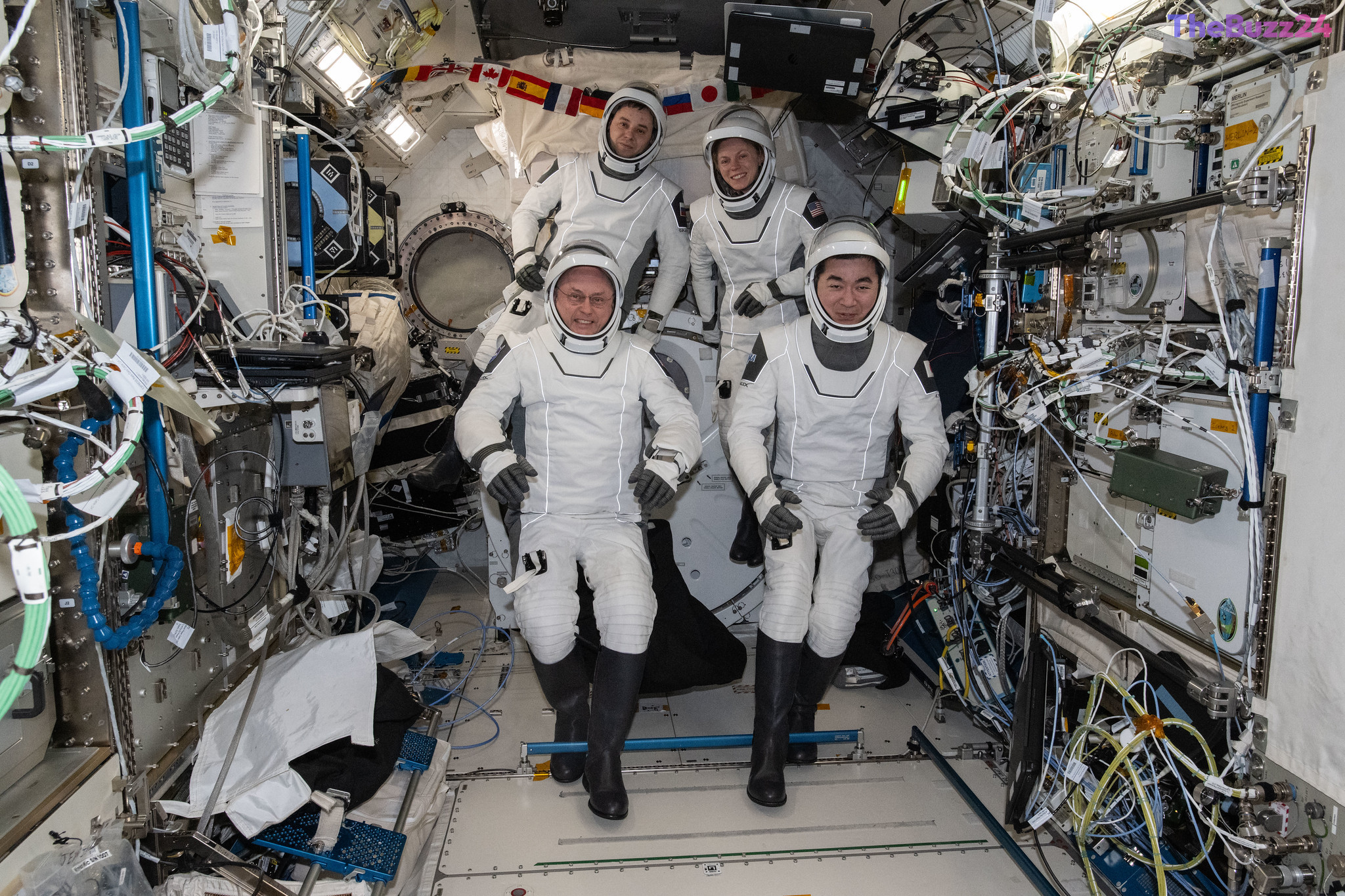
SpaceX Crew-11 Astronauts Reflect on 167-Day Scientific Mission Aboard the ISS
The astronauts of the SpaceX Crew-11 mission are set to provide a detailed account of their 167-day residency on the International Space Station. Following their successful return to Earth in January 2026, crew members Zena Cardman, Mike Fincke, and Kimiya Yui will host a public forum at agency headquarters in Washington to discuss the scientific breakthroughs and operational achievements realized during their time in low-Earth orbit.
Launched from the Kennedy Space Center in August 2025, the mission was a significant test of endurance, covering approximately 71 million miles and completing more than 2,670 orbits. Alongside Roscosmos cosmonaut Oleg Platonov, the team focused on critical research and technology demonstrations. These efforts were specifically aimed at refining the protocols and systems essential for upcoming human exploration missions to the Moon and Mars. The mission was particularly notable for taking place during the 25th anniversary of continuous human presence on the orbital laboratory, highlighting the ongoing success of international cooperation in space.
For veteran astronaut Mike Fincke, this mission marked his fourth journey into space, bringing his total time in orbit to 549 days. The upcoming presentation aims to bridge the gap between complex orbital operations and public understanding, offering insights into the daily realities of life in microgravity. By sharing their experiences, the crew hopes to illustrate the evolving role of commercial partnerships in space travel and the next generation of technologies that will shape the future of human spaceflight.
Key Takeaways
- The SpaceX Crew-11 mission successfully completed 167 days in orbit, covering 71 million miles.
- Research conducted during the mission focused on preparing for future human exploration of the Moon and Mars.
- The mission occurred during the 25th anniversary of continuous human occupation of the International Space Station.
Editor’s Analysis & Impact
The successful conclusion of the SpaceX Crew-11 mission underscores the maturing relationship between commercial spaceflight providers and government agencies. By leveraging private launch capabilities for long-duration scientific research, the industry is effectively accelerating the timeline for deep-space exploration. The focus on technology demonstrations for lunar and Martian missions suggests that the ISS is increasingly being utilized as a testbed for hardware that will eventually support permanent human outposts beyond Earth’s orbit. As commercial partnerships become the standard for orbital operations, the industry can expect a shift toward more frequent, specialized missions that prioritize both scientific output and the refinement of life-support systems necessary for long-term survival in hostile environments. This trend signals a robust future for the space economy, driven by both public-sector goals and private-sector efficiency.
Frequently Asked Questions
Q: How long was the SpaceX Crew-11 mission?
A: The mission lasted for 167 days, during which the crew lived and worked aboard the International Space Station.
Q: What was the primary focus of the research conducted by the Crew-11 astronauts?
A: The crew focused on scientific research and technology demonstrations intended to support future human exploration of the Moon and Mars.
AI Disclosure: This article is based on verified data and official reports. Our Team and AI have cross-referenced every financial detail with primary sources to ensure total accuracy.
More from this Category