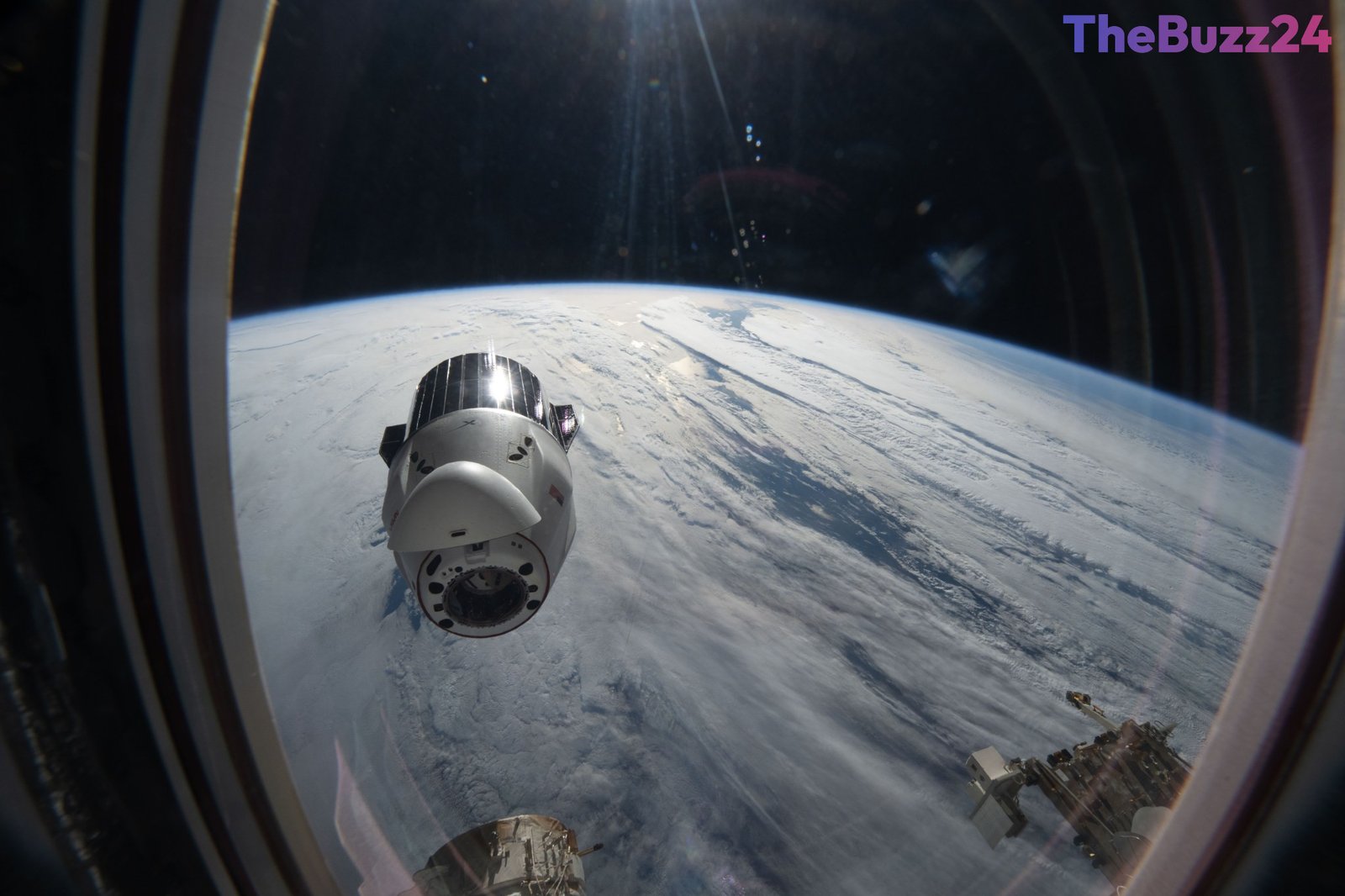
SpaceX Dragon Returns to Earth, Bringing Groundbreaking Research from ISS
A SpaceX Dragon cargo spacecraft is preparing for its return to Earth, carrying thousands of pounds of critical scientific research and hardware from the International Space Station (ISS). This departure marks the conclusion of the 35th commercial resupply services mission, with the uncrewed capsule scheduled to undock from the Harmony module’s space-facing port no earlier than Wednesday, November 18, at 11:05 a.m. EST. Following its departure, the Dragon is expected to splash down off the California coast no earlier than Thursday, November 19, at 1:50 a.m. EST, pending favorable weather conditions in the recovery area.
Among the valuable cargo returning are groundbreaking research samples poised to advance both future space exploration and improve life on Earth. Scientists will retrieve a 3D-bioprinted blood vessel construct, used to investigate vascular aging and cardiovascular disease in both microgravity and terrestrial environments. Also aboard are frozen tumor organoids, treated on the station, which will aid researchers in identifying novel approaches to cancer treatments and personalized medicine. Further analysis will be conducted on frozen microbial samples to deepen understanding of how antibiotic-resistant bacteria adapt and evolve in space. Additionally, a specialized lighting system, having spent over three years on the ISS, will return for evaluation of its potential to support astronaut sleep and well-being during extended missions.
The Dragon spacecraft initially arrived at the orbiting laboratory on October 15, two days after its launch aboard a Falcon 9 rocket from Space Launch Complex 40 at Cape Canaveral Space Force Station in Florida. These commercial resupply missions are integral to the continuous operation and scientific output of the International Space Station, which has hosted humans for over 26 years. The ISS serves as a unique microgravity laboratory, enabling research breakthroughs impossible on Earth, while simultaneously helping to overcome the challenges of human spaceflight, expand commercial opportunities in low Earth orbit, and lay the groundwork for ambitious long-duration missions to the Moon, under programs like Artemis and Moon Base, and ultimately to Mars.
Key Takeaways
- A SpaceX Dragon spacecraft is returning to Earth with thousands of pounds of critical scientific research from the International Space Station.
- The returning cargo includes advanced biological experiments focused on cardiovascular health, cancer treatment, and antibiotic resistance, with implications for both space and Earth.
- This mission highlights the ongoing importance of commercial resupply services and the ISS as a platform for scientific discovery and a stepping stone for future deep-space human exploration.
Editor’s Analysis & Impact
The successful return of the SpaceX Dragon with its precious scientific cargo underscores the vital role of commercial partnerships in advancing space exploration and research. This mission not only ensures the continuous operation of the International Space Station but also facilitates groundbreaking discoveries in microgravity that have direct applications for human health on Earth, particularly in areas like personalized medicine and disease treatment. The integration of private sector capabilities, exemplified by SpaceX, is crucial for sustaining a robust presence in low Earth orbit and is foundational for ambitious future endeavors, including the Artemis missions to the Moon and eventual human exploration of Mars. This collaborative model is setting a new standard for space logistics and scientific yield.
Frequently Asked Questions
Q: What specific types of scientific research are returning on the Dragon spacecraft?
A: The Dragon spacecraft is bringing back a variety of critical research samples, including a 3D-bioprinted blood vessel construct for studying cardiovascular health, frozen tumor organoids to advance cancer treatments, and microbial samples to understand antibiotic resistance in space. A specialized lighting system designed to improve astronaut well-being is also returning.
Q: How does this mission contribute to future space exploration?
A: This mission is crucial for future space exploration by returning data and samples that help scientists understand how the human body and various biological systems react to long-duration spaceflight. This knowledge is essential for mitigating risks and developing countermeasures for astronauts on extended missions to the Moon (Artemis program) and Mars, while also expanding commercial opportunities in low Earth orbit.
Q: When is the Dragon spacecraft expected to splash down?
A: The Dragon spacecraft is scheduled to splash down off the California coast no earlier than Thursday, November 19, at 1:50 a.m. EST (10:50 p.m. PST on November 18), subject to favorable weather conditions in the recovery zone.
AI Disclosure: This article is based on verified data and official reports. Our Team and AI have cross-referenced every financial detail with primary sources to ensure total accuracy.
More from this Category