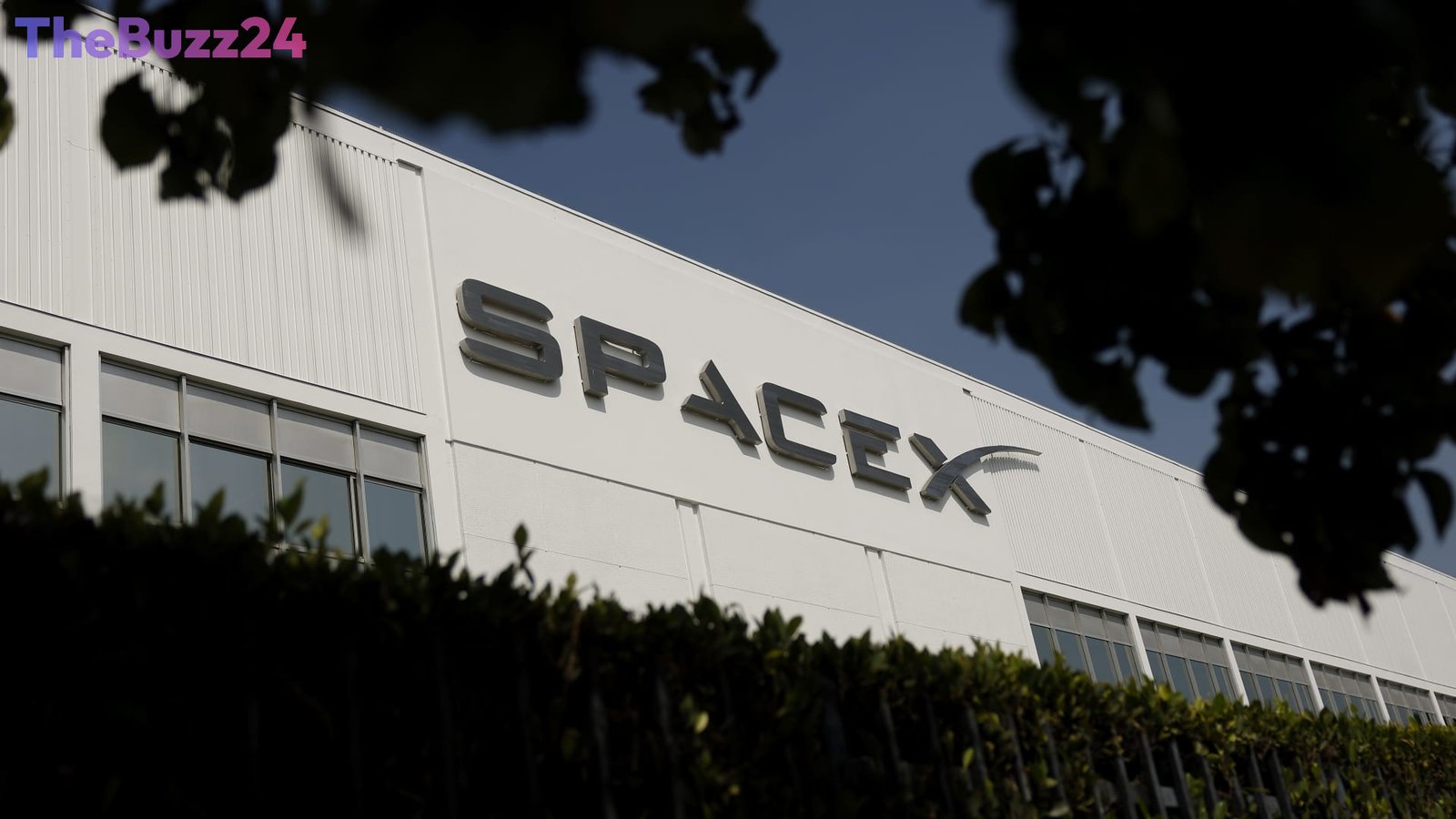
SpaceX Stock’s Unprecedented Calm Captivates Options Market
Elon Musk’s aerospace giant, SpaceX, is exhibiting a rare period of stability, a stark contrast to its initial trading days. After launching as one of the most volatile stocks among its large-cap peers, the company’s equity has remained remarkably steady for the past three weeks, trading within a narrow $10 range around the $140 mark. This newfound calm is reflected in its implied volatility, a key metric for options pricing, which has fallen significantly from over 120 to 57, according to data from ThinkOrSwim. When it first debuted, SpaceX’s volatility would have placed it at the top of the S&P 500’s volatility index; today, it would not even rank in the top 25.
This sustained stability is being interpreted in various ways by market observers. Proponents suggest it signals strong conviction among SpaceX’s insiders and early investors, who have held onto their shares despite the recent expiration of the company’s initial equity lockup period. Furthermore, the company’s inclusion in major stock indexes such as the Nasdaq 100 and Russell 1000 is likely contributing to a smoothing effect on its price movements, integrating it more closely with the broader market.
Noel Smith, founder and chief investment officer of Convex Asset Management, who accurately anticipated the decline in SpaceX’s volatility, likens the situation to a wild individual adapting to urban life. “SpaceX now lives in the city,” Smith commented, suggesting the company has matured into a more typical market participant. This shift is evident when comparing the expected price swings of SpaceX options to those of other tech giants. For instance, weekly options for SpaceX expiring September 25th are pricing in an approximate 11% swing, a figure notably lower than the expected moves for companies like Intel, Robinhood Markets, Corning, and Dell Technologies.
Despite the overall decrease in volatility, options trading data reveals a current preference for put contracts over call contracts, with a put/call open interest ratio of 1.1. However, this ratio has seen a slight decrease from its recent high, and recent trading volume indicates a leaning towards call options. On a recent trading day, approximately 500,000 SpaceX options contracts were traded, with calls significantly outnumbering puts purchased. The most actively traded contracts were calls, suggesting some traders are betting on a continued upward movement in the stock price.
However, seasoned traders are cautioning against rushing into either put or call positions. While implied volatility has decreased, it still exceeds the stock’s realized volatility. This means that options, while appearing cheaper than before, might still be relatively expensive on an absolute basis. Smith advises prudence, stating, “Just because it’s the cheapest it’s ever been relative to itself doesn’t mean much.” He suggests that while current volatility levels seem ‘fair-ish,’ he would still recommend selling options at these levels.
Key Takeaways
- SpaceX's stock has experienced a significant decrease in volatility, trading steadily around $140 after a volatile debut.
- Implied volatility for SpaceX options has dropped substantially, making them appear cheaper but still potentially overvalued compared to realized volatility.
- Options market activity shows a mixed sentiment, with a slight preference for puts but increasing call volume, indicating uncertainty about future price movements.
Editor’s Analysis & Impact
The dramatic reduction in SpaceX’s stock volatility, especially after its initial high-profile debut, is a significant development for options traders and the broader market. This stabilization, potentially driven by insider confidence and index inclusion, suggests a maturing stock that is moving away from speculative trading towards a more fundamental valuation. While the decrease in implied volatility makes options seem more accessible, the fact that it still outpaces realized volatility warrants caution. This presents a complex environment where traders must carefully weigh the cost of options against the stock’s actual price fluctuations. The ongoing debate between put and call dominance highlights the market’s uncertainty, making SpaceX a compelling case study in how newly public, high-growth companies find their equilibrium.
Frequently Asked Questions
Q: What is implied volatility and why is it important for options trading?
A: Implied volatility (IV) is a forecast of the likely future movement in a security's price, derived from the current price of its options. It represents the market's expectation of future price swings. For options traders, IV is crucial because it directly influences the price (premium) of an option contract. Higher IV generally leads to higher option premiums, as there's a greater perceived chance of a significant price move that could make the option profitable.
Q: What is the difference between implied volatility and realized volatility?
A: Implied volatility (IV) is a forward-looking measure, reflecting the market's expectation of future price fluctuations based on current option prices. Realized volatility (also known as historical volatility) is a backward-looking measure, calculating the actual price movements of an asset over a specific past period. When implied volatility is higher than realized volatility, it suggests the market anticipates greater price swings than have actually occurred recently.
Q: What does a put/call open interest ratio of 1.1 indicate for SpaceX?
A: A put/call open interest ratio of 1.1 for SpaceX indicates that there are currently more outstanding (open) put contracts than call contracts. Put options give the holder the right to sell an asset at a specified price, while call options give the right to buy. A ratio above 1 generally suggests a more bearish sentiment among options traders, as more investors are holding positions that profit from a price decrease. However, this ratio should be considered alongside trading volume and other market indicators for a complete picture.
AI Disclosure: This article is based on verified data and official reports. Our Team and AI have cross-referenced every financial detail with primary sources to ensure total accuracy.
More from this Category