SpaceX Valuation Skyrockets to $2.6 Trillion, Briefly Overtaking Amazon in Post-IPO Frenzy
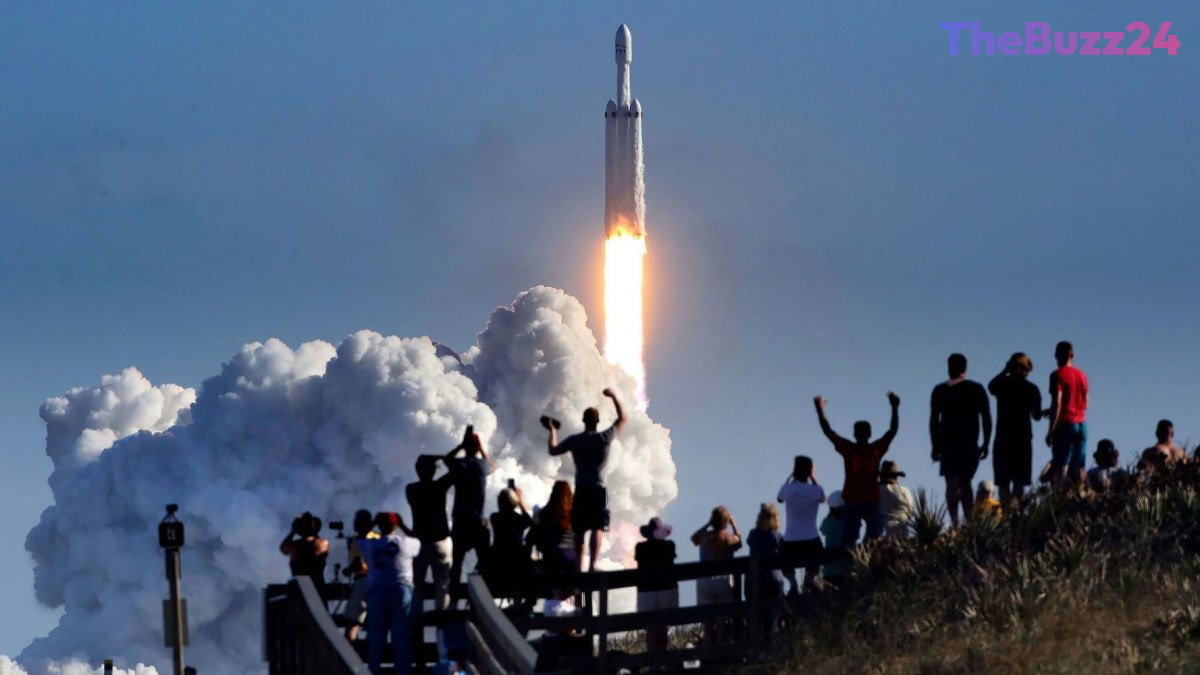
In a dramatic week of trading following its highly anticipated initial public offering, SpaceX briefly surpassed e-commerce giant Amazon to become the world’s fifth most valuable company. The aerospace and artificial intelligence conglomerate saw its valuation spike to an astonishing $2.9 trillion on Tuesday before settling back down. This massive surge was fueled by a combination of retail investor enthusiasm, the launch of options trading on its shares, and the strategic acquisition of AI coding startup Cursor.
The astronomical valuation comes despite a stark contrast in financial performance compared to the tech giants it is currently rivaling. Last year, SpaceX reported a net loss of $4.9 billion on $18.7 billion in revenue. In comparison, Amazon posted a massive $78 billion profit on $717 billion in sales during 2025. However, investors are looking toward the future, buoyed by SpaceX’s newly established, albeit non-binding, compute leasing agreements with tech heavyweights Google and Anthropic, alongside the incoming revenue from the Cursor acquisition, which is expected to close in the third quarter.
Much of the investor optimism centers on Elon Musk’s ambitious plans to build a multi-trillion-dollar AI ecosystem within SpaceX, which now houses his AI venture, xAI. This pivot follows Musk’s admission that the AI division had to be rebuilt from the ground up after initial missteps. SpaceX is funding the $60 billion Cursor acquisition entirely with company stock, utilizing a portion of the massive capital pool generated from its IPO. The public debut raised nearly $86 billion, initially valuing the company at $1.7 trillion.
Market analysts attribute the extreme price swings to the limited availability of SpaceX shares. The company floated only about 4% of its total stock for public trading, creating a highly volatile environment. This tight supply led to intense trading volume on Tuesday, with over 300 million of the 555 million publicly available shares changing hands. The wild fluctuations continued into after-hours trading, highlighting the speculative fervor surrounding Musk’s newly public venture.
Key Takeaways
- SpaceX's valuation briefly touched $2.9 trillion, temporarily surpassing Amazon as the fifth-most valuable company globally, just days after its public debut.
- The stock's rapid rise and high volatility are driven by a limited public float of only 4% of total shares, alongside the introduction of options trading.
- Investors are heavily backing Elon Musk's AI ambitions, including SpaceX's $60 billion acquisition of AI coding startup Cursor and partnerships with Google and Anthropic, despite the company posting a $4.9 billion loss last year.
Editor’s Analysis & Impact
The market’s reaction to SpaceX’s public debut represents a paradigm shift in how investors value aerospace and artificial intelligence integration. By housing xAI within SpaceX and aggressively acquiring assets like Cursor, Elon Musk is positioning the company not just as a space exploration pioneer, but as a foundational AI infrastructure play. However, the current valuation of nearly $2.6 trillion—resting on a company with substantial net losses and non-binding corporate agreements—signals extreme speculative behavior. The decision to float only 4% of shares was a calculated move that engineered scarcity, driving up demand and volatility. While this strategy successfully raised $86 billion in capital, it exposes retail investors to severe downside risks if the promised AI capabilities fail to monetize rapidly. Over the coming quarters, the market will demand a transition from speculative promise to concrete revenue, especially as the Cursor acquisition integrates.
Frequently Asked Questions
Q: Why did SpaceX's stock experience such extreme volatility?
A: The volatility was primarily caused by a very low public float. SpaceX only made about 4% of its total shares (555 million shares) available for public trading, meaning high demand quickly drove up prices, while high trading volume led to rapid fluctuations.
Q: How does SpaceX's financial performance compare to Amazon's?
A: There is a significant gap; SpaceX recorded a $4.9 billion loss on $18.7 billion in revenue last year, whereas Amazon generated a $78 billion profit on $717 billion in revenue during 2025. Investors are pricing SpaceX based on future AI and space exploration growth rather than current earnings.
Q: What is Cursor, and why did SpaceX acquire it?
A: Cursor is an AI-powered coding platform. SpaceX is acquiring the company for $60 billion in stock to bolster its rebuilt artificial intelligence division, xAI, and accelerate its software development capabilities.
AI Disclosure: This article is based on verified data and official reports. Our Team and AI have cross-referenced every financial detail with primary sources to ensure total accuracy.
More from this Category