Spain Slams EU Neighbors Over ‘Selfish’ Reaction to Ceuta Migrant Surge
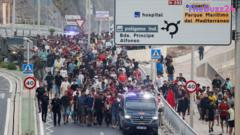
Spanish leadership has launched a scathing critique against several European Union member states, labeling their reactions to the recent influx of migrants into the North African enclave of Ceuta as selfish, polarising, and unlawful. The condemnation follows a dramatic episode that saw approximately 60,000 individuals cross from Morocco into the Spanish territory, prompting intense diplomatic friction and emergency border measures across the continent.
In the wake of the crossings, Interior Minister Fernando Grande-Marlaska confirmed that the situation has largely stabilized, with nearly all individuals having returned or been escorted back, though the tragic death toll associated with the crossings has risen to at least 67. Despite Madrid successfully restoring full border control and halting any unauthorized movement toward continental Europe within 48 hours, neighboring nations enacted swift punitive measures. Italy temporarily suspended the border-free Schengen arrangement concerning Spain, a move backed by Finland and Denmark, while the Czech Republic called for a complete suspension of Spain’s Schengen membership.
Responding to the mounting pressure, Prime Minister Pedro Sánchez addressed a formal letter to European Commission President Ursula von der Leyen, expressing profound concern over what he termed politically motivated attacks driven by prejudice and misinformation. Emphasizing that Ceuta lies outside the Schengen zone, Sánchez called for an urgent meeting of EU interior ministers to reinforce the principle that external border security is a shared responsibility among all member states. Meanwhile, a broad coalition of 22 EU nations has also petitioned for emergency talks to coordinate regional support and deploy instruments to help secure the Spanish border against future surges.
Key Takeaways
- Spain condemned the reaction of several EU countries to the influx of 60,000 migrants in Ceuta as 'selfish' and 'unlawful'.
- Italy temporarily suspended its Schengen arrangement with Spain, prompting support from other European nations like Finland and Denmark.
- Spanish Prime Minister Pedro Sánchez called for an urgent meeting of EU interior ministers to address border security as a shared responsibility.
Editor’s Analysis & Impact
The recent events in Ceuta highlight the fragile state of European migration policy and the deep political divisions among EU member states regarding border management. Italy and other northern nations prioritizing national security over regional solidarity demonstrate how quickly the Schengen agreement can face pressure during localized crises. For Spain, the diplomatic fallout underscores the complex challenge of balancing humanitarian obligations with rigorous border enforcement, especially given its geographical vulnerability as a primary gateway to Europe from Africa. Moving forward, the incident is likely to accelerate EU-wide debates over border fortification, the effectiveness of shared responsibility frameworks, and the geopolitical leverage held by transit nations like Morocco.
Frequently Asked Questions
Q: Why is Ceuta significant in European migration debates?
A: Ceuta, along with Melilla, forms the European Union's only land borders with Africa, making them frequent focal points for migrants attempting to enter Europe.
Q: How did Italy and other EU nations respond to the Ceuta crisis?
A: Italy temporarily suspended the EU's border-free Schengen arrangement with Spain for a month, a move supported by countries like Finland and Denmark, while others increased border checks.
Q: What was the stance of the Spanish government regarding the criticism?
A: Spanish Prime Minister Pedro Sánchez strongly defended his government's handling of the situation, criticized neighboring countries for reacting out of political interest, and called for an urgent meeting of EU interior ministers.
AI Disclosure: This article is based on verified data and official reports. Our Team and AI have cross-referenced every financial detail with primary sources to ensure total accuracy.
More from this Category