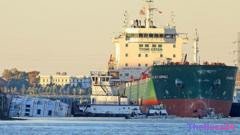
Steering Malfunction Blamed for New Orleans Cruise Ship Collision
A catastrophic steering failure on the cargo vessel Atlantic Asphalt preceded its collision with a docked cruise ship in New Orleans on Friday, according to preliminary findings released by the National Transportation Safety Board (NTSB). The incident, which occurred on the Mississippi River, resulted in 32 individuals aboard the American Heritage riverboat being hospitalized with non-critical injuries. Fortunately, no passengers or crew were reported missing.
Investigators are currently examining the precise cause of the “steering casualty” on the Atlantic Asphalt, noting that a variety of factors can lead to such an event. Evidence from the vessel’s voyage data recorder indicates that shortly before the collision, the ship’s warning systems were activated, and commands were issued to deploy anchors and execute emergency handling maneuvers. An investigator-in-charge confirmed that the steering issue caused the rudder to remain in a starboard position, leading the tanker’s heading to veer towards the east bank of the river.
The Port of New Orleans has initiated legal action, filing a $1 million lawsuit related to the incident. The American Heritage, operated by American Cruise Lines, was concluding an eight-day cruise when the collision took place. Approximately 129 passengers, along with the crew, were on board at the time. The impact caused the riverboat to take on water and list before capsizing, prompting a swift rescue operation involving tugboat operators, police, and other emergency services. Traffic on the Mississippi River was temporarily suspended to facilitate the rescue efforts.
Key Takeaways
- A steering failure on the Atlantic Asphalt cargo ship is identified as the cause of a collision with a docked cruise ship in New Orleans.
- 32 people on the American Heritage riverboat sustained non-critical injuries, with no reported missing persons.
- The NTSB is investigating the exact cause of the steering malfunction, with a preliminary report expected in 30 days.
Editor’s Analysis & Impact
This incident highlights the critical importance of reliable steering systems in maritime navigation, especially in busy waterways like the Mississippi River. The NTSB’s preliminary findings point to a mechanical or operational failure, underscoring the need for rigorous maintenance and safety protocols for cargo vessels. The economic impact, including the lawsuit filed by the Port of New Orleans, and the disruption to river traffic, demonstrate the significant consequences of such accidents. The focus now shifts to the NTSB’s full investigation to determine the root cause and implement preventative measures to avoid future occurrences, potentially influencing regulations and inspection standards for shipping companies operating in U.S. waters.
Frequently Asked Questions
Q: What caused the collision between the tanker and the cruise ship?
A: Preliminary findings from the National Transportation Safety Board (NTSB) indicate that a steering failure on the cargo vessel Atlantic Asphalt led to the collision with the docked cruise ship American Heritage.
Q: Were there any serious injuries or fatalities?
A: While 32 people on board the American Heritage riverboat were hospitalized with non-critical injuries, no one was reported missing, and there were no fatalities.
Q: What is the current status of the investigation?
A: The NTSB is actively investigating the exact cause of the steering malfunction. A preliminary report is expected within 30 days, with a full investigation to follow.
AI Disclosure: This article is based on verified data and official reports. Our Team and AI have cross-referenced every financial detail with primary sources to ensure total accuracy.
More from this Category