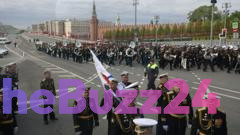
Moscow Scales Back Victory Day Parade Amid Security Concerns and Ongoing Conflict
The 2026 Victory Day parade in Moscow marked a notable departure from tradition, as the Kremlin opted for a significantly reduced and somber display. Historically defined by the thunderous passage of tanks and intercontinental ballistic missiles through Red Square, this year’s event relied heavily on digital projections to showcase military capabilities. This shift reflects the profound logistical and strategic pressures currently facing the nation as the conflict in Ukraine enters its fifth year.
Security remained the primary concern for organizers, with authorities citing the persistent threat of drone strikes as the catalyst for the restrained festivities. Despite these anxieties, the event concluded without incident, aided by a temporary ceasefire brokered by Donald Trump. The diplomatic backdrop remained fraught with tension, highlighted by a satirical decree from Ukrainian President Volodymyr Zelensky that mockingly authorized the parade—a gesture that Russian officials promptly dismissed.
During his keynote address, President Vladimir Putin emphasized the historical significance of the Soviet Union’s 1945 victory. However, the contrast between the commemorative rhetoric and the reality of the ongoing war was stark. The absence of heavy military hardware served as a visual testament to the strain on Russia’s resources, underscoring the uncertain trajectory of the current military campaign and the challenges of maintaining domestic morale during a prolonged period of instability.
Key Takeaways
- Moscow replaced traditional physical military hardware with digital displays during the 2026 Victory Day parade.
- Heightened security risks, particularly drone threats, necessitated a scaled-back event, though a ceasefire brokered by Donald Trump prevented disruptions.
- The event highlighted the ongoing resource strain caused by the five-year conflict in Ukraine, contrasting historical pride with current military limitations.
Editor’s Analysis & Impact
The 2026 Victory Day parade serves as a potent symbol of Russia’s current geopolitical and military standing. By opting for digital displays over physical hardware, the Kremlin is attempting to maintain a narrative of strength while simultaneously acknowledging the vulnerability of its capital to modern aerial threats. This shift suggests that the prolonged conflict in Ukraine is forcing a reevaluation of domestic propaganda strategies, as the state struggles to balance the need for nationalistic fervor with the practical limitations of its military assets. The reliance on external diplomatic intervention, such as the ceasefire brokered by Donald Trump, further underscores the isolation and complexity of Russia’s current position on the global stage. Moving forward, the inability to project traditional military might during its most significant national holiday may signal a long-term shift in how the Kremlin manages public perception amidst a grinding, multi-year war.
Frequently Asked Questions
Q: Why was the 2026 Victory Day parade in Moscow scaled back?
A: The parade was reduced in scale primarily due to heightened security concerns, specifically the threat of drone strikes, and the ongoing logistical demands of the conflict in Ukraine.
Q: What role did Donald Trump play in the event?
A: Donald Trump helped broker a last-minute ceasefire that allowed the Victory Day proceedings to take place without security incidents.
AI Disclosure: This article is based on verified data and official reports. Our Team and AI have cross-referenced every financial detail with primary sources to ensure total accuracy.
More from this Category