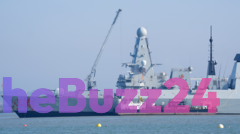
Royal Navy Deploys Advanced Destroyer to Secure Vital Strait of Hormuz Energy Corridor
The Royal Navy has significantly bolstered its maritime security posture in the Middle East by deploying the Type 45 destroyer, HMS Dragon, to the Strait of Hormuz. Renowned for its sophisticated anti-aircraft and anti-missile defense systems, the vessel is tasked with protecting one of the world’s most critical maritime chokepoints. This strategic move follows the destroyer’s successful completion of air defense operations in the eastern Mediterranean, marking a transition to a high-priority mission focused on regional stability.
The Strait of Hormuz serves as a vital artery for the global economy, facilitating the transit of roughly 20% of the world’s oil and liquefied natural gas. Given the region’s complex geopolitical landscape, the presence of the HMS Dragon is intended to deter potential threats and ensure that essential shipping lanes remain open and secure. Naval command views this deployment as a necessary measure to prevent disruptions that could have immediate and severe impacts on global energy markets.
In addition to the destroyer, the mission incorporates the RFA Lyme Bay, which is equipped with advanced autonomous mine-hunting technology. This integration of next-generation hardware highlights a tactical evolution toward more precise and versatile maritime security operations. By combining traditional naval power with modern surveillance capabilities, the mission aims to enhance responsiveness to potential maritime interference while maintaining a strictly defensive stance.
Authorities have clarified that the deployment is designed to uphold the principle of freedom of navigation and protect international commercial shipping. The operation is carefully calibrated to project stability and mitigate risks without escalating regional tensions. By maintaining a proactive presence, the naval forces seek to ensure the integrity of global trade routes while avoiding an offensive posture.
Key Takeaways
- The HMS Dragon has been deployed to the Strait of Hormuz to safeguard a critical global energy transit route.
- The mission integrates advanced autonomous mine-hunting technology via the RFA Lyme Bay to enhance maritime security.
- The deployment is strictly defensive, aimed at protecting international shipping and ensuring freedom of navigation.
Editor’s Analysis & Impact
The deployment of the HMS Dragon and accompanying autonomous systems to the Strait of Hormuz underscores the increasing reliance on high-tech naval assets to maintain global economic stability. As energy security remains a top priority for international markets, the ability to secure maritime chokepoints against both conventional and asymmetric threats is becoming a defining challenge for modern navies. The shift toward integrating autonomous mine-hunting capabilities suggests a broader trend in defense: moving away from purely kinetic deterrence toward more precise, surveillance-heavy operations. This strategy allows for a persistent presence that can monitor and react to threats without necessarily triggering a full-scale escalation. Moving forward, the success of this mission will likely serve as a blueprint for how international naval coalitions manage volatile trade routes, balancing the need for deterrence with the necessity of maintaining regional diplomatic equilibrium.
Frequently Asked Questions
Q: Why is the Strait of Hormuz considered a critical location for the Royal Navy?
A: The Strait of Hormuz is a vital maritime chokepoint through which approximately 20% of the world’s oil and liquefied natural gas must pass, making its security essential for global energy stability.
Q: What is the primary purpose of the HMS Dragon's current mission?
A: The mission is strictly defensive, focused on protecting international shipping lanes, upholding the freedom of navigation, and deterring potential threats to commercial vessels.
AI Disclosure: This article is based on verified data and official reports. Our Team and AI have cross-referenced every financial detail with primary sources to ensure total accuracy.
More from this Category