Resilience in Decentralized Finance: Lessons from the Aave Liquidity Crisis
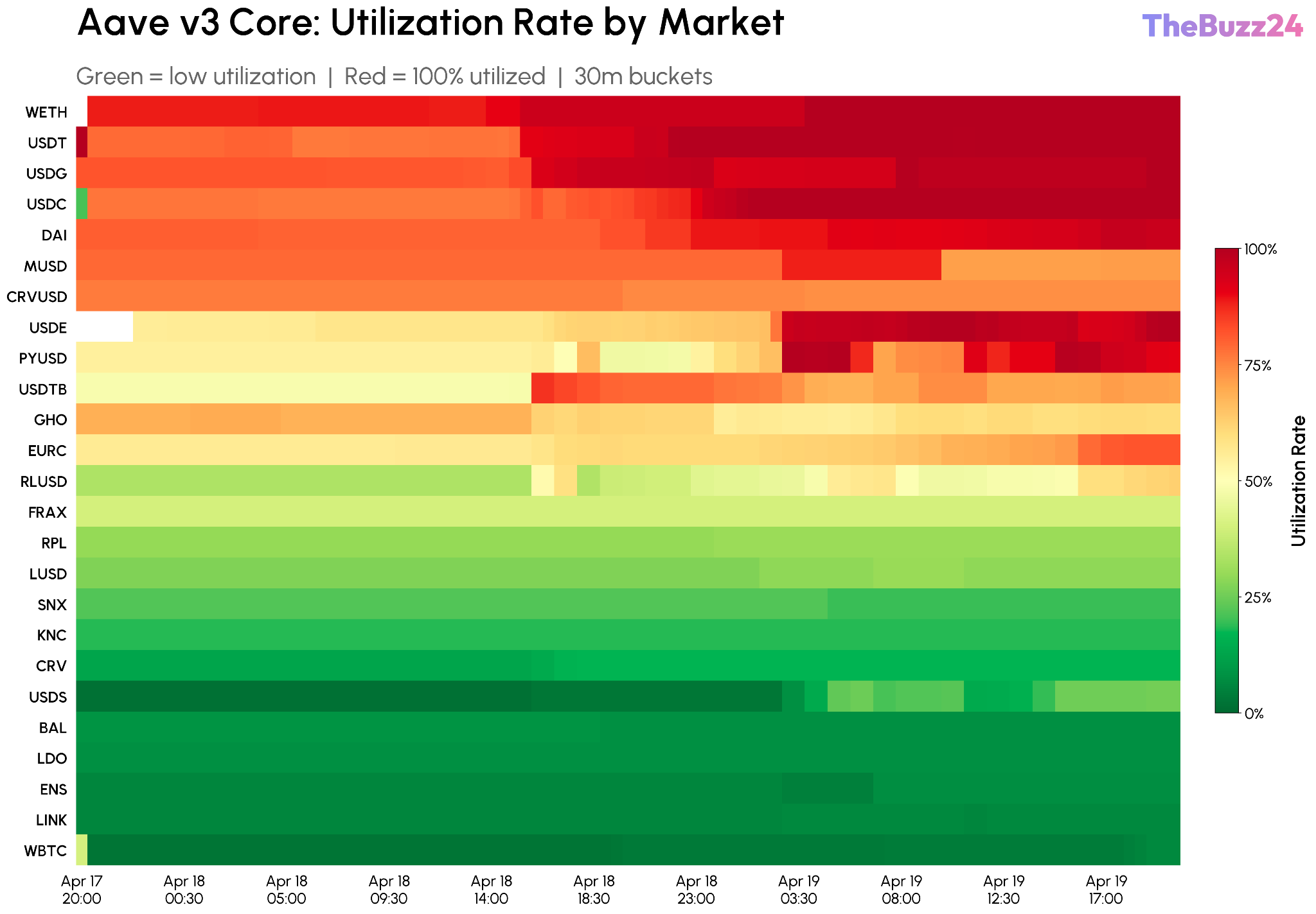
In April 2026, the decentralized finance (DeFi) sector faced a major stress test when an exploit involving KelpDAO’s rsETH triggered a severe liquidity crisis within Aave’s lending markets. The incident occurred when an attacker utilized unbacked assets to borrow substantial amounts of Wrapped ETH (WETH), causing automated interest rate models to spike as utilization rates reached maximum capacity. This rapid escalation demonstrated how quickly risk can propagate through interconnected liquidity pools.
The resulting market panic mirrored a traditional bank run, leading to the withdrawal of over $2 billion in stablecoin liquidity from Aave within a single day. While the protocol’s architecture is designed for capital efficiency, the event exposed the dangers of shared liquidity models where localized asset stress can threaten the entire ecosystem. Although the exploit generated approximately $123 million in bad debt, the DeFi United initiative stepped in to provide a necessary backstop, effectively stabilizing the markets.
Following the crisis, Aave has pivoted toward strengthening its infrastructure through the launch of Aave Horizon. This platform is specifically tailored for institutional participants, allowing for the integration of tokenized real-world assets (RWAs) as collateral. By incorporating U.S. Treasury funds from major issuers like Superstate, VanEck, and Ripple, the protocol is moving toward a more diversified and sustainable credit model. This shift is intended to provide institutional investors with 24/7 liquidity while reducing reliance on volatile crypto-native assets.
As of mid-2026, liquidity levels have largely recovered, and the market has stabilized. The transition toward RWA-backed lending marks a pivotal evolution for on-chain finance, signaling a move toward institutional-grade security. Developers and risk managers continue to analyze the KelpDAO incident to better balance the benefits of protocol composability with the necessity of systemic risk mitigation.
Key Takeaways
- An exploit involving KelpDAO’s rsETH caused a $2 billion liquidity drain on Aave, highlighting the risks of shared liquidity pools.
- Community intervention through the DeFi United initiative successfully managed $123 million in bad debt, preventing a total protocol collapse.
- Aave is shifting its long-term strategy toward institutional-grade lending by integrating tokenized real-world assets like U.S. Treasury funds.
Editor’s Analysis & Impact
The KelpDAO incident serves as a watershed moment for the DeFi industry, illustrating the inherent fragility of highly composable, shared liquidity models. While the protocol’s automated mechanisms functioned as intended, the speed of the ‘bank run’ underscores the need for more sophisticated, real-time risk management tools. The pivot toward Aave Horizon and the inclusion of real-world assets (RWAs) represent a strategic maturation of the sector. By diversifying collateral beyond volatile crypto-native tokens, Aave is attempting to bridge the gap between traditional finance and blockchain efficiency. This transition is likely to attract more conservative institutional capital, though it also introduces new regulatory and custodial complexities. Ultimately, the industry is moving away from pure ‘code-is-law’ experimentation toward a hybrid model that prioritizes systemic stability and institutional-grade security.
Frequently Asked Questions
Q: What caused the liquidity crisis on Aave in April 2026?
A: The crisis was triggered by an exploit involving KelpDAO’s rsETH, where an attacker used unbacked assets to borrow large quantities of WETH, causing interest rates to spike and triggering a mass withdrawal of stablecoins.
Q: How is Aave changing its lending model to prevent future crises?
A: Aave is launching Aave Horizon, a platform that allows for the use of tokenized real-world assets (RWAs), such as U.S. Treasury funds, as collateral to create a more diversified and stable credit framework.
AI Disclosure: This article is based on verified data and official reports. Our Team and AI have cross-referenced every financial detail with primary sources to ensure total accuracy.
More from this Category