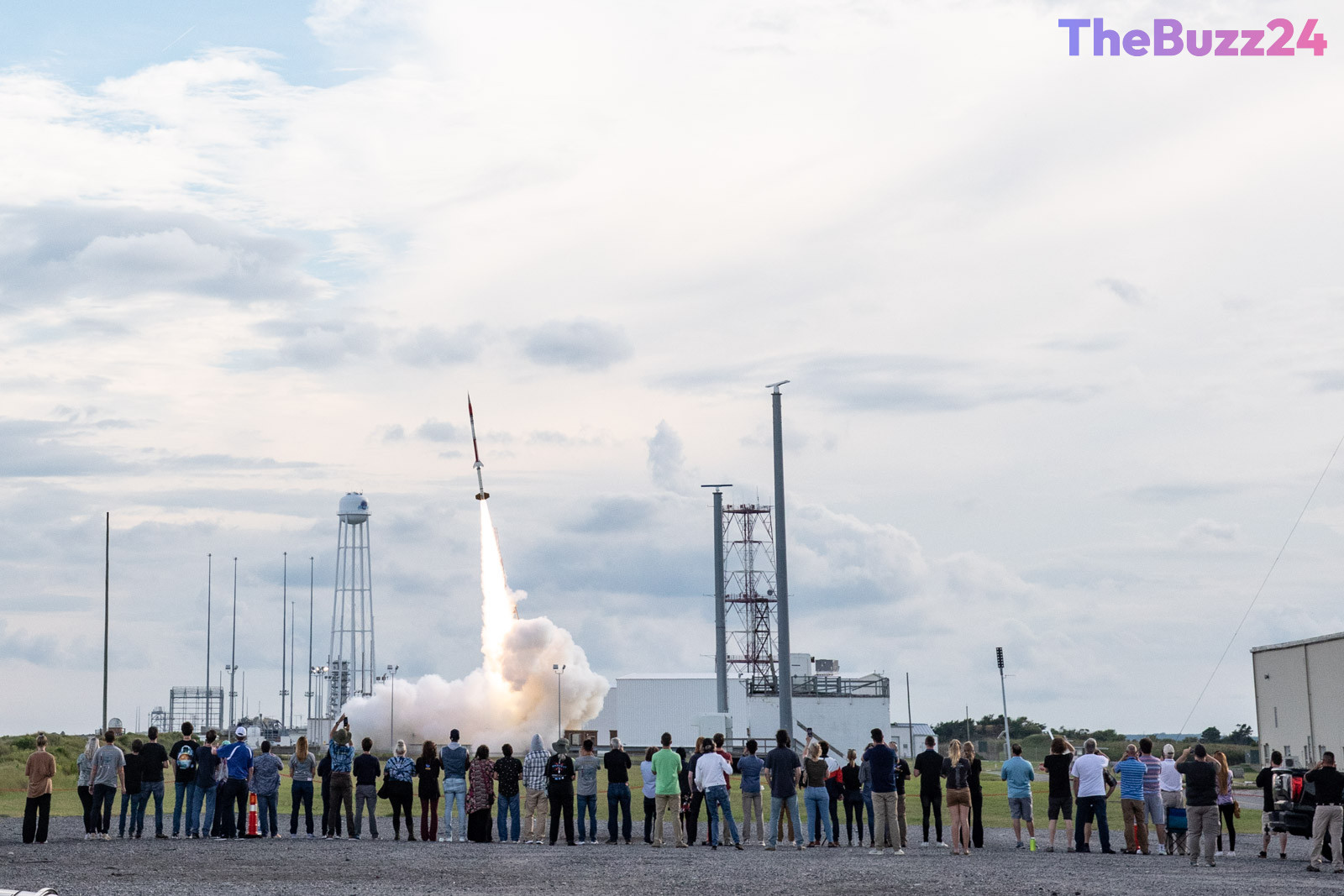
Student Innovation Soars: NASA Wallops Prepares for Dual University Experiment Launch
NASA’s Wallops Flight Facility in Virginia is gearing up for a significant launch, scheduled for Wednesday, June 24, between 5:30 and 9:30 a.m. EDT, with a backup day on Thursday, June 25. A sounding rocket will carry a unique payload: student-developed experiments from the agency’s RockSatX and RockOn programs. This mission marks a first for NASA, as it combines both the RockSat and RockOn missions onto a single rocket, maximizing the educational impact for aspiring aerospace professionals.
These programs are crucial for cultivating the next generation of space engineers and scientists, offering invaluable technical training and hands-on experience. Nearly 250 participants from 38 university and community college teams are involved, gaining practical skills essential for entering the United States aerospace industry. While RockOn teams focus on building circuit board experiments on-site, RockSat teams undertake more advanced projects, designing and constructing their experiments through a rigorous review process that mirrors larger NASA missions. Victoria Stoffel, workforce development lead at NASA Wallops, highlighted the collaborative effort, stating, “The Sounding Rocket Program Office team found creative ways to fit nearly 50 experiments into one rocket. We are grateful to the Wallops teams for making this happen for the students to get the most from this experience.”
The student experiments are diverse and forward-looking, ranging from collecting data on weather and radiation in Earth’s upper atmosphere to testing cutting-edge technologies. These include advancements in heat shields, systems for tracking space debris, and robotic servicing capabilities, all of which could prove vital for future NASA missions. The Terrier-Improved Malemute suborbital sounding rocket, carrying these innovative projects, is expected to reach an altitude of approximately 100 miles before descending via parachute into the Atlantic Ocean for recovery.
For those interested in witnessing this display of student ingenuity, the launch may be visible in the Chesapeake Bay region. The Wallops Visitor Center’s launch viewing area will open at 4:30 a.m. EDT on June 24. Additionally, a livestream will commence approximately 10 minutes before launch on the Wallops YouTube channel, with real-time updates also available via the facility’s Facebook page.
Key Takeaways
- NASA's Wallops Flight Facility is launching a sounding rocket carrying experiments from 250 students across 38 university and community college teams.
- This mission uniquely combines the RockSatX and RockOn programs, offering hands-on aerospace experience from basic circuit building to advanced experiment design.
- The experiments cover a range of critical research areas, including atmospheric measurements and testing future space technologies like heat shields and robotic servicing.
Editor’s Analysis & Impact
This initiative represents a significant investment in the future of the aerospace industry, directly impacting the talent pipeline by providing practical, real-world experience to a diverse group of students. By fostering innovation and skill development at the university level, NASA ensures a continuous flow of qualified professionals, strengthening the U.S.’s competitive edge in space technology and exploration. The integration of RockSatX and RockOn missions on a single rocket demonstrates an efficient approach to maximizing educational opportunities. This model could inspire similar collaborative efforts, leading to accelerated advancements in critical areas like space debris management, in-orbit servicing, and atmospheric research. Ultimately, these programs are vital for cultivating not just technical expertise, but also problem-solving and teamwork skills essential for any high-tech sector.
Frequently Asked Questions
Q: What are the RockSatX and RockOn programs?
A: These are NASA programs designed to provide university and community college students with hands-on experience in aerospace engineering. RockOn focuses on building basic circuit board experiments, while RockSatX involves designing and building more complex experiments, mirroring larger NASA missions.
Q: What types of experiments will be launched?
A: The student experiments cover a wide range, including taking measurements of weather and radiation in Earth's upper atmosphere, and testing advanced technologies such as heat shields, space-debris tracking systems, and robotic servicing capabilities for future space missions.
Q: How can the public view the launch?
A: The launch may be visible in the Chesapeake Bay region. For those wishing to view it in person, the Wallops Visitor Center's launch viewing area will open at 4:30 a.m. EDT on June 24. A livestream will also be available on the Wallops YouTube channel approximately 10 minutes before launch, with updates on the facility's Facebook page.
AI Disclosure: This article is based on verified data and official reports. Our Team and AI have cross-referenced every financial detail with primary sources to ensure total accuracy.
More from this Category