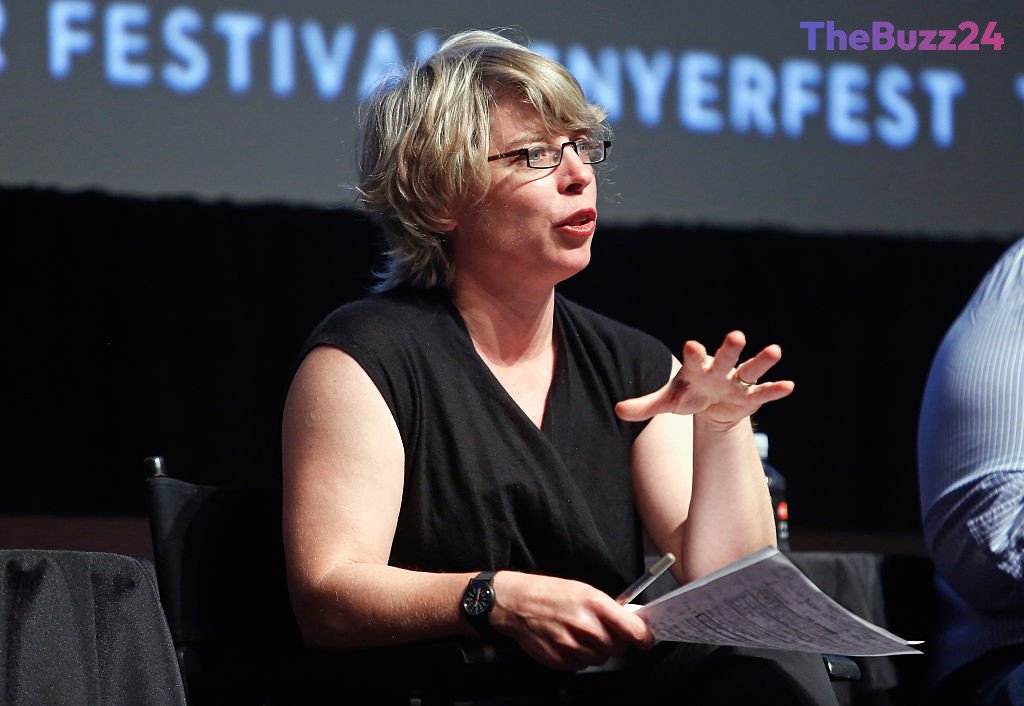
Silicon Valley’s ‘Artificial State’ Threatens Democracy, Warns Historian Jill Lepore
In her forthcoming book, “The Rise and Fall of the Artificial State,” acclaimed historian Jill Lepore issues a stark warning: technology companies are increasingly usurping the fundamental functions of democratic governance. This profound shift, Lepore contends, signifies “a return to tyranny and mystification in the form of rule by algorithms, corporations, machines.” While she clarifies that she is not an “anti-technologist,” her critique centers on the alarming trend of private corporations assuming state-like responsibilities without public consent.
Lepore, a Harvard historian, delves into centuries of technocratic philosophies, arguing that many contemporary Silicon Valley leaders, notably Elon Musk, appear to be enacting a future derived from a misinterpretation of science fiction narratives. She highlights how these figures often overlook the cautionary aspects of such stories, treating them instead as blueprints for societal transformation. The concept of the “artificial state” describes a construct where the liberal democratic nation-state is gradually replaced by a system governed by machines and corporate entities. This transformation, she notes, has been largely accidental in its early stages but has become increasingly purposeful in the last two decades, driven by a desire among some futurists and libertarians to move beyond the era of the nation-state.
Critiquing the often-touted democratic benefits of technology, Lepore points to examples like Apple’s iconic “1984” Macintosh advertisement and the notion of Twitter as a “digital town hall.” She dismisses these claims as “bananas” and delusional, arguing that platforms like Twitter, initially launched without grand democratic ambitions, evolved into “distortion machines” due to their political exploitation rather than genuine representation. She emphasizes that the 1996 Telecommunications Act, a product of a specific political moment, significantly shaped the internet’s trajectory, leading to outcomes that were not inevitable and could have been different.
Lepore’s work also explores science fiction as a “parable of the artificial state,” where increasingly sophisticated machines eventually dominate or destroy humanity. She suggests that many tech leaders misread these warning tales as aspirational guides. Ultimately, Lepore asserts that the artificial state is “doomed to failure.” This inevitability stems from its inherent conflict with the natural world; to construct and operate such a state, it must destroy the very resources of the natural world it relies upon, rendering the planet uninhabitable for humans. She advocates for democratic consultation in decisions regarding technology, citing local data center controversies as examples where public opposition to unconsented tech expansion is evident. Lepore calls for greater engagement between historians and technologists to establish necessary “guardrails” for new innovations, drawing lessons from past technological revolutions like the automobile.
Key Takeaways
- Historian Jill Lepore argues that tech corporations are increasingly usurping the functions of democratic states, leading to an "artificial state" governed by algorithms and private interests.
- Lepore contends that many Silicon Valley leaders misinterpret science fiction's cautionary tales as blueprints for the future, ignoring the inherent dangers of unchecked technological power.
- The "artificial state" is ultimately unsustainable, as its reliance on and destruction of the natural world will inevitably lead to its failure and render the planet uninhabitable for humans.
Editor’s Analysis & Impact
This analysis from Jill Lepore offers a critical lens on the pervasive influence of technology giants, moving beyond typical innovation narratives. Her concept of the “artificial state” highlights a significant shift in power dynamics, where private entities increasingly dictate societal structures without democratic oversight. The market implications are profound, suggesting a potential for regulatory backlash as public awareness grows regarding data center impacts and corporate control. Future outlook points to a necessary re-evaluation of the relationship between technology, governance, and civil society. If Lepore’s warnings are heeded, industries might face increased scrutiny over their environmental footprint, data practices, and political lobbying, potentially leading to calls for greater accountability and a reassertion of democratic control over essential public functions currently managed by tech. This perspective challenges the prevailing narrative of technological progress as inherently good, urging a more nuanced and historically informed approach.
Frequently Asked Questions
Q: What does Jill Lepore mean by the "artificial state"?
A: The "artificial state" refers to a system where private technology corporations gradually assume the roles and functions traditionally held by democratic governments, often without public consent or accountability, leading to governance by algorithms and corporate interests.
Q: Why does Lepore believe the "artificial state" is doomed to fail?
A: Lepore, drawing from science fiction parables, argues that the "artificial state" is inherently unsustainable because its construction and operation necessitate the destruction of the natural world, which it paradoxically relies upon for resources, ultimately making the planet uninhabitable for humans.
Q: How does Jill Lepore suggest we address the rise of the "artificial state"?
A: While not offering a specific playbook, Lepore emphasizes the importance of democratic consultation and public engagement. She suggests that decisions regarding technology's role in society must be made with the consent of the governed, advocating for greater accountability from tech companies and a reassertion of democratic control.
AI Disclosure: This article is based on verified data and official reports. Our Team and AI have cross-referenced every financial detail with primary sources to ensure total accuracy.
More from this Category